
Pale-vented Pigeon vs Roadside Hawk
Patagioenas cayennensis contro Rupornis magnirostris
Fai un quiz con Pale-vented Pigeon e Roadside Hawk
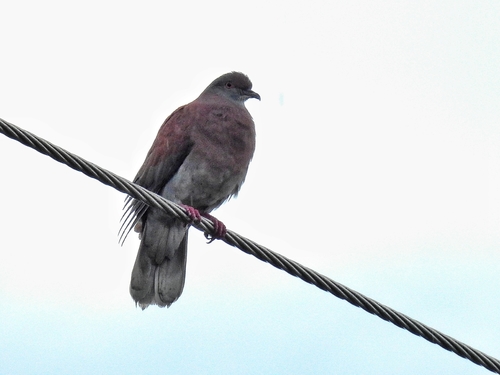 Pale-vented Pigeon
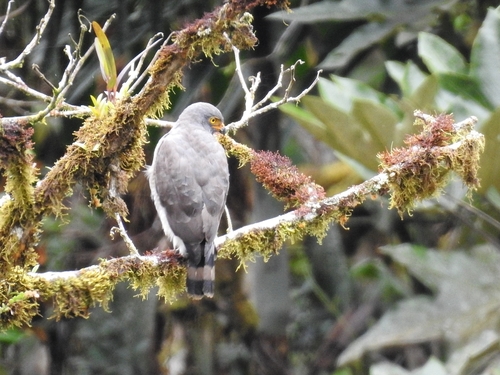 Roadside Hawk
In breve
Il segno distintivo più affidabile per separare il Pale-vented Pigeon dal Roadside Hawk è la struttura generale e lo stile di volo: il piccione è un grande uccello dal corpo pesante con ali larghe e una coda corta, mentre il falco è più snello, con una coda relativamente lunga e ali corte e arrotondate. In volo, il falco spesso plana e mostra una coda e parti inferiori barrate, mentre il piccione vola con battiti d'ali forti e diretti e non presenta alcuna barratura. Il piumaggio adulto è anche distintivo: il piccione è per lo più di un viola e grigio opaco con un ventre chiaro, mentre il falco è marrone o grigio con barrature prominenti sotto. I piccioni immaturi sono molto opachi e marroni, ma mancano ancora delle parti inferiori e della coda barrate del falco. Le vocalizzazioni sono completamente diverse e il comportamento del falco è più predatorio e appariscente. Queste due specie sono improbabili da confondere a distanza ravvicinata, ma viste da lontano o retroilluminate, specialmente di uccelli in posa, possono causare confusione a causa delle dimensioni simili e della postura eretta.
Consigli di identificazione
- Profilo di volo: Il Roadside Hawk ha una coda lunga e ali corte e arrotondate, spesso visto planare o scivolare con le ali piatte; il Pale-vented Pigeon ha ali più larghe e una coda più corta, volando con battiti d'ali forti e diretti. Questo è affidabile per tutte le età.
- Barratura delle parti inferiori: Il Roadside Hawk (tutte le età) mostra barrature marroni e bianche sul petto inferiore e sull'addome; il Pale-vented Pigeon (tutte le età) ha parti inferiori semplici, non barrate—grigio chiaro o bianco negli adulti, grigio-marrone opaco negli immaturi.
- Schema della coda: La coda del falco è distintamente barrata con 4–5 bande grigie, visibili sia in posa che in volo; la coda del piccione è di un grigio scuro uniforme.
- Forma del becco: Il falco ha un grande becco adunco (adattato per la predazione); il piccione ha un becco dritto e nero (adattato per mangiare frutta/semi). Questo è visibile a distanza moderata.
- Colore degli occhi: I falchi adulti hanno occhi bianchi o gialli; i piccioni hanno occhi rossi e un anello oculare rosso (adulti). I piccioni immaturi sono più opachi, ma mancano ancora di occhi gialli.
- Colore delle zampe: Il piccione ha zampe rosse; il colore delle zampe del falco non è descritto come diagnostico, ma non è rosso.
- Lucentezza del piumaggio: I piccioni adulti mostrano una lucentezza ramata sulla nuca; i falchi mai. I piccioni immaturi mancano di lucentezza e sono complessivamente più opachi, ma mancano ancora di barrature.
- Rufous nell'ala: Il falco può mostrare un tocco di rufous sulle ali in volo, specialmente in alcune sottospecie; il piccione non mostra mai rufous.
- Postura in posa: Il falco si posa eretto, spesso in luoghi esposti; il piccione è più massiccio e più orizzontale, di solito in luoghi più nascosti.
- Comportamento: Il falco è predatorio, spesso visto cacciare o planare; il piccione è più propenso a essere visto nutrirsi silenziosamente o volare tra gli alberi.
- Vocalizzazione: Il richiamo del falco è un fischio acuto e penetrante; quello del piccione è un morbido kuk kuk croo-ooos. I richiami non sono simili.
- Habitat: Il falco è comune in aree molto aperte, bordi stradali e parchi urbani; il piccione preferisce i bordi delle foreste, le rive dei fiumi e le aree con più copertura arborea.
- Confusione di sesso/età: Le femmine di falco sono più grandi, ma entrambi i sessi mostrano lo stesso piumaggio; i piccioni immaturi sono grigio-marrone opaco, ma mancano ancora di qualsiasi barratura o rufous, e sono più massicci dei falchi.
- Dimensione del gruppo: Il piccione può trovarsi in piccoli gruppi, specialmente vicino all'acqua; il falco è solitamente solitario.
- Trappole comuni: Gli uccelli in posa a distanza possono sembrare simili in dimensione e postura, ma il modello della coda e la barratura delle parti inferiori sono affidabili a qualsiasi distanza. I piccioni immaturi sono opachi, ma non mostrano mai barrature o rufous.
Taglia
Il Pale-vented Pigeon è un grande piccione, lungo 30–32 cm e pesante 230–250 g [wikipedia]. Il Roadside Hawk è leggermente più lungo (31–41 cm) e più pesante (250–300 g), ma la differenza è sottile e non sempre evidente sul campo [wikipedia]. Il falco è più snello, con una coda più lunga e ali più corte rispetto al suo corpo, mentre il piccione è più massiccio e più a forma di botte. I sessi sono simili in entrambi, anche se le femmine di falco sono circa il 20% più grandi dei maschi; questo non è di solito ovvio a meno che gli uccelli non siano affiancati.
Piumaggio
I piccioni giovanili e immaturi di Pale-vented sono molto opachi, di un grigio-marrone complessivo, privi di qualsiasi barratura o forte contrasto, e mostrano un aspetto uniforme sopra e sotto. Gli adulti hanno una testa, un petto e una parte superiore di un viola opaco con lucentezza ramata sulla nuca, parti inferiori di un grigio chiaro (o bianco in alcuni uccelli meridionali) e una coda e parte bassa di un grigio scuro. Il ventre è chiaro, come suggerisce il nome. Al contrario, il Roadside Hawk di tutte le età mostra parti inferiori barrate marroni e bianche e una coda con quattro o cinque barre grigie, visibili sia in posa che in volo. Le parti superiori del falco sono marroni o grigie, a volte con una sfumatura rufous sulle ali, specialmente in volo. Gli occhi del falco sono bianchi o gialli, mentre quelli del piccione sono rossi. Il becco del falco è relativamente grande e adunco, mentre quello del piccione è dritto e nero. Il piumaggio del falco è variabile per sottospecie, ma la combinazione di parti inferiori barrate e coda è costante.
Comportamento
Il Pale-vented Pigeon è solitamente solitario o in piccoli gruppi, nutrendosi silenziosamente di frutta e semi, spesso ai bordi delle foreste o lungo le rive dei fiumi. Il suo volo è forte, diretto e alto, con battiti d'ali regolari e occasionali scatti rapidi. Può eseguire un volo di esibizione con un planare semicircolare. Il Roadside Hawk è molto più appariscente, frequentemente posandosi in luoghi aperti, spesso su fili o rami esposti, ed è altamente vocale. Caccia da un posatoio, lanciandosi sulla preda, e spesso plana su termiche con le ali tenute piatte. Il falco non sospende il volo. Il comportamento del piccione è più segreto e meno predatorio.
Habitat
Entrambe le specie si trovano in aree parzialmente aperte con alberi, ma le loro preferenze microhabitat differiscono. Il Pale-vented Pigeon è comune ai bordi delle foreste, lungo le rive dei fiumi e in boschi aperti, evitando solitamente aree molto aperte. Il Roadside Hawk è spesso il rapace più comune nel suo raggio d'azione, trovato in una vasta gamma di habitat aperti e semi-aperti, inclusi i bordi stradali (come suggerisce il nome), savane e persino parchi urbani. Il falco è più probabile che venga visto in aree molto aperte o posato in luoghi esposti, mentre il piccione preferisce aree con più copertura.
Voce
Il Pale-vented Pigeon emette un morbido e ritmico kuk kuk croo-ooos, con il kuk iniziale che è distintivo per il suo gruppo. Il Roadside Hawk ha un fischio molto acuto e penetrante, che è molto più netto e simile a un rapace rispetto al cooing del piccione. I richiami non sono probabili da confondere all'orecchio.
Pale-vented Pigeon · Roadside Hawk · I miei uccelli difficili