

Motmot

Pale-crowned Cisticola vs Wing-snapping Cisticola

Cisticola cinnamomeus contro Cisticola ayresii

Fai un quiz con Pale-crowned Cisticola e Wing-snapping Cisticola
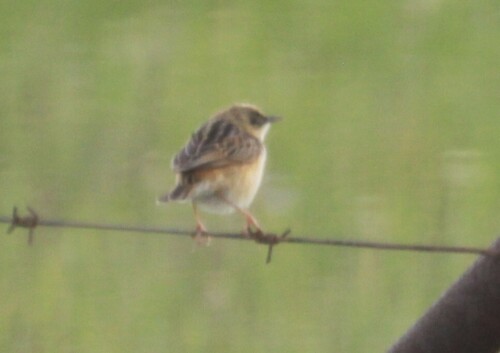
Pale-crowned Cisticola (Cisticola cinnamomeus) Pale-crowned Cisticola
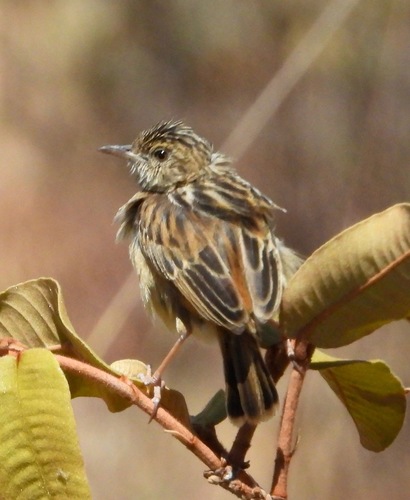
Wing-snapping Cisticola (Cisticola ayresii) Wing-snapping Cisticola

Media

Caricamento…

In breve

With the current sources, there are no documented age-specific wing or flight plumage differences between Pale-crowned Cisticola and Wing-snapping Cisticola, so field separation relies on subtle differences in structure, context, and (where available) vocalizations. Both are small, brownish cisticolas in the same family, and can be extremely similar in general appearance, especially when seen at a distance or in brief views. Reliable separation in the field may require close attention to behavior, habitat, and any vocal clues. If you have only a fleeting look at a perched or flying bird, be aware that confusion is common and sometimes unavoidable without additional context.

Consigli di identificazione

  1. Do not rely on plumage alone: Both species are small, brownish cisticolas with no documented age-specific or seasonal plumage differences in the available notes. If you are unsure, do not overinterpret subtle color shades or patterning.
  2. Watch for wing-snapping display: If you observe a bird making audible wing-snapping sounds in flight or display, this strongly suggests Wing-snapping Cisticola. However, absence of this behavior does not rule it out, as not all individuals display at all times.
  3. Listen for vocalizations: In the field, cisticola songs and calls are often the best way to separate similar species. If you can record or carefully note the song, consult a regional field guide or sound library for confirmation. Unfortunately, no vocal descriptions are provided here.
  4. Consider habitat and location: While not diagnostic based on these notes, local abundance and habitat preferences may help. Check eBird or local atlases for which species is more likely in your area.
  5. Structural clues: If you have prolonged views, look for subtle differences in bill shape, tail length, or posture, but be aware that these are not detailed in the current sources and may be unreliable.
  6. Perched vs. flight views: No distinctive flight or upperwing pattern differences are reported. Both species are likely to show similar flight profiles.
  7. Age and season: There are no documented differences in juvenile or immature plumage or structure between these two species. Treat all ages as potentially confusing.
  8. Sex differences: No sexual dimorphism is described for either species in these notes; males and females are likely similar.
  9. Do not overinterpret brief or distant views: If you only see a bird for a moment or at a distance, it may not be possible to separate these species reliably.
  10. Consult local experts: In regions where both species occur, local birders may have additional tips based on subtle differences or typical behaviors not covered in these sources.
  11. Photograph or record when possible: If you are unsure, try to obtain photos or sound recordings for later analysis.
  12. Be honest about uncertainty: With two such similar species and limited field marks, sometimes the best answer is 'cisticola sp.' unless you have clear behavioral or vocal evidence.

Taglia

No direct size or mass differences are documented between these two species in the provided sources. Both are typical small cisticolas, and size is not a useful field mark for separating Pale-crowned from Wing-snapping Cisticola.

Piumaggio

There are no detailed, age-specific plumage or wing pattern differences described in the available notes for either species. Both are described as small, brownish cisticolas, and no distinctive juvenile, first-winter, or immature upperwing marks are reported. Without further details, plumage is not reliably diagnostic for any age or season based on these sources.

Comportamento

Behavioral differences are not detailed in the current sources. However, the name 'Wing-snapping Cisticola' suggests a display involving wing-snapping, which may be a behavioral clue if observed. Otherwise, both species are expected to behave like typical cisticolas: skulking in grass, making short flights, and perching upright. In the absence of more information, behavior is not a consistently reliable separator.

Habitat

No habitat distinctions are provided in the current notes. Both species are members of the same genus and likely overlap in grassland or open-country habitats. Habitat alone is not a safe separator without more detailed local knowledge.

Voce

No vocal differences are described in the provided sources. Vocalizations are often key for cisticola identification, but without specific descriptions, they cannot be used here.

Invia una descrizione migliore

Usa le stesse sezioni del confronto. Il testo viene pubblicato subito.

With the current sources, there are no documented age-specific wing or flight plumage differences between Pale-crowned Cisticola and Wing-snapping Cisticola, so field separation relies on subtle differences in structure, context, and (where available) vocalizations. Both are small, brownish cisticolas in the same family, and can be extremely similar in general appearance, especially when seen at a distance or in brief views. Reliable separation in the field may require close attention to behavior, habitat, and any vocal clues. If you have only a fleeting look at a perched or flying bird, be aware that confusion is common and sometimes unavoidable without additional context.

  1. Do not rely on plumage alone: Both species are small, brownish cisticolas with no documented age-specific or seasonal plumage differences in the available notes. If you are unsure, do not overinterpret subtle color shades or patterning.
  2. Watch for wing-snapping display: If you observe a bird making audible wing-snapping sounds in flight or display, this strongly suggests Wing-snapping Cisticola. However, absence of this behavior does not rule it out, as not all individuals display at all times.
  3. Listen for vocalizations: In the field, cisticola songs and calls are often the best way to separate similar species. If you can record or carefully note the song, consult a regional field guide or sound library for confirmation. Unfortunately, no vocal descriptions are provided here.
  4. Consider habitat and location: While not diagnostic based on these notes, local abundance and habitat preferences may help. Check eBird or local atlases for which species is more likely in your area.
  5. Structural clues: If you have prolonged views, look for subtle differences in bill shape, tail length, or posture, but be aware that these are not detailed in the current sources and may be unreliable.
  6. Perched vs. flight views: No distinctive flight or upperwing pattern differences are reported. Both species are likely to show similar flight profiles.
  7. Age and season: There are no documented differences in juvenile or immature plumage or structure between these two species. Treat all ages as potentially confusing.
  8. Sex differences: No sexual dimorphism is described for either species in these notes; males and females are likely similar.
  9. Do not overinterpret brief or distant views: If you only see a bird for a moment or at a distance, it may not be possible to separate these species reliably.
  10. Consult local experts: In regions where both species occur, local birders may have additional tips based on subtle differences or typical behaviors not covered in these sources.
  11. Photograph or record when possible: If you are unsure, try to obtain photos or sound recordings for later analysis.
  12. Be honest about uncertainty: With two such similar species and limited field marks, sometimes the best answer is 'cisticola sp.' unless you have clear behavioral or vocal evidence.

No direct size or mass differences are documented between these two species in the provided sources. Both are typical small cisticolas, and size is not a useful field mark for separating Pale-crowned from Wing-snapping Cisticola.

There are no detailed, age-specific plumage or wing pattern differences described in the available notes for either species. Both are described as small, brownish cisticolas, and no distinctive juvenile, first-winter, or immature upperwing marks are reported. Without further details, plumage is not reliably diagnostic for any age or season based on these sources.

Behavioral differences are not detailed in the current sources. However, the name 'Wing-snapping Cisticola' suggests a display involving wing-snapping, which may be a behavioral clue if observed. Otherwise, both species are expected to behave like typical cisticolas: skulking in grass, making short flights, and perching upright. In the absence of more information, behavior is not a consistently reliable separator.

No habitat distinctions are provided in the current notes. Both species are members of the same genus and likely overlap in grassland or open-country habitats. Habitat alone is not a safe separator without more detailed local knowledge.

No vocal differences are described in the provided sources. Vocalizations are often key for cisticola identification, but without specific descriptions, they cannot be used here.

Scartare le modifiche?

Hai modifiche non salvate. Se esci ora, andranno perse.

Pale-crowned Cisticola · Wing-snapping Cisticola · I miei uccelli difficili