

Pacific Swift vs Topino
Apus pacificus contro Riparia riparia
Fai un quiz con Pacific Swift e Topino
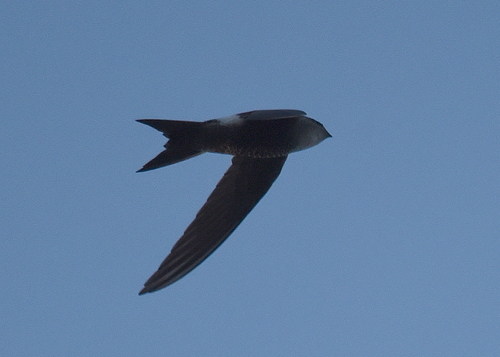 Pacific Swift
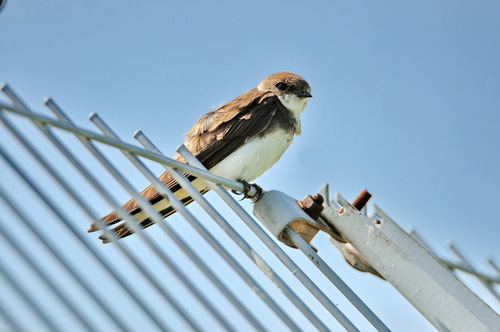 Topino
In breve
Il modo più affidabile per separare il Pacific Swift dal Topino è attraverso le dimensioni, la struttura e lo stile di volo: il Pacific Swift è molto più grande, con lunghe ali a forma di falce e una coda profondamente biforcuta, mentre il Topino è una piccola rondine compatta con ali corte e una coda poco profonda, quadrata o leggermente intagliata. In volo, il Pacific Swift mostra una bold band bianca sulla parte posteriore e una pancia dall'aspetto squamoso, mentre il Topino ha una banda pettorale marrone e un ventre bianco pulito. I giovani Pacific Swift possono mostrare frange chiare sulle ali, ma i giovani Topini hanno copritrici e secondarie con punte rugginose. Entrambe le specie sono insettivori aerei, ma la loro forma, dimensione e stile di volo sono immediatamente diversi attraverso i binocoli.
Consigli di identificazione
- Dimensioni e forma: Il Pacific Swift è molto più grande e massiccio del Topino; se vedi entrambi insieme, la differenza di dimensioni è ovvia. I swift hanno lunghe ali appuntite a forma di falce e una coda profondamente biforcuta, mentre il Topino è piccolo, compatto, con ali corte e una coda poco profonda, quadrata o leggermente intagliata.
- Banda bianca sulla parte posteriore (tutte le età): Il Pacific Swift mostra sempre una bold band bianca sulla parte posteriore, visibile dall'alto e dal basso in volo. Il Topino non ha mai una parte posteriore bianca: la sua schiena è marrone uniforme.
- Parte inferiore: Il Pacific Swift ha parti inferiori nere con un aspetto squamoso a causa delle frange bianche delle piume, specialmente quando visto dal basso. Il Topino è bianco sotto con una stretta banda pettorale marrone e una pancia bianca pulita.
- Banda pettorale: La stretta banda pettorale marrone del Topino è unica tra queste due; il Pacific Swift non mostra mai una banda pettorale.
- Forma della coda: La coda del Pacific Swift è profondamente biforcuta, specialmente quando è aperta in volo. La coda del Topino è solo leggermente intagliata o quadrata, mai così profondamente biforcuta come quella del swift.
- Schema delle ali nei giovani: I giovani Pacific Swift mostrano frange chiare sulle piume delle ali, dando un effetto scallop, mentre i giovani Topini hanno punte rugginose sulle copritrici e secondarie, visibili come bordi caldi in buona luce.
- Stile di volo: Il Pacific Swift vola con colpi lunghi, rigidi e plananti e battiti d'ali rapidi e poco profondi, spesso in alto. Il Topino ha un volo frenetico, veloce e scattoso, di solito basso sopra l'acqua o i campi.
- Comportamento di posarsi: Il Topino spesso si posa su fili, canne o argini; il Pacific Swift quasi mai si posa in aperto ed è quasi sempre visto in volo.
- Testa e becco: Il Pacific Swift ha una testa più sporgente e un aspetto più robusto e potente; il Topino ha una testa piccola e arrotondata e un becco minuscolo.
- Contesto e habitat: Se visto vicino a una riva sabbiosa o a una colonia, specialmente posato, è probabile che sia un Topino. Se visto in alto o migrando in grandi stormi, specialmente al di fuori della stagione di nidificazione, è più probabile che sia un Pacific Swift.
- Vocalizzazioni: Ascolta il cinguettio ghiaioso del Topino in volo; il Pacific Swift è generalmente silenzioso o emette solo brevi richiami non musicali.
- Stagione e distribuzione: In Europa o Nord America, il Topino è la specie attesa; il Pacific Swift è un raro vagabondo. Nell'Asia orientale o in Australasia, il Pacific Swift è più probabile, specialmente durante la migrazione.
- Trappole: Un swift leucistico con una parte posteriore bianca potrebbe essere scambiato per un Pacific Swift, ma controlla le dimensioni, la biforcazione della coda e il modello delle parti inferiori. Nessun Topino mostrerà una parte posteriore bianca o una coda profondamente biforcuta.
- Sessi: Entrambe le specie sono sessualmente monomorfiche; le differenze nel piumaggio non sono utili per determinare il sesso sul campo.
- Variazione delle sottospecie: I Pacific Swift meridionali (A. p. kurodae) hanno una parte posteriore bianca più stretta e una gola più grigia, ma mostrano comunque i contrasti strutturali e della parte posteriore chiave con il Topino.
Taglia
Il Pacific Swift è drammaticamente più grande: 17–18 cm di lunghezza con un'apertura alare di 43–54 cm e un peso di 42,5–44,5 g. Il Topino è molto più piccolo, con 12–13 cm di lunghezza, un'apertura alare di 26,5–29 cm e un peso di soli 11–16 g (fino a 19,5 g prima della migrazione). Anche a distanza, le dimensioni del swift e le sue lunghe ali appuntite spiccano rispetto alla forma compatta e dalle ali corte del topino.
Piumaggio
- Uccelli giovani/immaturi: I giovani Pacific Swift hanno frange chiare sulle piume delle ali, specialmente visibili sulla parte superiore, dando un aspetto leggermente scallop. I giovani Topini mostrano punte rugginose sulle copritrici e margini sulle secondarie, che possono essere visti come un bordo caldo sulla ala in buona luce.
- Adulti: Gli adulti del Pacific Swift sono neri sopra con una larga banda bianca sulla parte posteriore, una testa leggermente più grigia e parti inferiori nere con frange bianche che danno un aspetto squamoso alla pancia. La coda è profondamente biforcuta. Gli adulti del Topino sono marroni sopra, bianchi sotto, con una stretta banda pettorale marrone e una gola e pancia bianche pulite. La coda è solo leggermente intagliata o quadrata.
- Contrasti chiave: La banda bianca sulla parte posteriore del Pacific Swift è audace e larga (più stretta in alcune sottospecie meridionali), mentre il Topino non ha alcun bianco sulla parte posteriore. Le parti inferiori del swift sono scure e decorate, mentre quelle del martin sono bianche pulite con una singola banda pettorale.
Comportamento
Il Pacific Swift è un potente e veloce volatore aereo, spesso visto in alto o che si muove rapidamente con lunghe ali rigide a forma di falce e una coda profondamente biforcuta. Il suo volo è forte, diretto e determinato, con lunghe planate e battiti d'ali rapidi e poco profondi. Il Topino è molto più frenetico e agile, con battiti d'ali rapidi e scattosi e frequenti cambi di direzione, spesso basso sopra l'acqua o i campi. Si posa facilmente su fili o canne, mentre il Pacific Swift quasi mai si posa in aperto. In stormi misti di rondini e swift, il Pacific Swift apparirà molto più grande e robusto, muovendosi con un ritmo diverso.
Habitat
Il Pacific Swift nidifica nell'Asia orientale e migra attraverso il Sud-est asiatico verso l'Australia, spesso visto in grandi stormi durante la migrazione, a volte lontano dalla terra. Il Topino ha un'area di nidificazione molto più ampia attraverso l'Olarctico, nidificando in colonie in argini sabbiosi vicino all'acqua, e sverna in Africa, Asia meridionale e Sud America. Sul campo, i Topini sono di solito visti vicino a colonie di nidificazione o a foraggiare basso sopra l'acqua, mentre i Pacific Swift sono più spesso visti in alto nel cielo o passare durante la migrazione.
Voce
Il Topino emette un continuo cinguettio ghiaioso in volo, con un richiamo di allerta aspro quando è allarmato. Il Pacific Swift è generalmente meno vocale e non ha una canzone simile; i suoi richiami non sono descritti come diagnostici nelle note disponibili.