

Pacific Swift vs House Swift
Apus pacificus contro Apus nipalensis
Fai un quiz con Pacific Swift e House Swift
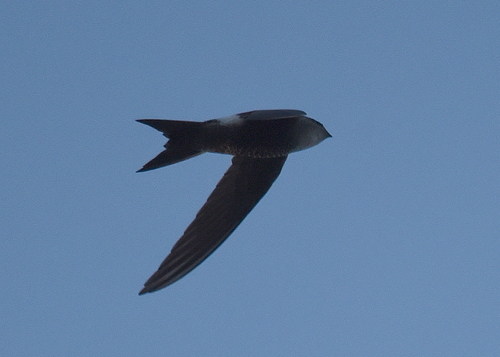 Pacific Swift
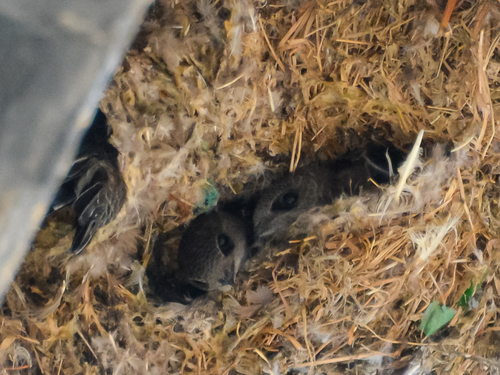 House Swift
In breve
Il modo più affidabile per separare il Pacific Swift dall'House Swift è attraverso le dimensioni e la struttura: il Pacific Swift è notevolmente più grande, con ali più lunghe e appuntite e una forcella della coda più profonda, mentre l'House Swift è più piccolo, compatto e ha una forcella della coda meno profonda. Entrambe le specie mostrano una banda bianca sul dorso e un piumaggio scuro, ma il dorso bianco del Pacific Swift è più ampio e le sue parti inferiori possono apparire squamose a causa delle frange chiare, specialmente nei giovani. In volo, il Pacific Swift appare con ali lunghe e potenti, mentre l'House Swift è più compatto e agile. Se vedi un swift con un ampio dorso bianco, una forcella della coda profonda e ali lunghe, è quasi certamente un Pacific Swift; un uccello più piccolo con una banda dorso stretta e una forcella della coda meno pronunciata è probabilmente un House Swift.
Consigli di identificazione
- Dimensione: Il Pacific Swift è molto più grande e pesante dell'House Swift. Se vedi due swifts insieme e uno è chiaramente più robusto, è probabile che sia il Pacific Swift. Questo è affidabile per tutte le età e i sessi.
- Forma dell'Ala: Il Pacific Swift ha ali più lunghe e appuntite, conferendogli un aspetto allungato e simile a una falce in volo. Le ali dell'House Swift sono più corte e più arrotondate, contribuendo a un aspetto compatto. Funziona meglio in volo.
- Forcella della Coda: La coda del Pacific Swift è profondamente biforcuta, specialmente quando è aperta; la forcella della coda dell'House Swift è notevolmente meno profonda. Questo è un segno chiave sia per gli uccelli posati che in volo.
- Banda Bianco sul Dorso: Il dorso bianco del Pacific Swift è più ampio (fino a 20 mm nella forma nominativa), mentre quello dell'House Swift è più stretto. Questo è visibile in buona luce e a distanza ravvicinata, ma fai attenzione all'usura o alla muta.
- Motivo delle Parti Inferiori: Il Pacific Swift può mostrare un aspetto squamoso sull'addome a causa delle frange chiare delle piume, specialmente nei giovani. Le parti inferiori dell'House Swift sono di un nero uniforme tranne che per la macchia bianca sulla gola. Questo segno è sottile e richiede buone visuali.
- Macchia sulla Gola: L'House Swift ha una distintiva macchia bianca sulla gola, che è meno prominente o assente nel Pacific Swift (eccetto in alcune sottospecie, dove può essere più grande ma comunque non così chiara come nell'House Swift).
- Forma della Testa: Il Pacific Swift ha una testa più sporgente, conferendogli una parte anteriore più pesante; la testa dell'House Swift è meno prominente, adattandosi al suo corpo compatto.
- Stile di Volo: Il Pacific Swift vola con battiti d'ala profondi e costanti e lunghe planate, spesso in alto sopra il suolo. L'House Swift è più agile, con battiti d'ala rapidi e irregolari e curve rapide, spesso più in basso e intorno agli edifici.
- Contesto dell'Habitat: L'House Swift è spesso visto intorno a strutture umane, mentre il Pacific Swift è più probabile che si trovi sopra campi aperti o in stormi migratori.
- Usura del Piumaggio: I giovani Pacific Swift possono mostrare frange chiare più evidenti sulle ali e sul corpo, ma questo è sottile e non sempre visibile a distanza.
- Sesso e Età: Entrambe le specie sono sessualmente monomorfiche e le differenze di età sono sottili. Concentrati sulla struttura e sulla banda dorso per tutte le età.
- Trappole: Fai attenzione agli swift leucistici o al piumaggio usurato, che possono far apparire le bande dorsali più ampie o più strette. Usa sempre più segni.
- Confronto Diretto: Se entrambe le specie sono presenti, il contrasto di dimensioni e struttura è sorprendente. Se è presente solo un uccello, fai affidamento sulla combinazione di dimensioni, forcella della coda e larghezza della banda dorso.
- Sovrapposizione Stagionale: Nel sud-est asiatico, entrambe le specie possono verificarsi insieme durante la migrazione. Buone visuali sono essenziali per un'identificazione sicura.
- Non Diagnostico: La voce non è un separatore affidabile con le informazioni attuali.
Taglia
Il Pacific Swift è il più grande degli Apus swifts, misurando 17–18 cm di lunghezza con un'apertura alare di 43–54 cm e un peso di 42–45 g. Al contrario, l'House Swift è molto più piccolo, lungo 14–16 cm, con un'apertura alare di 12.5–14.5 cm e un peso di 20–35 g. Questa differenza di dimensioni è spesso evidente in un confronto diretto o con esperienza, specialmente in volo.
Piumaggio
I giovani e gli adulti Pacific Swift mostrano entrambi una larga banda bianca sul dorso (15–20 mm di larghezza, a seconda della sottospecie), e le parti inferiori possono apparire squamose a causa delle frange chiare delle piume, specialmente nei giovani. La loro coda è profondamente biforcuta e le parti superiori sono nere con una testa leggermente più grigia. Anche l'House Swift mostra una banda bianca sul dorso, ma è più stretta e la forcella della coda è meno profonda. Il piumaggio dell'House Swift è complessivamente più nero, con una macchia bianca sulla gola e una coda scura, leggermente biforcuta. Entrambe le specie hanno ali superiori e inferiori nere, ma le dimensioni maggiori del Pacific Swift e la banda dorso più ampia sono chiave. I giovani Pacific Swift possono mostrare frange chiare più evidenti sulle ali, ma questo è sottile e meglio visto a distanza ravvicinata. Non sono state notate forti differenze nel motivo delle ali superiori specifiche per età per l'House Swift.
Comportamento
Il Pacific Swift è un potente migratore a lungo raggio, spesso visto in alto nel cielo con un volo forte e diretto e lunghe planate. Il suo volo è mirato, con battiti d'ala profondi e costanti e un aspetto leggermente pesante e con ali lunghe. L'House Swift è più probabile che venga visto volare rapidamente e in modo erratico intorno a edifici o scogliere, con battiti d'ala rapidi e agili e un aspetto compatto ed energico. L'House Swift spesso nidifica su strutture umane ed è più tollerante alla vicinanza delle persone.
Habitat
Il Pacific Swift nidifica in campi aperti in tutta l'Asia orientale e migra per lunghe distanze, svernando nel sud-est asiatico e in Australia. È più spesso visto in migrazione o sopra paesaggi aperti. L'House Swift è più urbano o suburbano, nidificando frequentemente su edifici e ponti in Giappone, Nepal e sud-est asiatico. Sebbene gli areali si sovrappongano in alcune aree, l'House Swift è più probabile che si trovi in aree costruite, mentre il Pacific Swift è più associato a cieli aperti e corridoi migratori.