

Orange-bellied Manakin vs White-fronted Manakin
Lepidothrix suavissima contro Lepidothrix serena
Fai un quiz con Orange-bellied Manakin e White-fronted Manakin
 Orange-bellied Manakin
 White-fronted Manakin
In breve
Il segno di campo più affidabile tra Orange-bellied Manakin e White-fronted Manakin è l'estensione e la forma del bianco sulla fronte del maschio: Orange-bellied ha una corona frontale bianca (che non si estende in avanti), mentre White-fronted mostra una macchia bianca audace che si proietta in avanti sopra il becco. Entrambe le specie mostrano un corpo nero, un sopraccoda blu e una pancia gialla nei maschi adulti, ma il colore della pancia è distintamente arancione in Orange-bellied e giallo zolfo brillante in White-fronted. Le femmine sono più difficili: le femmine di Orange-bellied sono verdi sopra con una fronte bluastra, mentre le femmine di White-fronted sono grigio-nerastre sopra con un anello oculare bianco e una pancia gialla. L'areale e l'habitat possono aiutare, ma la sovrapposizione in Guyana significa che i segni di campo sono essenziali. Gli uccelli immaturi e le femmine sono spesso confusi, quindi presta particolare attenzione al colore del viso e al tono della pancia.
Consigli di identificazione
- Forma della macchia bianca sulla fronte (maschi adulti): In posizioni perpendicolari o in viste ravvicinate, White-fronted Manakin ha una macchia bianca audace che si proietta in avanti sopra il becco, mentre Orange-bellied mostra una corona frontale bianca che non si estende in avanti. Questo è il segno di campo maschile più affidabile.
- Colore della pancia (maschi adulti): Orange-bellied ha una pancia giallo-arancione ricca, mentre le macchie della pancia di White-fronted sono di un giallo zolfo brillante e più limitate ai lati del petto, non un lavaggio completo della pancia.
- Colore del sopraccoda (maschi adulti): Entrambi hanno sopraccoda blu, ma quello di Orange-bellied è descritto come blu azzurro brillante e più esteso (sopraccoda inferiore e copritrici superiori), mentre quello di White-fronted è una stretta macchia blu chiaro sulla parte bassa della schiena-sopraccoda superiore.
- Parte superiore delle femmine: Le femmine di Orange-bellied sono verdi sopra con una fronte bluastra, mentre le femmine di White-fronted sono grigio-nerastre sopra senza toni verdi.
- Viso delle femmine: Le femmine di Orange-bellied hanno una fronte bluastra e un viso/collo grigio; le femmine di White-fronted hanno un anello oculare bianco e mancano dei toni blu.
- Colore della pancia delle femmine: Entrambi hanno pance gialle, ma quella di Orange-bellied è di un giallo più uniforme, mentre quella di White-fronted è descritta come giallo zolfo e può essere più macchiata.
- Anello oculare (femmine): Solo le femmine di White-fronted mostrano un distintivo anello oculare bianco; le femmine di Orange-bellied no.
- Colore del becco e delle gambe: Entrambe le specie hanno becchi neri e gambe scure, non utili per la separazione.
- Piumaggio giovanile/immaturo: Non ci sono differenze descritte nel piumaggio delle ali o nel pattern di volo per immaturi; la separazione si basa sul colore del viso e della pancia.
- Viste in posizioni perpendicolari rispetto al volo: La maggior parte dei segni di campo richiede viste in posizioni perpendicolari o ravvicinate; in volo, la separazione è molto difficile a meno che la fronte o la pancia non siano visibili.
- Areale e habitat: Nelle foreste di tepui o montane del sud Venezuela e del Brasile/Guyana adiacente, è più probabile trovare Orange-bellied. Nelle foreste umide di pianura delle Guiane e del Brasile nordorientale, ci si aspetta White-fronted. Nelle zone di sovrapposizione, fare affidamento sul piumaggio.
- Dimorfismo sessuale: Entrambe le specie sono fortemente dimorfiche; controllare sempre le caratteristiche femminili rispetto a quelle maschili prima di utilizzare i segni di colore.
- Rischio di confusione: Le femmine e gli immaturi sono il principale problema—cercare parti superiori verdi e fronte bluastra (Orange-bellied) rispetto a grigio-nerastro e anello oculare bianco (White-fronted).
- Non utilizzare dimensioni o struttura: Entrambi sono manakins piccoli e rotondi con proporzioni molto simili; la dimensione non è un separatore sicuro.
- Voce: Non ci sono differenze vocali distintive descritte nelle fonti; non fare affidamento sui richiami per la separazione.
Taglia
Entrambe le specie sono molto simili in dimensioni, con i maschi di Orange-bellied Manakin misurati a circa 9 cm di lunghezza e 8,5 g di peso [wikipedia]. Non ci sono differenze di dimensioni dirette nelle fonti, e entrambe sono tra i manakins più piccoli. La struttura, il becco e il colore delle gambe sono anche molto simili e non utili per la separazione.
Piumaggio
- Maschi adulti: Entrambi sono per lo più neri con un sopraccoda blu e una pancia giallastra, ma Orange-bellied Manakin ha una corona frontale bianca (che non si estende in avanti), un sopraccoda inferiore/uperiore blu azzurro brillante e una pancia giallo-arancione. White-fronted Manakin ha una macchia bianca sulla fronte che si estende in avanti oltre il becco, una macchia di sopraccoda blu chiaro stretta e macchie di petto giallo zolfo brillante (non un lavaggio completo della pancia). Il resto del corpo è di un nero profondo in entrambi.
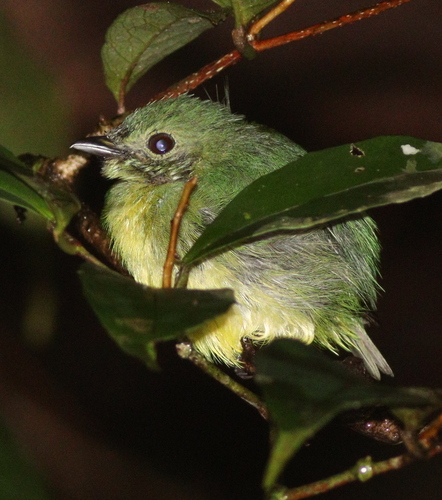
- Femmine adulte: Le femmine di Orange-bellied sono verdi sopra con una fronte bluastra, un viso/collo grigio e una pancia/parte inferiore gialla. Le femmine di White-fronted sono grigio-nerastre sopra, con un anello oculare bianco e una pancia giallo zolfo. Le parti superiori verdi e la fronte bluastra di Orange-bellied sono distintive rispetto al grigio-nerastro e all'anello oculare bianco di White-fronted.
- Uccelli immaturi/giovanili: Non ci sono differenze specifiche nel piumaggio delle ali o nel pattern di volo descritte per i giovanili o immaturi in entrambe le specie nelle fonti disponibili. Entrambi i sessi e le età hanno occhi scuri e gambe scure.
- In volo: Non ci sono differenze uniche nel piumaggio delle ali o nel pattern di volo descritte tra i due nelle fonti.
Comportamento
Entrambe le specie sono manakins tipici, spesso visti posati tranquillamente o facendo brevi voli diretti nei livelli inferiori a medi della foresta umida. Non ci sono differenze comportamentali notate nelle fonti che aiuterebbero a separarli sul campo.
Habitat
L'habitat può essere un indizio, ma non è sempre diagnostico. Orange-bellied Manakin si trova in Brasile, Guyana e Venezuela, principalmente nella regione dei tepui (montagne a tavola e foreste adiacenti). White-fronted Manakin è più diffuso nelle Guiane (Guyana Francese, Suriname, Guyana) e nel Brasile nordorientale, specialmente nelle foreste umide di pianura. Dove i loro areali si sovrappongono in Guyana, l'habitat da solo non è sufficiente per la separazione, ma Orange-bellied è più probabile nelle foreste di tepui o montane, mentre White-fronted preferisce le foreste di pianura.
Orange-bellied Manakin · White-fronted Manakin · I miei uccelli difficili