

Okarito Brown Kiwi vs Little Spotted Kiwi
Apteryx rowi contro Apteryx owenii
Fai un quiz con Okarito Brown Kiwi e Little Spotted Kiwi
 Okarito Brown Kiwi
 Little Spotted Kiwi
In breve
Il modo più affidabile per separare l'Okarito Brown Kiwi dal Little Spotted Kiwi è la dimensione e il piumaggio: l'Okarito Brown Kiwi è molto più grande e ha un piumaggio marrone uniforme, mentre il Little Spotted Kiwi è nettamente più piccolo con piume grigie chiare pesantemente macchiate di bianco. Sul campo, il Little Spotted Kiwi appare più compatto e più chiaro nel complesso, con un becco e delle gambe visibilmente più chiari. Entrambe le specie sono incapaci di volare e notturne, ma le loro preferenze di habitat e distribuzione sono abbastanza diverse: l'Okarito Brown Kiwi è ristretto alla foresta di Ōkārito nell'Isola del Sud, mentre il Little Spotted Kiwi si trova ora principalmente su isole offshore senza predatori e in alcune riserve sulla terraferma. Le differenze strutturali e di piumaggio sono solitamente chiare a distanza ravvicinata o in buona luce, ma possono verificarsi confusioni in condizioni di scarsa visibilità o con individui immaturi.
Consigli di identificazione
- La dimensione è l'indizio più immediato: l'Okarito Brown Kiwi è molto più grande e massiccio del Little Spotted Kiwi. Se l'uccello appare delle dimensioni di un gallo in miniatura o più piccolo, sospetta il Little Spotted Kiwi.
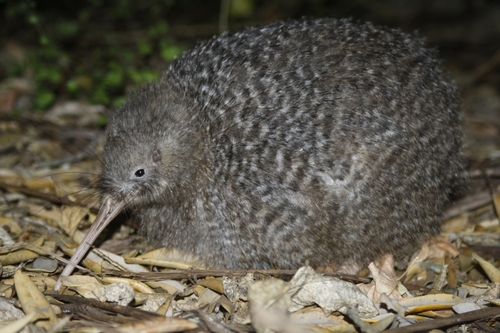
- Colore e motivo del piumaggio: l'Okarito Brown Kiwi ha un piumaggio marrone uniforme con una consistenza shaggy, privo di macchie o maculature chiare evidenti. Il Little Spotted Kiwi è grigio chiaro con macchie o maculature bianche fini, dando un aspetto molto più chiaro e patternizzato.
- Colore del becco: il Little Spotted Kiwi ha un becco lungo di colore avorio, mentre il becco dell'Okarito Brown Kiwi è meno distintamente chiaro (anche se questo è sottile e può essere difficile da giudicare in scarsa luce).
- Colore delle gambe: il Little Spotted Kiwi ha gambe chiare; le gambe dell'Okarito Brown Kiwi sono meno distintamente chiare.
- Contesto dell'habitat: se visto nella foresta di Ōkārito o nel vicino Parco Nazionale Westland Tai Poutini, è un Okarito Brown Kiwi. Su isole offshore come Kapiti o in riserve recintate, aspettati il Little Spotted Kiwi.
- Distribuzione: l'Okarito Brown Kiwi è ristretto a una piccola parte dell'Isola del Sud; il Little Spotted Kiwi è assente dalla terraferma tranne che in riserve gestite.
- Impressione comportamentale: l'Okarito Brown Kiwi si muove con un passo più pesante e goffo; il Little Spotted Kiwi è più compatto e può apparire più veloce.
- Nessun indizio di volo o motivo delle ali: entrambe le specie sono incapaci di volare e mancano di marcature distintive sulle ali a qualsiasi età.
- Nessuna coda: entrambe le specie mancano di una vera coda, ma questo non è un separatore tra di loro.
- Albinismo: individui albini rari si verificano nel Little Spotted Kiwi ma non nell'Okarito Brown Kiwi; un kiwi bianco su un'isola offshore è quasi certamente un Little Spotted Kiwi.
- Nessun dimorfismo sessuale: entrambe le specie mostrano poche o nessuna differenza tra i sessi sul campo.
- Giovanile vs adulto: non ci sono differenze di piumaggio specifiche per età note che aiutino a separare; i giovani di entrambe le specie somigliano agli adulti sul campo.
- Voce: non diagnostica con le informazioni disponibili; entrambi hanno richiami simili a quelli dei kiwi.
- Trappola – scarsa luce: in condizioni di scarsa illuminazione, la maculatura chiara del Little Spotted Kiwi può essere difficile da vedere, facendolo apparire più scuro e più simile all'Okarito Brown Kiwi. Usa dimensione e contesto come indizi di riserva.
- Trappola – popolazioni in cattività/gestite: nei santuari o negli zoo, controlla la segnaletica o chiedi al personale, poiché entrambe le specie possono essere presenti al di fuori dei loro intervalli naturali.
Taglia
L'Okarito Brown Kiwi è significativamente più grande del Little Spotted Kiwi. L'Okarito Brown Kiwi adulto pesa tipicamente più di 1,6 kg, mentre il Little Spotted Kiwi varia da 0,9 a 1,9 kg, con la maggior parte degli individui nella parte inferiore di quel range. In lunghezza, l'Okarito Brown Kiwi è anche più lungo e massiccio, mentre il Little Spotted Kiwi è delle dimensioni di un gallo in miniatura (35–45 cm di lunghezza). Questa differenza di dimensione è spesso evidente anche senza un confronto diretto, specialmente quando visto a terra o accanto a oggetti noti.
Piumaggio
Non ci sono motivi di volo o ali distintivi specifici per età per entrambe le specie, poiché entrambe sono incapaci di volare e hanno ali ridotte e non funzionali. Per tutte le età, il piumaggio è un separatore chiave: l'Okarito Brown Kiwi ha piume marroni uniformi, prive di forti maculature chiare, e appare più shaggy e scuro nel complesso. Il Little Spotted Kiwi, al contrario, è grigio chiaro con maculature bianche fini, dando un aspetto molto più chiaro e patternizzato. Entrambi mancano di aftershafts e barbules, ma l'impressione generale è che il Little Spotted Kiwi sia più chiaro e più maculato, mentre l'Okarito Brown Kiwi è marrone semplice. L'albinismo può verificarsi nel Little Spotted Kiwi, ma è raro.
Comportamento
Entrambe le specie sono notturne, terrestri e riservate, foraggiando a terra di notte. Il loro comportamento generale è simile: movimenti lenti e deliberati, sondando con il becco per invertebrati. L'Okarito Brown Kiwi può apparire più robusto e goffo a causa della sua dimensione maggiore. Il Little Spotted Kiwi, essendo più piccolo, può sembrare più veloce e più compatto nei suoi movimenti. Entrambe le specie sono raramente viste all'aperto durante il giorno.
Habitat
L'Okarito Brown Kiwi si trova solo nella foresta di Ōkārito sulla costa occidentale dell'Isola del Sud della Nuova Zelanda, con un'area molto ristretta e una piccola popolazione. Il Little Spotted Kiwi, un tempo diffuso, è ora confinato a diverse piccole isole offshore (come l'isola di Kapiti) e a poche riserve sulla terraferma con recinzioni di esclusione dei parassiti. Se incontri un kiwi sulla terraferma dell'Isola del Sud al di fuori di una riserva recintata, è quasi certamente un Okarito Brown Kiwi; su isole offshore o in santuari recintati, è più probabile che sia un Little Spotted Kiwi.
Okarito Brown Kiwi · Little Spotted Kiwi · I miei uccelli difficili