

Narina Trogon vs Pin-tailed Whydah
Apaloderma narina contro Vidua macroura
Fai un quiz con Narina Trogon e Pin-tailed Whydah
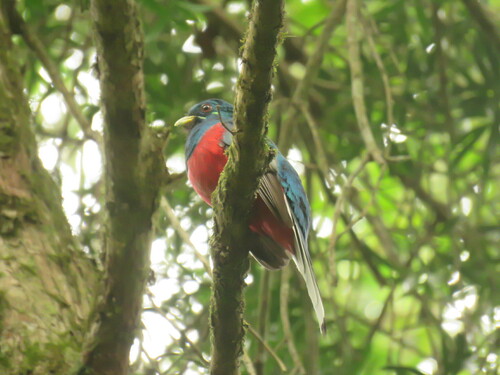 Narina Trogon
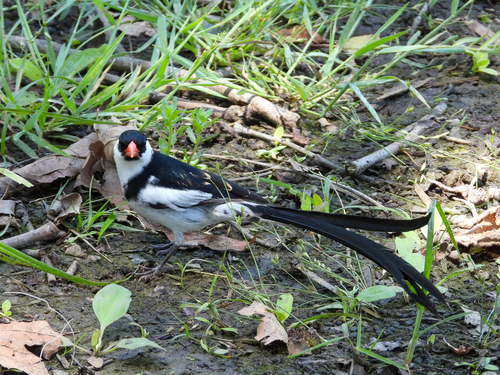 Pin-tailed Whydah
In breve
Il segno distintivo più affidabile è la coda estremamente lunga e nera a forma di bandiera del maschio Pin-tailed Whydah, che non ha pari con il Narina Trogon. Per gli uccelli immaturi, si noti che il giovane Narina Trogon mostra punte bianche distinte sulle terziali (ala interna), una caratteristica assente in qualsiasi whydah. Il Narina Trogon è un uccello forestale di dimensioni medie, verde e rosso, con un becco pesante e una coda sottostante frangiata di bianco, mentre il Pin-tailed Whydah è un uccello canoro molto più piccolo, granivoro, con un becco rosso e, nei maschi in riproduzione, una coda straordinariamente lunga. Le femmine e gli immaturi di entrambi possono essere confusi a distanza, ma la struttura, il colore del becco e l'habitat sono indizi forti.
Consigli di identificazione
- Forma e lunghezza della coda: Il maschio in riproduzione del Pin-tailed Whydah ha estremamente lunghe streamer di coda nere a forma di nastro (fino a 20 cm), mai eguagliate dal Narina Trogon. Le femmine e i whydah non in riproduzione mancano di questo, ma hanno comunque una coda corta e quadrata.
- Schema delle ali dei giovani/immaturi: Il giovane Narina Trogon mostra punte bianche distinte sulle terziali (piume dell'ala interna), un segno unico assente in qualsiasi whydah. Usa questo in volo o in vista di giovani uccelli appollaiati.
- Forma e colore del becco: Il Narina Trogon ha un becco pesante e largo; il colore varia ma spesso è scuro con aperture/fiancate verdi nei maschi. Il Pin-tailed Whydah ha un becco corto, conico e di un rosso brillante (tutte le età/sessi tranne i giovani, che hanno un becco grigiastro).
- Struttura del corpo: Il Trogon è robusto, con una grande testa, un collo spesso e una coda larga. Il Whydah è snello, simile a un fringuello, con una piccola testa e un corpo delicato.
- Piumaggio—maschi adulti: I maschi di Narina Trogon sono verdi sopra, rossi brillanti sotto, con una lucentezza metallica sulla coda e una coda sottostante frangiata di bianco. I maschi di Pin-tailed Whydah sono neri sopra, bianchi sotto, con un becco rosso e lunga coda nera.
- Piumaggio—femmine/maschi non in riproduzione: Le femmine di Narina Trogon sono verdeggianti sopra, con viso marrone, pelle blu attorno agli occhi e rosso opaco sotto. Le femmine di Whydah sono striate di marrone sopra, bianche sotto, con un motivo facciale color sabbia e nero e un becco rosso.
- Schema della coda sottostante: Il Narina Trogon (tutte le età/sessi) mostra piume esterne della coda con punte/frange bianche quando è appollaiato, creando un effetto di coda sottostante bianca. La coda sottostante del whydah non è mai frangiata di bianco.
- Contesto dell'habitat: Trogon in foresta/bosco; whydah in campagna aperta, prateria, giardini. L'habitat da solo è spesso decisivo.
- Comportamento: Trogon è fermo e verticale, spesso a metà storia; whydah è attivo, si appollaia in alto e (in stagione di riproduzione) esegue esibizioni di volo in sospensione.
- Vocalizzazione: Trogon emette un hoot basso e stridente; whydah canta rapidi squeaks e churrs da posatoi esposti.
- Alimentazione: Trogon caccia insetti e piccoli vertebrati, raramente a terra. Whydah è un granivoro che si nutre a terra, spesso visto con i fringuelli.
- Dimensione del gruppo: I Trogon sono solitari o in coppie; i whydah possono essere in piccoli gruppi, specialmente vicino ai fringuelli ospiti.
- Pelle facciale: Il maschio di Narina Trogon ha pelle verde nuda all'apertura e alle fiancate oculari; la femmina ha pelle blu attorno agli occhi. Il Whydah manca di pelle facciale nuda.
- Segni stagionali: La lunga coda del Whydah è presente solo nei maschi in riproduzione; nella stagione non riproduttiva, i maschi assomigliano alle femmine e mancano di streamer di coda.
- Trappole: Le femmine/immaturi di whydah e trogon possono apparire entrambi opachi e verdastri/marroni, ma il colore del becco (rosso nel whydah, scuro nel trogon) e l'habitat sono separatori affidabili.
Taglia
Il Narina Trogon è molto più grande e pesante (massa corporea ~61g) rispetto al Pin-tailed Whydah (~15.8g) [wikidata]. Il trogon è lungo 32–34 cm, con una costruzione robusta e massiccia e una coda larga. Il whydah è lungo solo 12–13 cm (escludendo la coda), con i maschi in riproduzione che raggiungono fino a 33 cm includendo gli streamer della coda, ma il corpo rimane piccolo e simile a un fringuello. Anche quando la coda del whydah eguaglia la lunghezza del trogon, il corpo del whydah è molto più piccolo e delicato.
Piumaggio
- Uccelli immaturi/giovani: Il giovane Narina Trogon ha punte bianche distinte sulle terziali (piume dell'ala interna), un segno unico non mostrato da nessuna età o sesso di Pin-tailed Whydah. I whydah immaturi sono semplici, con parti superiori striate di marrone e un becco grigiastro, privi di qualsiasi punta terziale bianca.
- Maschi adulti: I maschi di Narina Trogon sono verdi vividi sopra con una lucentezza blu-verde metallica sulla coda, parti inferiori rosse brillanti e un'apertura/fiancata verde, con una coda sottostante frangiata di bianco. I maschi in riproduzione di Pin-tailed Whydah sono neri sopra (schiena e corona), bianchi sotto e sul viso (eccetto la corona), con un becco rosso brillante e streamer di coda nera estremamente lunghi. Le loro ali sono marroni scure con macchie bianche.
- Femmine/maschi non in riproduzione: Le femmine di Narina Trogon sono più opache, con viso e petto marroni, pelle blu attorno agli occhi e rosso più opaco sotto. Le femmine di Pin-tailed Whydah e i maschi non in riproduzione sono striati di marrone sopra, bianchi sotto con fianchi color sabbia, un motivo facciale color sabbia e nero, e un becco rosso. Entrambi mancano della lunga coda.
- Coda sottostante: Il Narina Trogon (tutte le età/sessi) mostra piume esterne della coda con punte/frange bianche quando è appollaiato, creando un effetto di coda sottostante bianca. La coda sottostante del whydah non è mai frangiata di bianco.
Comportamento
Il Narina Trogon è tipicamente silenzioso e fermo, spesso appollaiato in posizione verticale nella parte centrale della foresta, a volte gonfiando le piume del petto in mostra. Si nutre di insetti e piccoli vertebrati, raramente visto a terra aperta. Il Pin-tailed Whydah è attivo, spesso visto in habitat aperti, appollaiato in modo evidente, e in stagione di riproduzione, i maschi eseguono elaborate esibizioni di volo in sospensione per mostrare le loro code. I whydah sono granivori, spesso si nutrono a terra o in vegetazione bassa. Il comportamento sociale differisce: i whydah possono essere visti in piccoli gruppi, specialmente vicino ai fringuelli ospiti, mentre i trogon sono solitamente solitari o in coppie.
Habitat
Il Narina Trogon è uno specialista della foresta e del bosco, trovato in foreste dense, spesso umide, dalle pianure alle alture in tutta l'Africa subsahariana. Evita la campagna aperta. Il Pin-tailed Whydah preferisce habitat aperti—praterie, savane, cespugli, parchi e giardini—ed è raramente trovato in foreste profonde. Se vedi l'uccello in una foresta fitta, è molto più probabile che sia un trogon; in campi aperti o aree suburbane, un whydah è molto più probabile.
Voce
I maschi di Narina Trogon emettono un hoot basso, stridente e ripetuto, principalmente per attrarre territorio o compagno. Il Pin-tailed Whydah canta da posatoi alti, producendo note rapide di squeaking e churring. Il canto del whydah è molto più acuto e complesso rispetto al semplice hoot del trogon.
Narina Trogon · Pin-tailed Whydah · I miei uccelli difficili