

Mottled Spinetail vs Rondone comune
Telacanthura ussheri contro Apus apus
Fai un quiz con Mottled Spinetail e Rondone comune
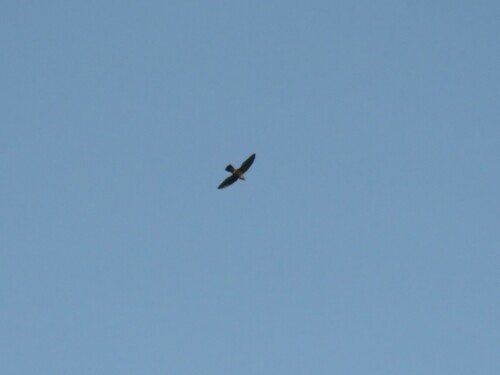 Mottled Spinetail
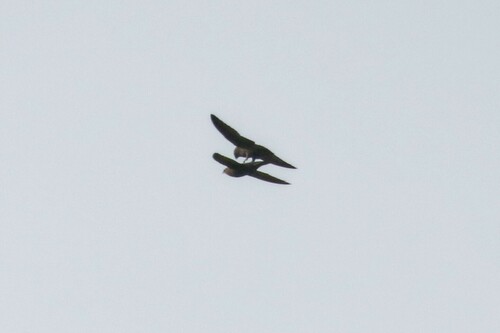 Rondone comune
In breve
Il segno di campo più affidabile tra Mottled Spinetail e Rondone comune è la presenza di un motivo chiaro e maculato sulle parti inferiori e sul coda del Mottled Spinetail, assente nel Rondone comune uniformemente scuro. In volo, il Rondone comune mostra un corpo costantemente scuro, quasi marrone-nerastro, con solo una piccola macchia chiara sulla gola, spesso nascosta, mentre il Mottled Spinetail presenta un aspetto più contrastante e maculato. Strutturalmente, il Mottled Spinetail ha una coda più corta e squadrata e un corpo più robusto rispetto alla lunga coda a falce e profondamente biforcuta del Rondone comune. Queste differenze sono visibili in tutte le età, ma sono particolarmente utili quando si osservano gli uccelli in volo con i binocoli.
Consigli di identificazione
- Underpart pattern: Mottled Spinetail mostra un motivo chiaro, maculato o macchiato sulle parti inferiori e sul coda, visibile in volo e a riposo. Rondone comune è uniformemente scuro tranne che per una piccola macchia chiara sulla gola, che è spesso difficile da vedere a meno che non si sia molto vicini.
- Rump contrast: Cerca un coda chiara contrastante sul Mottled Spinetail, assente nel Rondone comune.
- Tail shape: Il Rondone comune ha una coda lunga e profondamente biforcuta, spesso tenuta chiusa per apparire appuntita. La coda del Mottled Spinetail è più corta e squadrata, a volte con punte spinose (non sempre visibili a distanza).
- Wing shape: Le ali del Rondone comune sono lunghe, strette e fortemente curve, dando una forma a mezzaluna o a boomerang in volo. Le ali del Mottled Spinetail sono più corte e meno curve, contribuendo a un aspetto più robusto e meno aerodinamico.
- Overall jizz: Il Rondone comune appare elegante, aerodinamico e veloce, con un volo rapido e diretto. Il Mottled Spinetail è più compatto, con uno stile di volo leggermente più pesante e fluttuante.
- Size impression: Il Rondone comune è più grande e ha ali più lunghe; il Mottled Spinetail è più piccolo e robusto. Questo è più evidente quando entrambe le specie sono viste insieme, ma può essere giudicato con l'esperienza.
- Throat patch: La gola chiara del Rondone comune è piccola e di solito non è visibile a meno che l'uccello non sia vicino e ben illuminato. Non fare affidamento solo su questo segno.
- Vocalization: I stormi urlanti sono un marchio distintivo del Rondone comune. Il Mottled Spinetail è molto più silenzioso; se senti urla forti e penetranti, è probabile che sia un Rondone comune.
- Group size: Grandi stormi rumorosi suggeriscono il Rondone comune, specialmente in migrazione. Il Mottled Spinetail è più spesso visto singolarmente o in piccoli gruppi.
- Habitat context: In campagna aperta, città o sopra l'acqua in Africa, specialmente in gran numero, è più probabile vedere il Rondone comune. In aree boschive o forestali, specialmente nell'interno africano, è più probabile vedere il Mottled Spinetail.
- Geographical context: Se ti trovi in Europa o Asia, è presente solo il Rondone comune. Nell'Africa subsahariana, entrambe possono verificarsi, ma il Mottled Spinetail è residente e il Rondone comune è un migrante (principalmente da settembre ad aprile).
- Perched views: Raro per entrambe, ma se visto, nota la coda: quella del Rondone comune è più lunga e più profondamente biforcuta, mentre quella del Mottled Spinetail è più corta e squadrata.
- Flight style: Il Rondone comune è veloce e diretto, spesso planando su ali rigide. Il Mottled Spinetail ha un volo più fluttuante e meno diretto.
- Pitfalls: Non confondere la gola chiara del Rondone comune con la maculatura chiara più estesa del Mottled Spinetail. L'illuminazione e la distanza possono offuscare questi segni, quindi usa la struttura e lo stile di volo come supporto.
- No strong age/sex differences: Entrambe le specie mostrano un piumaggio simile in tutte le età e sessi per scopi di campo, quindi questi segni sono affidabili tutto l'anno.
Taglia
Il Rondone comune è leggermente più grande, misurando 16–17 cm di lunghezza con un'apertura alare di 38–40 cm [wikipedia]. Il Mottled Spinetail è generalmente più piccolo e più compatto, anche se le misure esatte non sono fornite nelle fonti. Sul campo, il Rondone comune appare con ali più lunghe e più aerodinamico, mentre il Mottled Spinetail appare più robusto e con una coda più corta.
Piumaggio
Le differenze nel motivo delle ali o delle ali superiori specifiche per età non sono descritte nelle fonti per nessuna delle due specie, quindi ci si concentra sul piumaggio complessivo. Il Mottled Spinetail di tutte le età mostra un motivo distintivo maculato o chiaro sulle parti inferiori e sul coda, distinguendosi dal Rondone comune, che è uniformemente marrone scuro fino a nerastro tranne per una piccola macchia chiara sulla gola che è spesso difficile da vedere a distanza [wikipedia]. Il piumaggio del Rondone comune è coerente in tutte le età e stagioni, privo di qualsiasi maculatura o coda chiara. Entrambe le specie hanno ali superiori scure, ma il corpo e il coda contrastanti del Mottled Spinetail sono visibili in volo, mentre il Rondone comune mantiene un aspetto scuro uniforme.
Comportamento
Entrambe le specie sono altamente aeree, trascorrendo la maggior parte del loro tempo in volo. Tuttavia, il Rondone comune è rinomato per il suo volo quasi continuo, raramente posandosi tranne che nel nido, e forma spesso grandi stormi rumorosi, specialmente durante la migrazione [wikipedia]. Il Mottled Spinetail può essere visto in gruppi più piccoli e, pur essendo anch'esso altamente aereo, è meno probabile incontrarlo nei grandi gruppi urlanti tipici del Rondone comune. In volo, le lunghe ali a forma di falce del Rondone comune e il volo veloce e diretto contrastano con il volo più compatto e leggermente fluttuante del Mottled Spinetail.
Habitat
Il Mottled Spinetail si trova in una vasta area dell'Africa subsahariana, spesso in aree boschive o forestali, ed è più probabile incontrarlo nell'interno africano [wikipedia]. Il Rondone comune nidifica in tutta Europa e Asia e sverna in Africa, spesso visto sopra aree urbane, campagna aperta e vicino all'acqua durante la migrazione [wikipedia]. In Africa, è possibile un sovrapposizione durante il soggiorno invernale del Rondone comune, ma la preferenza per l'habitat può aiutare: il Rondone comune è più probabile sopra paesaggi aperti e città, mentre il Mottled Spinetail favorisce le regioni boschive.
Voce
Il Rondone comune è molto vocale, producendo urla forti e penetranti, spesso in stormi, con entrambi i sessi che chiamano ma le femmine a un tono più alto [wikipedia]. Il Mottled Spinetail è molto più silenzioso e meno appariscente vocalmente, quindi un gruppo di rondoni urlanti è molto più probabile che sia Rondone comune.
Mottled Spinetail · Rondone comune · I miei uccelli difficili