

Matsudaira's Storm-Petrel vs Kermadec Petrel
Hydrobates matsudairae contro Pterodroma neglecta
Fai un quiz con Matsudaira's Storm-Petrel e Kermadec Petrel
 Matsudaira's Storm-Petrel
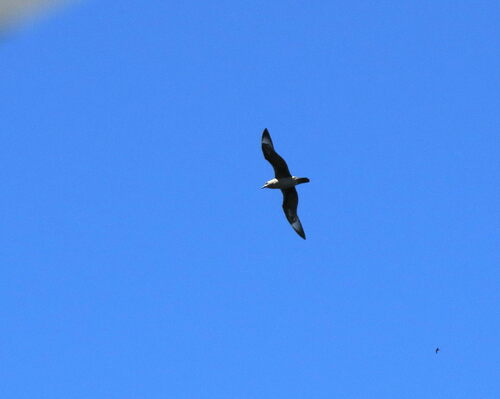 Kermadec Petrel
In breve
Il segno di campo più affidabile per separare il Matsudaira's Storm-Petrel dal Kermadec Petrel è la struttura generale e la forma della coda: il Matsudaira's Storm-Petrel è un uccello molto più piccolo e più delicato con una lunga coda profondamente biforcuta e un becco sottile e ricurvo, mentre il Kermadec Petrel è un grande petrello robusto con un'ampia apertura alare e una biforcazione della coda meno drammatica. In volo, il Matsudaira's Storm-Petrel mostra piume alula nerastre che contrastano con le basi bianche delle primarie, un modello non visibile nel Kermadec Petrel. Il Kermadec Petrel è altamente variabile nel piumaggio (morfologie chiare, scure e intermedie), ma tutte le morfologie sono molto più grandi e massicce rispetto a quelle del Matsudaira's. Se vedi un piccolo uccello marino veloce con la coda biforcuta e un becco affilato e un modello di ali contrastante, è il Matsudaira's; un grande petrello polimorfo e pesante è il Kermadec.
Consigli di identificazione
- La dimensione è il primo controllo: Il Kermadec Petrel è enorme rispetto al Matsudaira's Storm-Petrel. Se l'uccello sembra delle dimensioni di un gabbiano o di un albatros, è il Kermadec; se è molto più piccolo, è il Matsudaira's.
- Forma della coda: Il Matsudaira's Storm-Petrel ha una lunga coda profondamente biforcuta visibile in volo e spesso anche a riposo. La coda del Kermadec Petrel è più corta e meno biforcuta.
- Modello delle ali: Cerca l'alula nerastra che contrasta con le basi bianche delle primarie scure sul Matsudaira's Storm-Petrel. Questo contrasto è unico e visibile in buone viste di volo. L'ala del Kermadec Petrel è più uniforme, indipendentemente dalla morfologia.
- Forma del becco: Il Matsudaira's ha un becco lungo e sottile con un gancio pronunciato all'estremità; il becco del Kermadec Petrel è più corto e robusto (anche se questo è sottile a distanza).
- Polimorfismo del piumaggio: Il Kermadec Petrel si presenta in morfologie chiare, scure e intermedie. Il Matsudaira's Storm-Petrel è sempre scuro nel complesso, senza morfologie chiare.
- Stile di volo: Il Matsudaira's è fluttuante, erratico e galleggiante, spesso pattinando sull'acqua. Il Kermadec Petrel è potente, con battiti d'ala profondi e lunghi scivolamenti.
- Comportamento a riposo: Il Matsudaira's Storm-Petrel è raramente visto seduto sull'acqua; il Kermadec Petrel può riposare sulla superficie.
- Contesto geografico: Il Matsudaira's è previsto solo nel Pacifico nord-occidentale e nell'Oceano Indiano; il Kermadec Petrel nidifica nel Pacifico meridionale. Le segnalazioni fuori dalla gamma sono eccezionali.
- Habitat: Entrambi sono pelagici, ma se visti vicino a isole di nidificazione, controlla quale specie è prevista localmente.
- Jizz: Il Matsudaira's appare snello, con una lunga coda e simile a un swift; il Kermadec è massiccio, con ali larghe e potente.
- Nessuna confusione specifica per età: Non ci sono modelli di ali superiori giovanili/immaturi descritti per il Kermadec Petrel che imitano il contrasto alula/primaria del storm-petrel. Tutte le età del Matsudaira's mostrano questo segno.
- Nessun indizio vocale: Le vocalizzazioni non sono descritte come diagnostiche nelle fonti disponibili.
- Nessuna sovrapposizione di massa: Se hai un'idea del peso (ad esempio, da un uccello in mano), il Kermadec Petrel pesa oltre 500 g; il Matsudaira's è molto più leggero.
- Confusione polimorfica: Il Kermadec Petrel di morfologia scura potrebbe sembrare superficialmente simile al Matsudaira's a distanza, ma sarà sempre molto più grande e privo della coda e del modello di ali del storm-petrel.
- Dettagli del becco a distanza ravvicinata: Se puoi vedere la punta del becco, il gancio pronunciato del Matsudaira's è un segno distintivo.
Taglia
Il Kermadec Petrel è drammaticamente più grande, con una massa corporea adulta di circa 501 g e un'apertura alare di 100 cm [wikidata]. Il Matsudaira's Storm-Petrel è molto più piccolo e leggero (nessuna massa fornita, ma tutti gli storm-petrels sono ridotti rispetto ai petrelli gadfly), con una costruzione più delicata e una coda proporzionalmente più lunga. Non c'è sovrapposizione di dimensioni: se vedi un uccello delle dimensioni di un grande gabbiano o di un piccolo albatros, è il Kermadec Petrel; se è più vicino a un swift o a una rondine in dimensioni, è il Matsudaira's Storm-Petrel.
Piumaggio
Per tutte le età, il Matsudaira's Storm-Petrel mostra piume alula nerastre compensate da basi bianche delle primarie altrimenti scure, creando un contrasto sottile ma diagnostico sulla parte superiore dell'ala in volo [wikipedia]. La coda è lunga e profondamente biforcuta, e l'uccello è nel complesso scuro. Il Kermadec Petrel è polimorfo: adulti e immaturi possono essere scuri, chiari o intermedi, ma nessuno mostra il contrasto alula/primaria affilato del storm-petrel o la coda profondamente biforcuta. Invece, il modello dell'ala del Kermadec Petrel è più uniforme, e la coda è più corta e meno biforcuta. Il becco del storm-petrel è anche più lungo e più ricurvo all'estremità, visibile a distanza ravvicinata. Non ci sono modelli di ali superiori giovanili/immaturi specifici per età descritti per nessuna delle due specie, ma il contrasto unico alula/primaria del storm-petrel è presente in tutti i piumaggi.
Comportamento
Il Matsudaira's Storm-Petrel si comporta come altri storm-petrels: è agile, galleggiante e spesso fluttua o pattina sull'acqua, a volte apparendo simile a un pipistrello. Il Kermadec Petrel è un volatore forte e diretto, con battiti d'ala profondi e lunghi scivolamenti, tipici dei grandi petrelli gadfly. Il Matsudaira's è raramente visto seduto sull'acqua, mentre il Kermadec Petrel può riposare sulla superficie. In stormi misti, il storm-petrel apparirà molto più piccolo e più erratico in volo.
Habitat
Il Matsudaira's Storm-Petrel nidifica solo nelle Isole Volcano (Pacifico nord-occidentale) e sverna nell'Oceano Indiano, tipicamente lontano dalla costa [wikipedia]. Il Kermadec Petrel nidifica su isole da Lord Howe alle Isole Juan Fernández, specialmente le Isole Kermadec, ed è un raro vagabondo altrove [wikipedia]. Entrambi sono pelagici, ma il Kermadec Petrel non è previsto nel Pacifico nord-occidentale o nell'Oceano Indiano, e il Matsudaira's non è previsto nel Pacifico meridionale. Se il contesto è noto, la posizione può essere un forte indizio.
Matsudaira's Storm-Petrel · Kermadec Petrel · I miei uccelli difficili