

Marsh Seedeater vs Chestnut-bellied Seed-Finch
Sporophila palustris contro Sporophila angolensis
Fai un quiz con Marsh Seedeater e Chestnut-bellied Seed-Finch
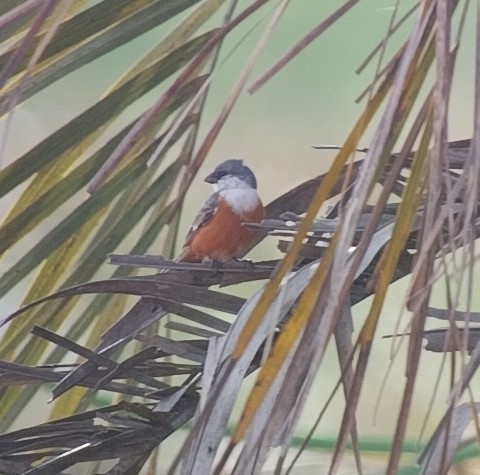 Marsh Seedeater
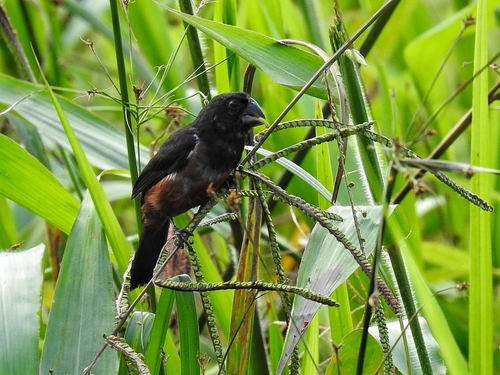 Chestnut-bellied Seed-Finch
In breve
Il segno di campo più affidabile per separare il Marsh Seedeater dal Chestnut-bellied Seed-Finch è il motivo della testa e delle parti inferiori del maschio: i maschi di Marsh Seedeater hanno un volto e una gola bianchi con una corona e una nuca grigie, mentre i maschi di Chestnut-bellied Seed-Finch sono completamente neri sopra con un profondo ventre castano. Entrambe le specie mostrano una macchia bianca alla base delle primarie sulla ala chiusa nei maschi adulti, ma il motivo e l'estensione differiscono. Le femmine e i giovani sono più complicati: le femmine di Marsh Seedeater sono più chiare e più ocra sotto, mentre le femmine di Chestnut-bellied Seed-Finch sono di un marrone più ricco sopra e cannella sotto. Anche la dimensione e la forma del becco aiutano: il Seed-Finch ha un becco molto più profondo e pesante. Il Marsh Seedeater è molto più raro e localizzato, mentre il Seed-Finch è diffuso.
Consigli di identificazione
- Motivo della testa del maschio adulto: i maschi di Marsh Seedeater hanno un volto e una gola bianchi con una corona e una nuca grigie in contrasto; i maschi di Chestnut-bellied Seed-Finch sono completamente neri sulla testa e sulle parti superiori. Questo è il controllo di campo più veloce per i maschi adulti.
- Parti inferiori del maschio adulto: i maschi di Marsh Seedeater hanno un petto bianco e un ventre da marrone scuro a cannella; i maschi di Chestnut-bellied Seed-Finch hanno un ventre castano profondo, fianchi e copritrici della coda, nettamente separati dalle parti superiori nere.
- Tonalità di colore femminile/giovanile: le femmine e i giovani di Marsh Seedeater sono più chiari, con parti inferiori ocra e un aspetto più delicato; le femmine di Seed-Finch sono di un marrone più ricco sopra e cannella sotto, apparendo più robuste.
- Dimensione e forma del becco: il Chestnut-bellied Seed-Finch ha un becco molto più profondo e pesante con una base molto ampia, evidente anche da lontano. Il becco del Marsh Seedeater è più piccolo e più snello, con un culmine arrotondato. Questo funziona per tutte le età e i sessi.
- Macchia dell'ala (maschi adulti): entrambe le specie mostrano una macchia bianca alla base delle primarie sulla ala chiusa, ma è più grande e più evidente nel Marsh Seedeater. Nel Seed-Finch, la macchia è più piccola e meno evidente. Le femmine di Seed-Finch non hanno affatto questa macchia.
- Colore della coda: i maschi di Marsh Seedeater hanno una coda nerastra; le femmine hanno una coda grigio-marrone più scura. I maschi di Seed-Finch hanno una coda nera; le femmine hanno una coda marrone caldo. Il colore della coda è sottile ma può aiutare con buone viste.
- Colore del becco (femmine): le femmine di Marsh Seedeater hanno un mandibola superiore marrone e un mandibola inferiore giallastro chiaro; le femmine di Seed-Finch hanno un becco nerastro. Questo è un controllo sottile ma utile a distanza ravvicinata.
- Dimensione e struttura: il Seed-Finch è più robusto e pesante, con un aspetto più potente e una testa e un becco più grandi. Il Marsh Seedeater è più delicato e leggero.
- Habitat e distribuzione: se sei al di fuori della piccola distribuzione del Marsh Seedeater (principalmente nel sud del Brasile, Uruguay, Paraguay, nord dell'Argentina), è quasi certamente Seed-Finch. Il Marsh Seedeater è raro e altamente localizzato nelle praterie paludose.
- Contesto di gruppo: il Marsh Seedeater si trova solitamente in coppie o piccoli gruppi nelle paludi; il Seed-Finch è più diffuso e può essere trovato in una varietà più ampia di habitat aperti.
- Confusione giovanile: i giovani Marsh Seedeater assomigliano alle femmine: marrone chiaro sopra, ocra sotto, becco piccolo. I giovani Seed-Finch sono di un marrone più ricco e più robusti, con un becco più pesante.
- Copritrici sottoala: il Seed-Finch di entrambi i sessi ha copritrici sottoala bianche, ma questo è raramente visibile sul campo. Il Marsh Seedeater non ha questo segno.
- Colore delle gambe: entrambi hanno gambe nere o scure, non un separatore utile.
- Colore dell'iride: entrambi hanno iridi nere; non diagnostico.
- Vocalizzazioni: Non descritte nelle fonti; non fare affidamento sul canto per la separazione in questa coppia.
Taglia
Il Chestnut-bellied Seed-Finch è notevolmente più grande e pesante: 10.6–12.4 cm di lunghezza e 11.4–14.5 g, rispetto ai 10.5–11.5 cm e 7.5–9 g del Marsh Seedeater. Il Seed-Finch ha anche un becco molto più profondo e potente, evidente anche da lontano. Il Marsh Seedeater è uno dei più piccoli Sporophila, apparendo più delicato e più fragile nel complesso.
Piumaggio
- Giovani e femmine: Entrambi sono marroni sopra e più chiari sotto, ma le femmine e i giovani di Marsh Seedeater sono generalmente più chiari, con parti inferiori ocra e un becco più piccolo e meno robusto. Le femmine di Chestnut-bellied Seed-Finch sono di un marrone più ricco e caldo sopra e hanno parti inferiori di cannella, con un becco più massiccio e ali/coda più scure.
- Maschi adulti: i maschi di Marsh Seedeater hanno un volto e una gola bianchi, una corona/nuca/schiena grigia e parti inferiori scure da marrone a cannella. I maschi di Chestnut-bellied Seed-Finch sono neri lucidi sopra (testa, schiena, ali, coda) con un profondo ventre castano e fianchi. Entrambi mostrano una macchia bianca alla base delle primarie sulla ala chiusa, ma questa è più estesa e evidente nel Marsh Seedeater, mentre nel Seed-Finch è più piccola e meno evidente.
- Ali in volo: Entrambi i maschi adulti mostrano bianco alla base delle primarie, ma il motivo è più prominente nel Marsh Seedeater. Le femmine non hanno questa macchia bianca nel Seed-Finch, mentre le femmine di Marsh Seedeater possono mostrare bordi di piume chiari ma non un forte pannello bianco.
Comportamento
Non sono state notate forti differenze comportamentali nelle fonti, ma il Marsh Seedeater è più probabile che venga trovato in piccoli gruppi sparsi o coppie in praterie paludose aperte, mentre il Chestnut-bellied Seed-Finch può essere più evidente e diffuso, spesso in habitat aperti più vari. Entrambi sono tipici Sporophila nello stile di foraggiamento, nutrendosi di semi e posandosi in posizione eretta.
Habitat
Il Marsh Seedeater è altamente localizzato e in pericolo, ristretto alle praterie paludose in Argentina, Brasile, Paraguay e Uruguay. È ora molto raro e in declino a causa della perdita di habitat. Il Chestnut-bellied Seed-Finch è diffuso in tutta l'America del Sud (eccetto Cile e Uruguay), trovato in una vasta gamma di habitat aperti e semi-aperti, comprese le bordure, i campi e la crescita secondaria. Se sei al di fuori della piccola distribuzione del Marsh Seedeater, è molto più probabile che tu trovi il Seed-Finch.
Marsh Seedeater · Chestnut-bellied Seed-Finch · I miei uccelli difficili