
Marbled Godwit vs Short-billed Dowitcher
Limosa fedoa contro Limnodromus griseus
Fai un quiz con Marbled Godwit e Short-billed Dowitcher
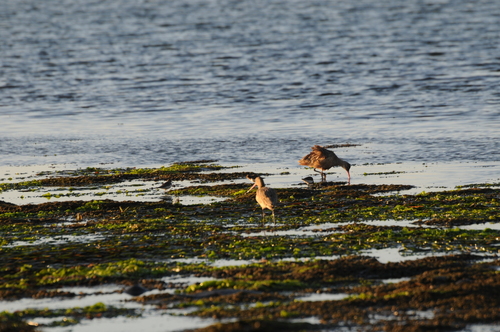 Marbled Godwit
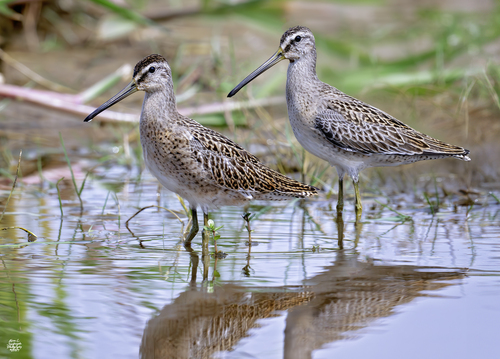 Short-billed Dowitcher
In breve
Marbled Godwit e Short-billed Dowitcher sono entrambi uccelli costieri con becco lungo, ma differiscono notevolmente in dimensioni, struttura e aspetto in volo. Il godwit è molto più grande e mostra ricche foderature alari color cannella in volo, mentre il dowitcher è più piccolo, tozzo e privo di questa caratteristica. Anche il colore e la forma del becco sono fondamentali: i godwit hanno un becco lungo, leggermente ricurvo verso l'alto, di base rosa, mentre i dowitcher hanno un becco dritto e scuro. Il colore delle gambe e il motivo delle parti inferiori aiutano ulteriormente a separarli, specialmente a distanza ravvicinata o con buona luce. Gli uccelli immaturi e non in riproduzione possono essere difficili, ma la struttura generale e i segni di volo rimangono affidabili.
Consigli di identificazione
- Size is the most immediate clue: Marbled Godwit è molto più grande e alto di qualsiasi Short-billed Dowitcher. Se vedi entrambi insieme, il godwit si distinguerà come un gigante.
- Flight view: cinnamon wing linings: In qualsiasi età o stagione, Marbled Godwit mostra ricche foderature alari color cannella-arancio in volo, una caratteristica mai presente nei dowitchers.
- Bill structure and color: I godwit hanno un becco molto lungo, di base rosa, con una leggera curvatura verso l'alto e una punta scura. I dowitcher hanno un becco più corto, dritto e scuro. La lunghezza del becco da sola non è affidabile per le specie di dowitcher, ma lo è per separare il godwit dal dowitcher.
- Leg color: Marbled Godwit ha gambe blu-grigie; Short-billed Dowitcher ha gambe giallastre. Questo è meglio visto a distanza ravvicinata o in buona luce.
- Body shape and posture: I godwit sono slanciati, con collo lungo e stanno dritti. I dowitcher sono più tozzi, con colli più corti e una postura più orizzontale.
- Underpart pattern: I godwit hanno parti inferiori di colore marrone chiaro a buffo con barre scure sul petto e sui fianchi. I dowitcher variano per sottospecie: alcuni hanno pance rossastre e fianchi maculati o barrati in abito nuziale, ma nessuno combina pance rossastre con fianchi barrati come nel Limnodromo pettorossiccio. In non riproduzione e piumaggio giovanile, i dowitcher sono per lo più grigi sotto.
- Tail pattern: I dowitcher hanno una coda barrata bianca e nera, visibile quando si puliscono o in volo. Le code dei godwit sono meno contrastanti e non così distintamente barrate.
- Back pattern: I godwit hanno un dorso maculato e scuro; i dorsi dei dowitcher sono marroni scuri, a volte con macchie chiare nei giovanili.
- Foraging behavior: I godwit spesso camminano dritti e possono catturare prede a vista. I dowitcher si nutrono con rapidi, ripetuti colpi ('movimento della macchina da cucire') e spesso si nutrono in gruppi ristretti.
- Roosting posture: I godwit possono dormire in piedi su una gamba con il becco ripiegato sotto il corpo, una postura meno tipica per i dowitcher.
- Habitat context: Se l'uccello è in una distesa di fango molto aperta ed espansiva o in erba corta, è più probabile che sia un godwit. Le paludi dense, i torbiere o i margini costieri possono favorire il dowitcher.
- Seasonal variation: I dowitcher in inverno o in piumaggio giovanile sono per lo più grigi sotto, privi dei toni caldi e delle barre del godwit. I godwit mantengono il loro aspetto chiaro e barrato tutto l'anno.
- Subspecies confusion: Le sottospecie di dowitcher differiscono nel motivo della pancia e dei fianchi, ma nessuna corrisponde alla combinazione di toni caldi e barrati del godwit.
- Bill length overlap: Non fare affidamento sulla lunghezza del becco da sola per separare questi due; usa colore e forma invece.
- Mixed flocks: Se vedi un gruppo di uccelli costieri simili e uno è molto più grande, con un becco di base rosa e foderature alari color cannella, è un Marbled Godwit tra i dowitcher.
Taglia
Marbled Godwit è sostanzialmente più grande di Short-billed Dowitcher. I godwit raggiungono i 40–50 cm di lunghezza con un'apertura alare di 70–88 cm, e le femmine pesano in media quasi 400 g. Al contrario, i Short-billed Dowitchers sono uccelli costieri di dimensioni medie, lunghi solo 23–32 cm, con un'apertura alare di 46–56 cm e un peso medio di circa 113 g. Sul campo, i godwit appaiono slanciati e alti, svettando su qualsiasi dowitcher nelle vicinanze.
Piumaggio
In volo, i godwit adulti e immaturi mostrano foderature alari distintive di un ricco colore cannella-arancio, visibili dal basso, che non sono mai presenti nei Short-billed Dowitchers di alcuna età. I godwit hanno un corpo di colore marrone chiaro a buffo con barre scure sul petto e sui fianchi, e un dorso maculato e scuro. I Short-billed Dowitchers, a seconda della sottospecie e della stagione, mostrano parti superiori marroni scure e parti inferiori rossastre o grigiastre. I dowitcher giovanili e invernali sono per lo più grigi sotto e mancano delle barre e dei toni cannella del godwit. I dowitcher hanno una coda barrata bianca e nera, mentre le code dei godwit sono meno contrastanti. Anche il colore delle gambe è un indizio: i godwit hanno gambe blu-grigie, i dowitcher giallastre. Il colore del becco è diagnostico: i becchetti dei godwit sono rosa alla base, quelli dei dowitcher sono scuri in tutto. Esistono differenze sottili nel motivo della pancia e dei fianchi tra le sottospecie di dowitcher, ma nessuna corrisponde all'aspetto complessivo caldo e barrato del godwit.
Comportamento
Entrambe le specie si nutrono sondando, ma i Marbled Godwits spesso avanzano attraverso ampie distese di fango o erba corta con una camminata più eretta e maestosa, a volte catturando insetti a vista. I dowitcher si nutrono con un rapido movimento 'della macchina da cucire', spesso in gruppi più densi e più vicini al suolo. I godwit possono riposare in piedi su una gamba con il becco ripiegato, un comportamento meno tipico dei dowitcher.
Habitat
Entrambi utilizzano distese di fango e paludi, ma i Marbled Godwits tendono a preferire distese di fango e spiagge più aperte ed espansive, mentre i Short-billed Dowitchers si trovano più spesso in una varietà di habitat umidi, comprese le paludi di marea, i torbiere e persino le radure forestali durante la riproduzione. Durante la migrazione e l'inverno, i dowitcher sono più propensi a essere visti vicino alle coste oceaniche, mentre i godwit possono essere trovati da praterie interne a pianure costiere.
Voce
Nessuna differenza vocale diagnostica è descritta tra Marbled Godwit e Short-billed Dowitcher nelle note fornite. L'identificazione del dowitcher per voce è principalmente rilevante per separarlo dal Limnodromo pettorossiccio, non dal godwit.
Marbled Godwit · Short-billed Dowitcher · I miei uccelli difficili