
Marbled Godwit vs Limnodromo pettorossiccio
Limosa fedoa contro Limnodromus scolopaceus
Fai un quiz con Marbled Godwit e Limnodromo pettorossiccio
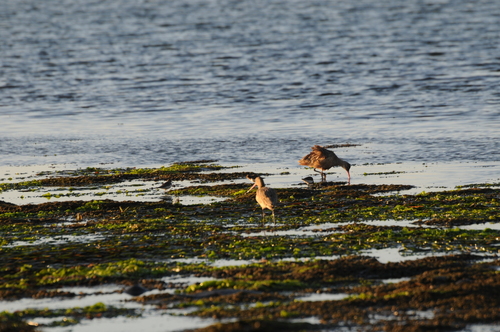 Marbled Godwit
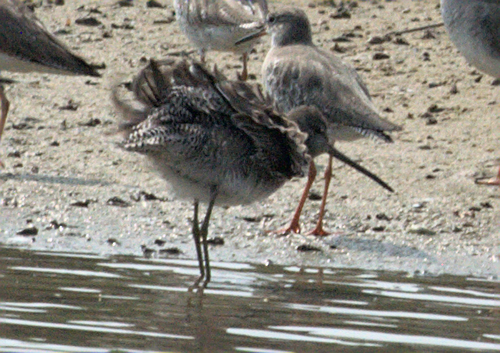 Limnodromo pettorossiccio
In breve
Il segno di campo più affidabile tra il Marbled Godwit e il Limnodromo pettorossiccio è la dimensione: il Marbled Godwit è un uccello molto più grande e massiccio con un becco più lungo e leggermente ricurvo alla base rosa, mentre il Limnodromo pettorossiccio è di dimensioni medie e tozzo con un becco dritto e scuro. In volo, il Marbled Godwit mostra distintive foderi delle ali color cannella, mentre il Limnodromo pettorossiccio sfoggia un luminoso posteriore bianco che si estende lungo la schiena e una coda fortemente striata in bianco e nero. Gli uccelli giovani e non in riproduzione possono essere particolarmente confusi, ma la forma del becco, la massa complessiva e il pattern di volo rimangono indizi forti. Entrambe le specie hanno parti superiori marroni macchiate, ma le loro parti inferiori e le proporzioni strutturali differiscono notevolmente.
Consigli di identificazione
- Size is the first check: Se l'uccello è quasi delle dimensioni di un curlew, è un Marbled Godwit; se è solo un po' più grande di un tipico pettine, è un Limnodromo pettorossiccio. Questo è vero a qualsiasi distanza o in stormi misti.
- Bill shape and color: Il Marbled Godwit ha un becco molto lungo, leggermente ricurvo con una base rosata e una punta scura; il Limnodromo pettorossiccio ha un becco dritto e nero (a volte oliva alla base) lungo circa il doppio della lunghezza della sua testa ma mai così massiccio o ricurvo come quello del godwit.
- Flight pattern (all ages): Il Marbled Godwit sfoggia ricchi foderi delle ali color cannella in volo; il Limnodromo pettorossiccio mostra un luminoso posteriore bianco che si estende lungo la schiena e una coda fortemente striata in bianco e nero—questi sono meglio visti quando l'uccello si alza in volo o atterra.
- Neck and body shape: Il godwit ha un collo lungo, gambe lunghe e sta eretto; il dowitcher è compatto, con collo corto e appare più accovacciato.
- Leg color: Il godwit ha gambe blu-grigie; il dowitcher ha gambe giallastre (anche se questo può essere difficile da vedere in acqua fangosa o in scarsa luce).
- Breeding plumage: Il dowitcher è rufoso sotto con una corona scura e un dorso macchiato; il godwit è marrone più chiaro con striature scure sul petto/fianchi e una testa più uniforme, meno contrastante.
- Juvenile plumage: I giovani dowitcher hanno parti superiori frangiate di castagno e un petto grigio che contrasta con un ventre rufoso più chiaro; i giovani godwit sono pale brown sotto con dark barring, lacking the sharp breast-belly contrast.
- Non-breeding plumage: Entrambi diventano più opachi, ma il godwit rimane più chiaro e più uniformemente colorato sotto; il dowitcher è grigio opaco con un ventre bianco e un lieve supercilium.
- Supercilium: Il dowitcher mostra sempre un supercilium biancastro e una striscia loreale scura attraverso l'occhio; il godwit manca di questo forte pattern facciale.
- Tail pattern: La coda del dowitcher è fortemente striata in bianco e nero, con barre nere più larghe di quelle bianche; la coda del godwit è meno distintamente marcata.
- Feeding behavior: Il godwit esplora lentamente o raccoglie; il dowitcher si nutre con un rapido movimento a 'macchina da cucire'.
- Roosting posture: I godwit spesso stanno su una gamba, con il becco ripiegato; i dowitcher meno spesso.
- Habitat context: I godwit preferiscono le distese di fango aperte e le spiagge; i dowitcher si trovano più spesso in paludi d'acqua dolce e campi allagati.
- Voice (if heard): Non diagnostico da queste note, ma i dowitcher sono noti per i loro acuti richiami 'keek' in volo, mentre i godwit hanno un richiamo dolce e ringhiante.
- Pitfall: In scarsa luce o a distanza, concentrati su dimensione, forma del becco e pattern di volo—la sola livrea può essere fuorviante, specialmente negli uccelli non in riproduzione o giovani.
Taglia
Il Marbled Godwit è drammaticamente più grande del Limnodromo pettorossiccio. Il godwit pesa in media 326–391 g (maschi/femmine), con una lunghezza totale di 40–50 cm e un'apertura alare di 70–88 cm [wikipedia]. Al contrario, il Limnodromo pettorossiccio pesa in media solo 104 g [wikidata], ed è molto più corto e compatto nel complesso. Anche a distanza o in stormi misti, il godwit si distingue come un gigante tra gli uccelli costieri, mentre il dowitcher è più vicino a un grande pettine in dimensioni.
Piumaggio
Le livree giovanili e non in riproduzione possono essere confuse, ma le differenze chiave persistono. In volo (tutte le età), il Marbled Godwit rivela ricchi foderi delle ali color cannella, mentre il Limnodromo pettorossiccio mostra un luminoso posteriore bianco che si estende lungo la schiena e una coda fortemente striata in bianco e nero. I giovani dowitcher hanno parti superiori frangiate di castagno e un petto grigio delimitato da un ventre rufoso più chiaro, mentre i giovani godwit sono generalmente marroni chiari sotto con striature scure sul petto e fianchi. In livrea di riproduzione, i dowitcher sono rufosi sotto con una corona scura e un dorso macchiato, mentre i godwit sono marroni più chiari con striature scure e un aspetto più uniforme. In livrea non in riproduzione (inverno), entrambe le specie diventano più grigie, ma il godwit mantiene un collo più lungo e parti inferiori più chiare e uniformi, mentre il dowitcher è grigio opaco con un ventre bianco contrastante e un lieve supercilium.
Comportamento
I Marbled Godwits spesso si nutrono con una lenta esplorazione o raccogliendo in distese di fango aperte o erba corta, a volte stando alti e dritti. Possono essere visti riposare su una gamba con il becco ripiegato. I Limnodromo pettorossiccio si nutrono con un rapido movimento a 'macchina da cucire', sondando ripetutamente e rapidamente in acque poco profonde. In volo, i godwit hanno un battito d'ali più languido e costante e appaiono allungati, mentre i dowitcher sono più compatti e diretti.
Habitat
I Marbled Godwits si trovano più spesso su distese di fango aperte, spiagge e a volte erba corta vicino all'acqua, specialmente durante la migrazione e l'inverno. I Limnodromo pettorossiccio preferiscono habitat d'acqua dolce—paludi, stagni e campi allagati—specialmente durante la migrazione e l'inverno. Anche se entrambi possono sovrapporsi su distese di fango costiere, i dowitcher sono più probabili in ambienti interni o d'acqua dolce.
Marbled Godwit · Limnodromo pettorossiccio · I miei uccelli difficili