

Malayan Banded-Pitta vs Bornean Banded-Pitta
Hydrornis irena contro Hydrornis schwaneri
Fai un quiz con Malayan Banded-Pitta e Bornean Banded-Pitta
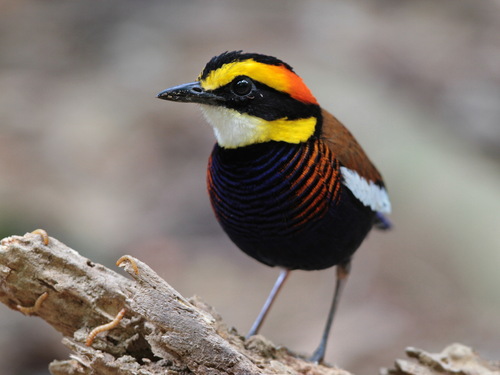 Malayan Banded-Pitta
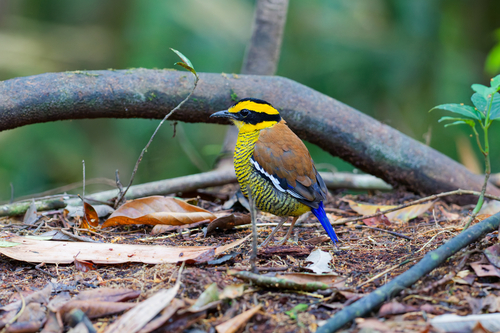 Bornean Banded-Pitta
In breve
Il modo più affidabile per separare il Malayan Banded-Pitta dal Bornean Banded-Pitta è l'areale: il Malayan si trova in Thailandia, nella penisola malese e a Sumatra, mentre il Bornean è ristretto a Borneo. Sul campo, entrambi sono straordinariamente colorati, ma il Malayan mostra una gola giallo limone e più arancione sui lati del petto, mentre il Bornean differisce sottilmente in questi dettagli del piumaggio. Le differenze strutturali e le vocalizzazioni non sono documentate nelle fonti disponibili, quindi concentrati sulla geografia e sui sottili contrasti del piumaggio se visti bene. Gli uccelli immaturi o in volo non sono descritti in dettaglio, quindi è necessaria cautela con gli esemplari non adulti o con viste scarse.
Consigli di identificazione
- L'areale geografico è l'indizio più decisivo: il Malayan Banded-Pitta non si trova mai a Borneo, e il Bornean Banded-Pitta è endemico di Borneo. Controlla sempre prima la tua posizione.
- Colore della gola: il Malayan adulto ha una gola giallo limone; il Bornean può differire in tonalità o estensione, ma i dettagli non sono specificati in queste note—usa con cautela.
- Barre sul petto: il petto del Malayan mostra barre arancioni e blu scuro, con più arancione sui lati e più blu al centro. Il pattern del petto del Bornean può differire sottilmente, ma le specifiche non sono fornite qui.
- Supercilio e nuca: il Malayan ha un supercilio giallo/arancione e una nuca arancio-rossa. Il pattern della testa del Bornean non è descritto in dettaglio, quindi usa questo segno con cautela.
- Pancia e coda: il Malayan ha una pancia blu e una coda blu. Il Bornean è probabilmente simile, quindi questo non è un forte separatore.
- Colore della schiena: entrambi hanno schiene marroni, non un separatore utile.
- Piumaggio giovanile e immaturo: non sono disponibili informazioni per nessuna delle due specie, quindi non tentare di separare gli uccelli non adulti.
- Pattern di volo e ala superiore: non sono descritti segni distintivi di volo o pannelli delle ali per nessuna delle due specie a qualsiasi età.
- Dimensioni e struttura: entrambe le specie sono simili in dimensioni e forma; non usare dimensioni o forma del becco per la separazione.
- Comportamento: entrambe si comportano come tipici pittas; il comportamento non è un separatore.
- Habitat: entrambe utilizzano habitat forestali simili all'interno dei loro rispettivi areali; l'habitat è utile solo se conosci la tua posizione.
- Vocalizzazioni: non sono descritte differenze; non usare la voce per la separazione a meno che tu non abbia conoscenze locali o registrazioni.
- Dimorfismo sessuale: non descritto; assumere che entrambi i sessi sembrino simili sul campo.
- Variazione stagionale: non descritta; assumere che gli adulti sembrino simili tutto l'anno.
- Suggerimento riassuntivo: se sei fuori da Borneo, hai il Malayan; se sei a Borneo, hai il Bornean. Se devi fare affidamento sul piumaggio, concentrati sul colore della gola e sulle barre del petto, ma aspettati sovrapposizioni e incertezze senza immagini di riferimento dettagliate.
Taglia
Non sono documentate differenze dirette di dimensioni o massa tra il Malayan e il Bornean Banded-Pitta nelle fonti disponibili. Entrambi sono pittas di dimensioni medie con proporzioni simili, e le dimensioni non sono un segno utile per separare questi due.
Piumaggio
Le differenze nel piumaggio sono sottili e meglio apprezzate in buona luce e con viste ravvicinate di adulti. Il Malayan Banded-Pitta mostra una testa nera con un supercilio giallo/arancione prominente, una nuca arancio-rossa, una gola giallo limone e un petto con barre arancioni e blu scuro—più arancione verso i lati, più blu centralmente. La pancia è blu, la schiena è marrone e la coda è blu. Il Bornean Banded-Pitta non è descritto in dettaglio qui, ma è noto che differisce nell'estensione e nella tonalità della colorazione della gola e del petto, così come nel pattern e nell'intensità delle barre. I piumaggi giovanili o immaturi e i pattern delle ali superiori non sono descritti per nessuna delle due specie, quindi queste età non possono essere separati in modo affidabile in base alle informazioni attuali.
Comportamento
Non sono documentate differenze comportamentali tra queste due specie nelle fonti disponibili. Entrambi sono pittas tipici, probabilmente segreti, terrestri e solitari o in coppie.
Habitat
Il Malayan Banded-Pitta si trova nelle foreste di pianura e di piede di montagna della Thailandia, della penisola malese e di Sumatra, mentre il Bornean Banded-Pitta è ristretto a Borneo. Entrambi abitano tipi di foresta simili all'interno dei loro rispettivi areali, quindi l'habitat da solo non è diagnostico a meno che la posizione non sia nota.
Malayan Banded-Pitta · Bornean Banded-Pitta · I miei uccelli difficili