

Long-tailed Woodcreeper vs White-chinned Woodcreeper
Deconychura longicauda contro Dendrocincla merula
Fai un quiz con Long-tailed Woodcreeper e White-chinned Woodcreeper
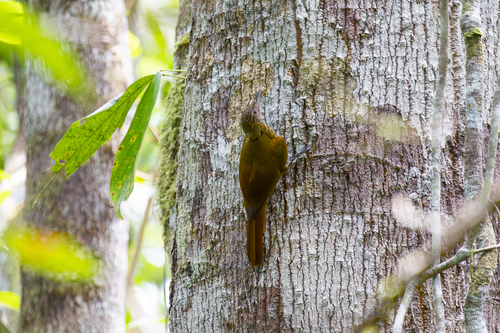 Long-tailed Woodcreeper
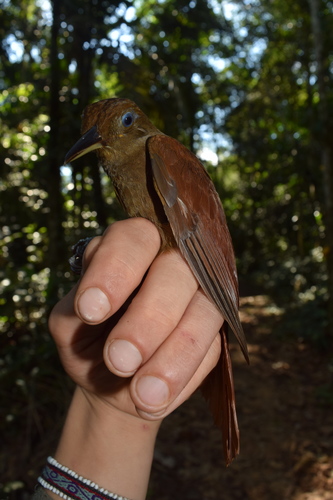 White-chinned Woodcreeper
In breve
Il segno di campo più affidabile per separare il Long-tailed Woodcreeper dal White-chinned Woodcreeper è la presenza di una stretta striscia verticale bianca o giallastra sul mento e sulla gola del White-chinned, che è assente nel Long-tailed. Entrambi sono woodcreepers di taglia media con struttura simile e aree sovrapposte, ma il Long-tailed è più snello, più leggero e mostra striature buff più estese sulla testa e sul petto. Il piumaggio giovanile non è fortemente distintivo tra i due, ma sottili differenze nelle striature e nel colore della testa possono aiutare. Un'attenta attenzione al modello della gola, alla colorazione generale e alla struttura è fondamentale, specialmente in stormi misti o in scarsa illuminazione.
Consigli di identificazione
- Throat Mark (All Ages): Il White-chinned Woodcreeper mostra sempre una stretta striscia verticale bianca o giallastra sul mento e sulla gola—questo è assente nel Long-tailed Woodcreeper. Anche in scarsa illuminazione, cerca questo segno chiaro sulla gola come primo controllo.
- Head and Breast Streaking (Adult/Immature): Il Long-tailed Woodcreeper ha sottili striature buff sulla corona, sul nape e sul petto, dando un aspetto leggermente striato. Il White-chinned è meno striato, con un petto di un uniforme marrone oliva scuro.
- Overall Color Tone (Adult): Il Long-tailed è marrone oliva sopra, con ali e coda color ruggine-castagna; il White-chinned è di un marrone rossastro più scuro con ali/coda più rosse. Sottili ma visibili in buona luce.
- Belly and Flanks (Adult): Il Long-tailed ha un ventre e fianchi marrone oliva uniforme, in contrasto con il suo petto striato. Le parti inferiori del White-chinned sono più uniformemente scure, sfumando verso il ruggine sotto la coda.
- Underwing Color (Adult): Il Long-tailed mostra copritrici sottoala color ruggine cannella e lati delle penne da volo; il White-chinned ha copritrici sottoala più chiare di castagna. Questo è sottile e raramente diagnostico sul campo.
- Iris Color (Adult): Il Long-tailed ha iridi marroni; il White-chinned varia per sottospecie (marrone/marrone rossastro o grigio/bluastro). Non sempre visibile ma può aiutare con viste ravvicinate.
- Bill Structure: Il Long-tailed ha un becco snello, di media lunghezza e dritto; il becco del White-chinned è corto e dritto. La differenza è sottile e non sempre affidabile sul campo.
- Leg Color: Le gambe/piedi del Long-tailed sono marroni; quelli del White-chinned sono più variabili (bluastro, oliva, grigio o marrone). Utile solo a distanza molto ravvicinata.
- Juvenile Plumage: Il giovane Long-tailed è più scuro sulla testa con meno striature chiare sul petto, ma altrimenti simile agli adulti. Il giovane White-chinned non è descritto come distinto, quindi non fare affidamento sull'età per la separazione.
- Size and Structure: Il Long-tailed è più snello e leggero (24 g) rispetto al più pesante e massiccio White-chinned (28–54 g). Questo è più evidente con l'esperienza o il confronto diretto.
- Song: Se udito, il canto alto, discendente e lamentoso del Long-tailed è distintivo. La mancanza di canto o una diversa vocalizzazione possono suggerire il White-chinned, ma l'assenza di prove non è prova di assenza.
- Habitat Sensitivity: Il Long-tailed è più sensibile alla frammentazione dell'habitat e preferisce foreste continue; il White-chinned può essere trovato in una gamma più ampia di tipi di foresta. Il contesto può aiutare se l'habitat è noto.
- Geographic Range: Se in Bolivia, Colombia, Ecuador, Perù o Venezuela, è probabile che tu incontri solo il White-chinned. Nelle Guiane e nel Brasile settentrionale, entrambi sono possibili—usa i segni di campo.
- Mixed-species Flocks: Entrambi si uniscono a stormi misti, quindi non usare il comportamento di stormo come separatore.
- Pitfalls: In scarsa luce, il segno sulla gola del White-chinned può essere trascurato, e le striature del Long-tailed possono essere perse. Cerca sempre di confermare sia il modello della gola che il colore/strettura generale prima di fare un'identificazione.
Taglia
Il Long-tailed Woodcreeper è nettamente più leggero, con una massa corporea tipica di circa 24 g [wikidata], mentre il White-chinned Woodcreeper è più pesante (maschi 28–54 g, femmine 29–54 g) [wikipedia]. Entrambe le specie sono simili in lunghezza (16–21 cm), ma il Long-tailed è complessivamente più snello. La differenza di volume è più evidente quando viste fianco a fianco o con esperienza; il White-chinned appare più robusto, specialmente nelle sottospecie più grandi (in particolare D. m. merula e D. m. obidensis).
Piumaggio
- Juvenile/immature plumage: I giovani di entrambe le specie assomigliano agli adulti, ma i giovani Long-tailed Woodcreeper hanno una testa leggermente più scura e meno striature chiare sul petto rispetto agli adulti. Non è descritto un modello distintivo delle ali giovanili per nessuna delle due specie, quindi l'età non è un forte separatore in volo.
- Adult plumage: Il Long-tailed Woodcreeper è per lo più marrone oliva con una corona e un nape più scuri, finemente striati di buff, un petto striato di buff, un ventre/fianchi marrone oliva uniforme e ali e coda color ruggine-castagna. L'ala sotto è color ruggine cannella. Il White-chinned Woodcreeper è di un marrone rossastro più scuro sopra, con copritrici delle ali più rosse, penne da volo e coda, e una striscia verticale bianca/giallastra diagnostica e stretta sul mento e sulla gola. Il suo petto è marrone oliva scuro, diventando ruggine scuro sotto la coda. Le copritrici sottoala sono di castagna chiara. Il colore dell'iride varia (marrone a marrone rossastro in alcune sottospecie, grigio/bluastro in altre). Alcune sottospecie mostrano toni più chiari o più rossi, ma il segno sulla gola è costante.
Comportamento
Entrambe le specie si nutrono arrampicandosi su tronchi e viti, principalmente raccogliendo artropodi. Il Long-tailed Woodcreeper è noto per nutrirsi singolarmente, in coppie o in stormi misti da sottobosco a chioma (3–20 m), ed è altamente sensibile alla modifica dell'habitat. Il comportamento alimentare del White-chinned Woodcreeper è simile, ma ci sono meno dettagli sulla sua gamma verticale. Nessuna delle due specie è descritta come formante legami di coppia a lungo termine. Sul campo, il loro comportamento è molto simile e non è un forte separatore.
Habitat
Entrambe le specie si trovano in foreste primarie umide e foreste secondarie mature nelle regioni dell'Amazzonia e dello Scudo della Guiana. Il Long-tailed Woodcreeper è presente in Brasile (a nord dell'Amazzonia e a est del Rio Negro), Guiana Francese, Guyana e Suriname, ed è considerato abbastanza comune a comune tranne che in Suriname. Il White-chinned Woodcreeper ha una gamma più ampia, inclusi Bolivia, Brasile, Colombia, Ecuador, Guiana Francese, Guyana, Perù, Suriname e Venezuela. Entrambi preferiscono l'interno della foresta ma possono essere trovati ai margini; il Long-tailed è più sensibile alla frammentazione dell'habitat.
Voce
Il Long-tailed Woodcreeper emette un canto alto, distintamente discendente, chiaro e lamentoso: 'pee-pue-tue-tuh---'. È più vocale all'alba e al tramonto, e risponde fortemente alla riproduzione. Nessuna descrizione vocale è fornita per il White-chinned Woodcreeper nelle note, quindi il canto non è un separatore affidabile a meno che non si senta il distintivo modello discendente del Long-tailed.
Long-tailed Woodcreeper · White-chinned Woodcreeper · I miei uccelli difficili