
Little Bee-eater vs Black-backed Puffback
Merops pusillus contro Dryoscopus cubla
Fai un quiz con Little Bee-eater e Black-backed Puffback
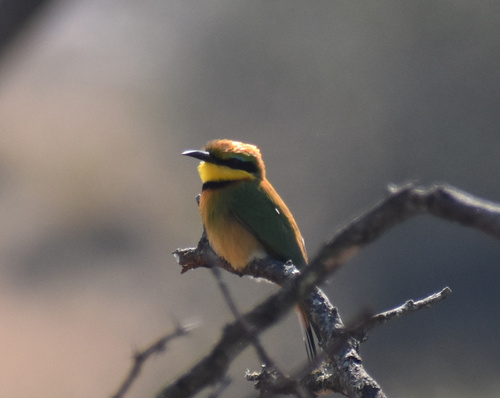 Little Bee-eater
 Black-backed Puffback
In breve
Il segno distintivo più affidabile per separare il Little Bee-eater dal Black-backed Puffback è il colore e il motivo complessivi: il Little Bee-eater è un uccello snello, vivacemente verde e giallo con una banda nera sulla gola, mentre il Black-backed Puffback è un bushshrike più robusto, per lo più nero e bianco, con un occhio rosso o arancione sorprendente e un cappuccio scuro. I puffback giovanili e femminili possono mostrare toni più grigi o color sabbia, ma non mostrano mai le parti superiori verdi brillanti o la gola gialla del bee-eater. In volo o posati, la struttura snella e delicata del bee-eater e la coda quadrata contrastano con il corpo più pesante del puffback, il becco più corto e il profilo più robusto da bushshrike. Entrambe le specie possono essere trovate nell'Africa subsahariana, ma il bee-eater preferisce aree aperte, erbose o paludose, mentre il puffback si attiene a habitat boschivi e chiome degli alberi.
Consigli di identificazione
- Upperparts color: Il Little Bee-eater è verde brillante sopra (tutte le età), mentre il Black-backed Puffback è nero o grigiastro sopra (maschio/femmina/immaturo), mai verde.
- Throat and breast: Il bee-eater ha una gola gialla con un gorgetto (banda) nera ben definita sotto; il puffback ha parti inferiori bianche o color sabbia senza banda nera sulla gola.
- Bill shape: Il bee-eater ha un becco lungo, snello e leggermente ricurvo; il becco del puffback è più corto, più robusto e più ricurvo, tipico dei bushshrikes.
- Tail shape: La coda del bee-eater è quadrata o leggermente biforcuta; la coda del puffback è più arrotondata e meno prominente.
- Eye color: I puffback adulti hanno occhi rossi o arancioni (varia a seconda della sottospecie); gli occhi del bee-eater sono scuri. I puffback immaturi hanno occhi marroni.
- Cap and face: I maschi puffback hanno un cappuccio nero solido; le femmine e gli immaturi hanno una striscia lorale nera e un supercilium bianco. Il bee-eater ha una corona e un viso verdi semplici senza maschera o cappuccio scuro.
- Underpart color: Le parti inferiori del bee-eater sono ocra a color sabbia; quelle del puffback sono bianche pure (maschio) o grigiastre/color sabbia (femmina/immaturo).
- Wing pattern: I puffback possono mostrare barre scapolari bianche o bordature bianche sulle piume delle ali (soprattutto in alcune sottospecie), ma mai ali verdi o marroni come il bee-eater.
- Structure and posture: Il bee-eater è snello, delicato e spesso si posa eretto su rami esposti; il puffback è più robusto, con una postura più orizzontale e un aspetto da bushshrike.
- Behavior: Il bee-eater spesso esce per catturare insetti in aria; il puffback si muove inquieto attraverso le chiome degli alberi e raramente cattura insetti in volo.
- Habitat: Aree aperte, erbose o paludose favoriscono il bee-eater; habitat boschivi, forestali o ricchi di alberi favoriscono il puffback.
- Vocalization: Una chiamata morbida 'seep' è tipica del bee-eater; chiamate più varie o più forti suggeriscono il puffback.
- Sex and age confusion: Le femmine e gli immaturi puffback sono più grigi e color sabbia ma mai verdi o gialli; i sessi e le età del bee-eater sono simili e mostrano sempre un gorgetto verde/giallo/nero.
- Size and bulk: Il puffback è più pesante e più robusto (26g) rispetto al bee-eater molto più leggero e delicato (14.6g).
- Context: Se visti in un gruppo che esce da posatoi bassi, probabilmente è un bee-eater; se si muovono singolarmente o in coppie attraverso la chioma degli alberi, probabilmente è un puffback.
Taglia
Il Little Bee-eater è notevolmente più piccolo e più leggero, con una massa media di 14.6g e una lunghezza di 15–17 cm, rendendolo il più piccolo bee-eater africano. Al contrario, il Black-backed Puffback è più pesante a 26g e lungo circa 17 cm, ma appare molto più robusto e robusto a causa della sua corporatura tozza e delle proporzioni da bushshrike. La forma snella ed allungata del bee-eater e il suo becco fine sono molto diversi dal corpo più compatto e massiccio del puffback e dal becco più corto e robusto.
Piumaggio
I puffback giovanili e immaturi assomigliano alle femmine, con parti superiori più grigie, parti inferiori color sabbia e becchi e occhi marroni, ma mancano sempre delle parti superiori verdi brillanti e della gola gialla del Little Bee-eater. Il Little Bee-eater di tutte le età mostra parti superiori verdi, gola gialla bordata sotto da un gorgetto nero ben definito e un petto superiore marrone che sfuma in ocra color sabbia sull'addome. Le sue ali sono verdi e marroni, e la coda è quadrata o leggermente biforcuta. I maschi adulti del Black-backed Puffback sono di un blu-nero profondo sopra con una lucentezza lucida, un cappuccio nero, occhi rossi o arancioni e parti inferiori bianche pure; le femmine e gli immaturi sono più grigi sopra, con una striscia lorale nera, supercilium bianco e parti inferiori più color sabbia o grigio-bianco. I puffback mostrano motivi neri e bianchi sulle ali e sulla schiena, a volte con barre scapolari bianche o bordature a seconda della sottospecie, ma mai il verde e il giallo del bee-eater. Nessuna età di puffback mostra la banda nera sulla gola o le parti superiori verdi del bee-eater.
Comportamento
I Little Bee-eaters sono spesso visti posati apertamente su rami bassi o fili, che escono per catturare insetti in aria, e possono essere difficili da individuare quando sono posati a causa del loro mimetismo verde. Di solito sono solitari o in piccoli gruppi. I Black-backed Puffbacks sono inquieti, si muovono singolarmente, in coppie o in gruppi familiari, e tipicamente rimangono in alto nella chioma degli alberi, spesso svolazzando tra i rami e facendo brevi voli. Il loro comportamento da bushshrike è più segreto e arboricolo rispetto alle abitudini aperte e aeree dei bee-eaters.
Habitat
Il Little Bee-eater preferisce habitat aperti come savana, bushveld e aree paludose in tutta l'Africa subsahariana, spesso lontano da boschi densi. Il Black-backed Puffback è legato a habitat boschivi, inclusi foreste, cespugli e aree ricche di alberi a sud dell'equatore, ed è raramente visto in campagna aperta. Se ti trovi in un bosco fitto o in una foresta, è più probabile vedere un puffback; in una prateria aperta o in una palude, aspettati un bee-eater.
Voce
Il Little Bee-eater è spesso silenzioso ma emette una chiamata morbida e acuta 'seep'. Le vocalizzazioni del Black-backed Puffback non sono descritte nelle note fornite, ma generalmente sono più vocali e possono emettere una varietà di fischi e chiamate chiacchierine tipiche dei bushshrikes. Se senti solo un debole 'seep', sospetta un bee-eater; chiamate più complesse o più forti possono indicare un puffback.
Little Bee-eater · Black-backed Puffback · I miei uccelli difficili