

Totano zampegialle minore vs Greater Yellowlegs
Tringa flavipes contro Tringa melanoleuca
Fai un quiz con Totano zampegialle minore e Greater Yellowlegs
 Totano zampegialle minore
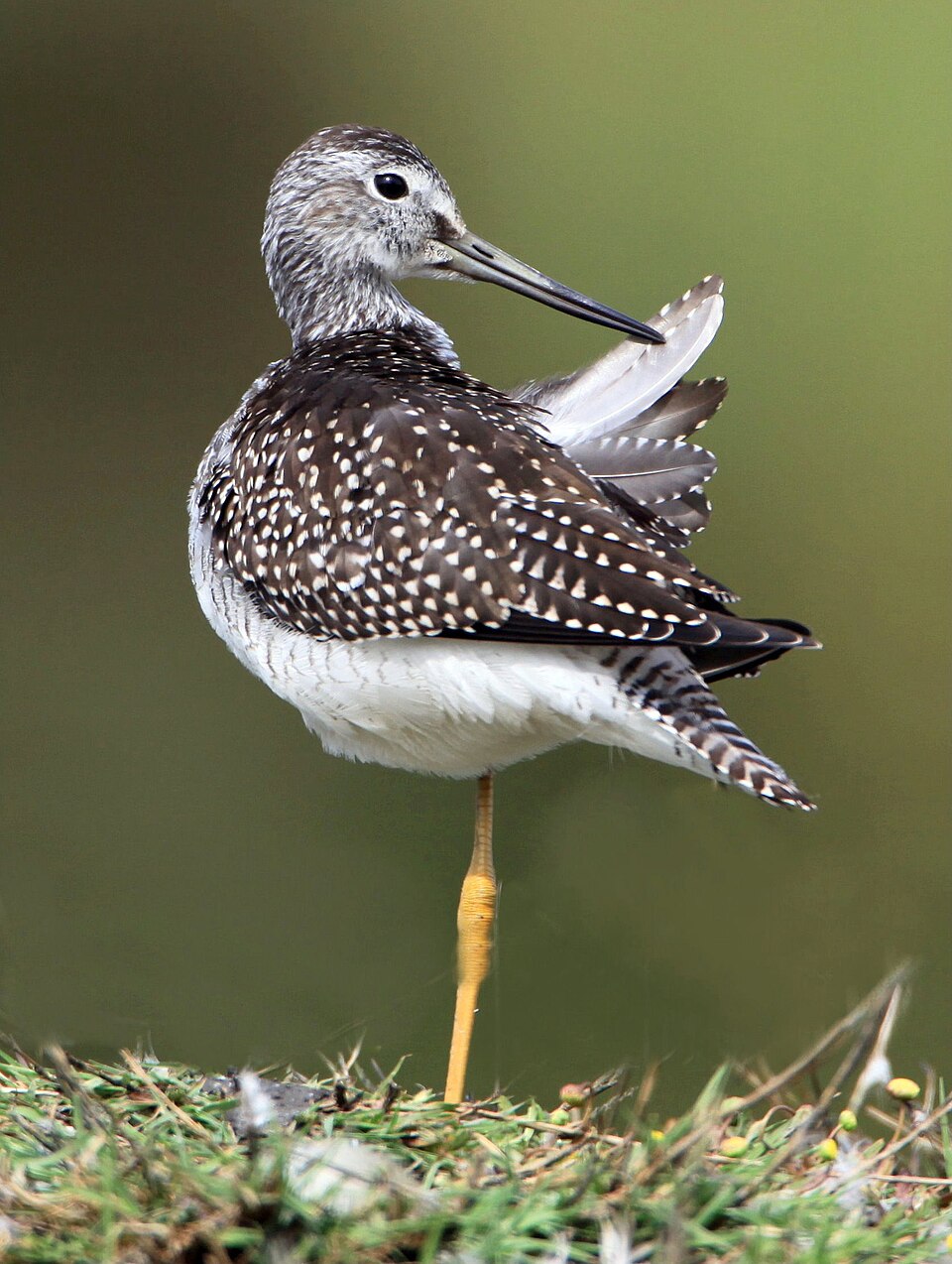 Greater Yellowlegs
In breve
Il segno di campo più affidabile tra il Totano zampegialle minore e il Greater Yellowlegs è il becco: il becco del Totano zampegialle minore è snello, dritto e di lunghezza simile alla testa, mentre il becco del Greater Yellowlegs è visibilmente più lungo della testa e spesso leggermente ricurvo. Entrambe le specie sono simili nel piumaggio e condividono zampe gialle brillanti, ma il Greater Yellowlegs è molto più robusto, con una costruzione più pesante e un motivo del petto più grossolano e scuro in piumaggio nuziale. La voce è anche un forte separatore: il richiamo del Greater è molto più forte e chiaro. Gli uccelli immaturi e adulti possono essere difficili da distinguere, specialmente nel piumaggio non nuziale, ma un'attenta attenzione alla lunghezza e alla struttura del becco, alla dimensione e alle vocalizzazioni risolverà la maggior parte delle confusioni sul campo.
Consigli di identificazione
- Lunghezza e forma del becco: Sul Totano zampegialle minore, il becco è di lunghezza simile alla testa, snello, dritto e uniformemente scuro. Sul Greater, il becco è visibilmente più lungo della testa e spesso leggermente ricurvo; appare anche più pesante. Questo è il segno di campo più affidabile in tutte le età e stagioni.
- Dimensione e robustezza relative: Il Greater Yellowlegs è quasi due volte più pesante del Totano. Quando visti insieme, il Greater appare molto più grande e robusto. Da solo, cerca un corpo più pesante, un collo più lungo e zampe più lunghe sul Greater.
- Motivo del petto in piumaggio nuziale: Il Greater mostra striature e barrature più grossolane, scure e più estese sul petto e sui fianchi, mentre i segni del Totano zampegialle minore sono più fini e limitati. Questo è meglio visto da vicino in primavera/estate.
- Collo e aspetto generale: Il Greater sta più in alto e più eretto, con un collo più lungo e un aspetto più allungato. Il Totano zampegialle minore appare più delicato, con un collo più corto e una costruzione più leggera.
- Colore delle zampe: Entrambi hanno zampe gialle brillanti, quindi questo non è un separatore.
- Voce: Il richiamo del Greater è molto più forte, chiaro e squillante, spesso un fischio a tre note. Il richiamo del Totano zampegialle minore è più morbido e meno penetrante. Usa la voce quando gli uccelli sono spaventati o chiamano in volo.
- Colore e motivo del becco: Entrambe le specie hanno becchi scuri, ma quello del Greater può mostrare un leggero effetto bicolore (punta più scura), anche se questo è sottile e inaffidabile.
- Comportamento alimentare: Entrambe le specie si nutrono attivamente, ma il Greater può usare il suo becco più lungo per mescolare l'acqua più spesso. Questo è un indizio minore.
- Piumaggio negli uccelli non nuziali e giovanili: Entrambi sono simili: grigio-marrone sopra, bianco sotto, con colli striati. Non sono descritte forti differenze nei modelli di volo o nelle ali, quindi fai affidamento sulla struttura e sul becco.
- Segni sui fianchi: In piumaggio nuziale, il Greater ha più barrature estese sui fianchi; i fianchi del Totano zampegialle minore sono più finemente segnati.
- Coda e groppa: Entrambi hanno groppa e coda bianche; non è un separatore.
- Habitat e contesto: Entrambi utilizzano habitat simili durante tutto l'anno; non fare affidamento solo sulla posizione.
- Comportamento di gruppo: Quando mescolati, il Greater può apparire più dominante e eretto, ma questo è sottile.
- Sesso e età: I sessi sono simili in entrambe le specie; le differenze di età non sono fortemente diagnostiche tranne per i segni leggermente più fini sui giovani Totani zampegialle minori.
- Quando hai dubbi: Se non puoi giudicare la dimensione o la lunghezza del becco (ad esempio, uccelli distanti), aspetta un richiamo o cerca un confronto diretto con altri uccelli di riva.
Taglia
Il Greater Yellowlegs è significativamente più grande e pesante del Totano zampegialle minore: gli adulti pesano in media circa 170 g rispetto ai 81 g del Totano. Sul campo, il Greater appare con un corpo più lungo (29–40 cm contro 23–25 cm), con una postura più robusta e eretta. Il Totano zampegialle minore appare più delicato e snello, con un collo e un corpo più corti. Quando i due sono insieme, la differenza di dimensione è ovvia, ma quando sono soli, usa la lunghezza del becco e la robustezza complessiva come principali indizi.
Piumaggio
I piumaggi giovanili e non nuziali sono abbastanza simili tra i due, con entrambi che mostrano parti superiori grigio-marroni e parti inferiori bianche. In piumaggio nuziale, entrambi hanno colli e petti striati, ma il Greater Yellowlegs mostra striature e barrature più grossolane, scure e più estese, specialmente sul petto e sui fianchi, mentre i segni del Totano zampegialle minore sono più fini e limitati. Entrambi hanno groppa bianche e zampe gialle. Non ci sono modelli distintivi delle ali specifici per età o segni di volo descritti per nessuna delle due specie che li separino in volo, quindi la struttura e il becco rimangono fondamentali. I sessi sono simili in entrambe le specie.
Comportamento
Entrambi si nutrono attivamente in acque poco profonde, spesso muovendosi rapidamente con andature alte. Il Greater Yellowlegs può usare il suo becco più lungo per mescolare l'acqua più frequentemente. Il Totano zampegialle minore tende ad apparire più delicato e si muove con un'andatura più leggera e aggraziata. Entrambe le specie si trovano spesso singolarmente o in piccoli gruppi, a volte insieme, ma il Greater Yellowlegs può apparire più dominante e eretto.
Habitat
L'overlap degli habitat è esteso: entrambe le specie nidificano nel nord dell'America del Nord e svernano in un'ampia gamma che va dal sud degli Stati Uniti all'America del Sud. Entrambi preferiscono zone umide poco profonde, fanghi e paludi. Non c'è una forte separazione degli habitat durante la migrazione o nei terreni di svernamento, quindi il contesto non è di solito utile per l'identificazione.
Voce
Il Greater Yellowlegs ha un richiamo molto più forte, chiaro e squillante, spesso un fischio a tre sillabe con una terza nota di tono più basso. Il Totano zampegialle minore emette un richiamo più morbido e meno penetrante. La voce è uno dei migliori separatori sul campo, specialmente quando gli uccelli sono spaventati o chiamano in volo.
Totano zampegialle minore · Greater Yellowlegs · I miei uccelli difficili