

Grillaio vs Rock Kestrel
Falco naumanni contro Falco rupicolus
Fai un quiz con Grillaio e Rock Kestrel
 Grillaio
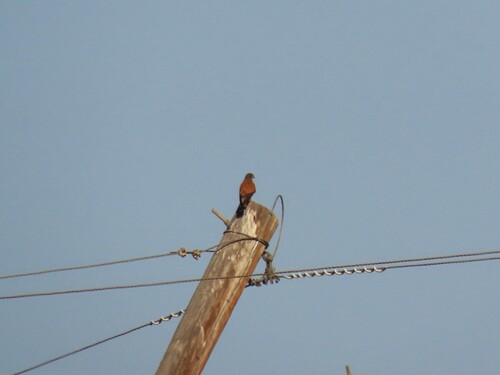 Rock Kestrel
In breve
La separazione sul campo più affidabile tra Grillaio e Rock Kestrel è la dimensione e la struttura: il Grillaio è nettamente più piccolo e più delicato, con ali e coda proporzionalmente più corte, rispetto al più grande e robusto Rock Kestrel. I maschi adulti di Grillaio non hanno la striscia malare nera e le macchie scure sulla schiena visibili in molti altri gheppi, e presentano macchie grigie uniche nelle ali, ma le femmine e gli immaturi di entrambe le specie sono estremamente simili e spesso richiedono attenzione alla struttura sottile e al richiamo. Entrambe le specie condividono un richiamo aspro 'chay-chay-chay', a differenza del Gheppio, e le loro livree si sovrappongono pesantemente, rendendo la separazione sul campo difficile, tranne che a distanza ravvicinata o con buone viste di dimensione e proporzioni. L'habitat e l'areale possono aiutare: il Grillaio è un migratore in Africa, mentre il Rock Kestrel è residente e diffuso nel sud dell'Africa.
Consigli di identificazione
- Dimensione e struttura: il Grillaio è nettamente più piccolo e più delicato, con una coda e ali più corte. Il Rock Kestrel è più robusto e ha ali più lunghe. Usa il confronto diretto se entrambe le specie sono presenti, o giudica rispetto a riferimenti di dimensione noti (ad es., piccioni, storni).
- Livrea del maschio adulto: Solo il maschio adulto di Grillaio è facilmente distintivo, con una schiena marrone uniforme (senza macchie scure), testa e coda grigie, e macchie grigie nelle ali. I maschi di Rock Kestrel sono più striati o macchiati sulla schiena e mancano delle ampie macchie grigie sulle ali.
- Striscia malare: I maschi di Grillaio mancano della striscia malare nera tipica di molti gheppi, incluso il Rock Kestrel. Questo è un segno sottile ma importante in buona luce.
- Schema della schiena: Il Grillaio (soprattutto i maschi) ha una schiena marrone senza macchie, mentre il Rock Kestrel spesso mostra macchie scure o striature sulla schiena, ma questo è variabile e non sempre visibile a distanza.
- Livrea femminile e immatura: Le femmine e gli immaturi di entrambe le specie sono estremamente simili, con solo lievi differenze di pallore. Non fare affidamento solo sulla livrea per queste età/sessi.
- Artigli: Il Grillaio ha artigli di colore bianco-avorio, a differenza degli artigli scuri abituali della maggior parte dei falchi, ma questo è visibile solo a distanza molto ravvicinata e non utile nella maggior parte delle situazioni sul campo.
- Proporzioni di ali e coda: In volo, il Grillaio mostra ali e coda proporzionalmente più corte, dando un aspetto più compatto e agile. Il Rock Kestrel ha ali più lunghe e un volo più stabile.
- Jizz in volo: Il Grillaio appare spesso più galleggiante e svolazzante, specialmente in stormi; il Rock Kestrel è più stabile, con battiti d'ali più lenti e profondi.
- Stormi e posatoi: Il Grillaio è spesso visto in grandi stormi, specialmente in posatoi comuni o durante la migrazione. Il Rock Kestrel è solitamente solitario o in coppie.
- Comportamento di nidificazione: Il Grillaio nidifica in colonie, spesso su edifici o scogliere; il Rock Kestrel preferisce scogliere o vecchi nidi di rami e raramente utilizza edifici.
- Habitat e areale: Nel sud dell'Africa, un gheppio visto al di fuori dell'inverno settentrionale è quasi sempre Rock Kestrel. Il Grillaio è un migratore, presente principalmente in inverno, spesso in campagna aperta o vicino a insediamenti.
- Voce: Entrambe le specie danno un richiamo aspro 'chay-chay-chay', che non le separa ma aiuta a escludere il Gheppio.
- Comportamento alimentare: Entrambi cacciano in volo e da posato, ma il Rock Kestrel è più spesso visto seguire i mammiferi (ad es., babbuini) per far saltare fuori gli insetti.
- Contesto stagionale: In Africa, controlla la data: il Grillaio è presente principalmente da ottobre a marzo; il Rock Kestrel è residente tutto l'anno.
- Insidie: Non fare affidamento solo sulla livrea per femmine e immaturi; struttura, dimensione e contesto sono più affidabili. I maschi adulti sono l'unica classe di età/sesso che può essere separata con sicurezza dalla livrea sul campo.
Taglia
Il Grillaio è notevolmente più piccolo e leggero, con una massa corporea tipica di circa 159g [wikidata], e una lunghezza di 27–33 cm e un'apertura alare di 63–72 cm [wikipedia]. Il Rock Kestrel è più grande e pesante: i maschi pesano 183–254g, le femmine 190–280g, e la lunghezza è di 30–33 cm [wikipedia]. Sul campo, il Rock Kestrel appare più robusto e robusto, mentre il Grillaio appare più delicato e compatto, con ali e coda proporzionalmente più corte. Questa differenza di dimensione è spesso visibile anche a distanza, specialmente in stormi misti o quando visti insieme.
Piumaggio
Non ci sono schemi di ali superiori giovanili o immaturi fortemente diagnostici descritti per entrambe le specie, quindi la separazione si basa sulla sottile livrea e struttura degli adulti. Il maschio adulto di Grillaio è il più distintivo: ha una testa e coda grigie, manca della striscia malare nera e mostra macchie grigie nelle ali, con una schiena che è marrone e senza macchie. I maschi di Rock Kestrel (e la maggior parte delle femmine/immaturi di entrambe le specie) non mostrano queste caratteristiche in modo distintivo, e le loro schiene sono più propense a essere macchiate o striate. Le femmine e gli immaturi di Grillaio sono solo leggermente più chiari rispetto ai Rock Kestrel e sono estremamente simili; la livrea da sola è raramente sufficiente per una separazione sicura. Nessuna delle due specie ha artigli scuri: quelli del Grillaio sono bianchi-avorio, ma questo è visibile solo a distanza molto ravvicinata. In sintesi, solo il maschio adulto di Grillaio è facilmente separabile dalla livrea; tutte le altre età e sessi sono meglio identificati dalla struttura e dal contesto.
Comportamento
Entrambe le specie cacciano in modi simili, utilizzando la caccia in volo e da posato per catturare principalmente insetti, ma anche piccoli vertebrati. Il Grillaio è più probabile essere visto in grandi posatoi comuni o colonie, specialmente durante la migrazione o in inverno, e spesso nidifica in colonie su edifici, scogliere o alberi. Il Rock Kestrel è più solitario o visto in coppie, ed è meno probabile nidificare su edifici, preferendo scogliere o vecchi nidi di rami. Entrambe le specie possono seguire i mammiferi per far saltare fuori gli insetti, ma questo è meglio documentato per il Rock Kestrel. In volo, il Grillaio appare più galleggiante e agile, mentre il Rock Kestrel è più stabile e potente.
Habitat
Il Grillaio è un migratore a lungo raggio, che nidifica dal Mediterraneo alla Mongolia e sverna in Africa e nel sud dell'Asia. In Africa, è presente principalmente durante l'inverno settentrionale, spesso in campagna aperta o vicino a insediamenti umani, e forma grandi posatoi comuni. Il Rock Kestrel è un nidificante residente in gran parte del sud e dell'est dell'Africa, favorendo habitat aperti aridi e semi-aridi, scogliere e affioramenti rocciosi, ma si trova anche in praterie aperte e savane. Nel sud dell'Africa, un gheppio visto al di fuori del periodo principale di svernamento è quasi certamente un Rock Kestrel; il Grillaio è più probabile in stormi o colonie durante l'inverno settentrionale.
Voce
Entrambe le specie condividono un richiamo aspro 'chay-chay-chay', specialmente quando allarmate o difendendo il territorio. Questo è diverso dal 'kee-kee-kee' del Gheppio, ma non aiuta a separare il Grillaio dal Rock Kestrel. La voce non è un separatore affidabile tra questi due, anche se aiuta a escludere il Gheppio.