
Least Flycatcher vs Hammond's Flycatcher
Empidonax minimus contro Empidonax hammondii
Fai un quiz con Least Flycatcher e Hammond's Flycatcher
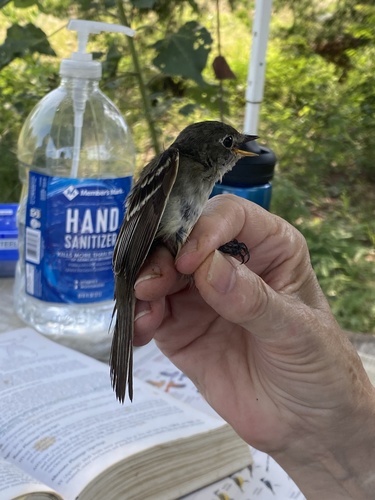 Least Flycatcher
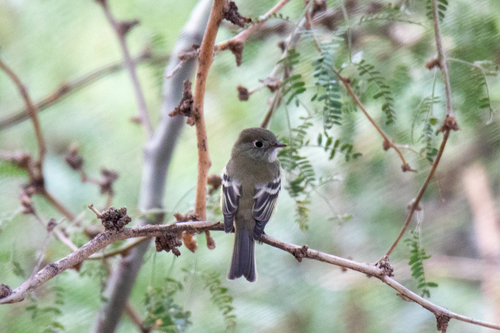 Hammond's Flycatcher
In breve
Least Flycatcher e Hammond's Flycatcher sono entrambi piccoli empidonax con proporzioni simili e classici segni distintivi degli Empid, rendendo difficile la separazione visiva, specialmente nei piumaggi immaturi. I segni distintivi più affidabili sono sottili differenze nella luminosità del piumaggio, nella forma del becco e, per alcuni uccelli, nel tono delle parti inferiori e del viso. Least Flycatcher è leggermente più luminoso e più olivastro sopra, con un becco più corto e con una base gialla, mentre Hammond's Flycatcher è più grigio, con un becco piccolo e stretto e un petto più grigio. Entrambe le specie hanno anelli oculari bianchi prominenti e barre alari, ma i dettagli della struttura del becco e le sottili differenze di colore sono fondamentali. La voce e l'habitat sono spesso più affidabili del piumaggio per la separazione sul campo.
Consigli di identificazione
- Juvenile and Immature Wing Bars: Entrambe le specie hanno due barre alari bianche, ma gli immaturi di Hammond's Flycatcher tendono ad avere barre alari più larghe e più color crema, mentre quelle di Least sono leggermente più scure con una tonalità bruna/olivastra. Questo è sottile e non sempre affidabile sul campo.
- Bill Shape and Color: Least Flycatcher ha un becco corto con una mandibola inferiore distintamente giallastra. Hammond's Flycatcher ha un becco piccolo e stretto che è generalmente più scuro e meno ovviamente giallo alla base. Le femmine di Hammond's possono mostrare un becco più corto e più largo, ma questo è sottile.
- Face and Eye Ring: Entrambi hanno anelli oculari bianchi audaci, ma Hammond's spesso appare avere un viso più contrastante a causa di un lavaggio grigio sul petto e sui lati della testa. Il viso di Least è più luminoso e più olivastro.
- Underparts Color: Least Flycatcher è più bianco sotto, con una pancia pulita e pallida. Hammond's Flycatcher mostra un lavaggio grigio sul petto e fianchi giallastri, dando un aspetto leggermente più opaco.
- Upperparts Tone: Least è di un grigio-olivastro più luminoso sopra, mentre Hammond's è più uniformemente grigio-olivastro, a volte apparendo più scuro, specialmente in scarsa illuminazione.
- Tail and Wing Structure: Entrambi hanno code corte e forme alari simili. Hammond's può apparire leggermente più lungo nelle ali e con una coda più corta, ma questo non è un segno distintivo forte.
- Behavioral Cues: Least Flycatcher è spesso più aggressivo e vocale, specialmente durante la riproduzione. Hammond's è più propenso a cercare cibo in silenzio più in alto nella chioma.
- Habitat Context: Nell'Est, Least Flycatcher è atteso in boschi aperti e margini. Hammond's è un uccello delle foreste conifere mature nel West. Fuori dalla gamma, sii cauto con le identificazioni visive.
- Vocalizations: Ascolta il "che-bec" di Least Flycatcher. Il canto di Hammond's è più complesso e rauco, ma non viene emesso durante la migrazione o nei luoghi di svernamento.
- Seasonal Overlap: Durante la migrazione, entrambe le specie possono verificarsi al di fuori delle loro aree di riproduzione principali. Usa una combinazione di piumaggio sottile, struttura e indizi di habitat quando la voce non è disponibile.
- Sex Differences: Le femmine di Hammond's possono avere un becco leggermente più corto e più largo, ma questo non è un segno distintivo affidabile senza un confronto diretto.
- Clustered Breeding: Least Flycatcher spesso nidifica in gruppi ed è altamente territoriale; Hammond's è più solitario in foreste dense.
- Plumage Pitfalls: Entrambe le specie possono apparire molto simili in scarsa luce o a distanza. Concentrati sul colore del becco, sul tono delle parti inferiori e sull'habitat per i migliori risultati.
- No Strong Flight Pattern Differences: Nessuna delle due specie mostra un modello distintivo delle ali superiori in volo che sia diagnostico per età o specie.
- When in Doubt, Use Voice and Habitat: Per Empidonax, specialmente questi due, le vocalizzazioni e l'habitat sono spesso più affidabili del piumaggio da solo.
Taglia
Entrambe le specie sono molto simili in dimensioni, misurando ciascuna circa 12–14 cm di lunghezza e con aperture alari comparabili (Least: 19–22 cm, Hammond's: ~22 cm). Il Least Flycatcher pesa in media circa 10,7 g, mentre il Hammond's Flycatcher è riportato tra 8–12 g, quindi c'è una significativa sovrapposizione. Sul campo, la dimensione non è un separatore affidabile tra questi due.
Piumaggio
Gli uccelli immaturi di entrambe le specie assomigliano molto agli adulti ma hanno barre alari leggermente più larghe e scure, con un lavaggio bruno o color crema (Least) o più color crema nel complesso (Hammond's). Per tutte le età, Least Flycatcher è generalmente di un grigio-olivastro più luminoso sopra e più bianco sotto, mentre Hammond's è più grigio nel complesso con un lavaggio grigio più pronunciato sul petto e lati giallastri della pancia. Entrambi hanno due barre alari bianche e un anello oculare bianco audace, ma Hammond's può mostrare un viso leggermente più contrastante a causa del lavaggio grigio. Gli uccelli giovanili e di primo autunno di entrambe le specie possono apparire molto simili, ma Hammond's tende ad avere barre alari più larghe e più color crema e un viso leggermente più scuro. Nessuna delle due specie mostra forti differenze nel modello delle ali superiori in volo che siano diagnostiche per età, quindi le viste in posizione sono solitamente necessarie.
Comportamento
Entrambe le specie sono classici Empidonax nel comportamento: si posano eretti, escono per catturare insetti e muovono le code e le ali. Least Flycatcher è noto per essere particolarmente territoriale e aggressivo durante la riproduzione, spesso trovato in gruppi e difendendo piccoli territori. Hammond's Flycatcher cerca spesso cibo più in alto nella chioma, posandosi nelle parti superiori degli alberi conifere e a volte sospendendosi per raccogliere insetti. Nei gruppi misti di Empidonax, Least può apparire leggermente più attivo e vocale, mentre Hammond's è più silenzioso e più ritirato.
Habitat
L'habitat è un indizio forte: Least Flycatcher nidifica in boschi aperti, margini e foreste di secondo sviluppo in tutta l'America del Nord orientale e centrale, mentre Hammond's Flycatcher è un uccello delle foreste conifere mature e miste nel West. Se trovi un piccolo Empidonax in una foresta densa di abeti o pioppi nel Rockies o nel Pacific Northwest, è molto più probabile che sia Hammond's. Nell'Est, Least è l'Empidonax predefinito in habitat adatti. Durante la migrazione, le aree possono sovrapporsi, quindi il contesto è utile ma non sempre definitivo.
Voce
Le vocalizzazioni sono tra i segni distintivi più affidabili. Least Flycatcher emette un richiamo acuto e ripetuto "che-bec" o "chebecker", che è distintivo e spesso il modo più semplice per confermare la sua identità. Hammond's Flycatcher ha un canto rauco e multi-parti ("ssilit, greeep, silit, pweet") e un richiamo acuto "peek", ma non canta durante la migrazione o nei luoghi di svernamento. Se senti il classico "che-bec", è un Least; altrimenti, la voce è meno utile al di fuori della stagione di riproduzione.
Least Flycatcher · Hammond's Flycatcher · I miei uccelli difficili