

Motmot

Large Cuckooshrike vs Bar-bellied Cuckooshrike

Coracina macei contro Coracina striata

Fai un quiz con Large Cuckooshrike e Bar-bellied Cuckooshrike
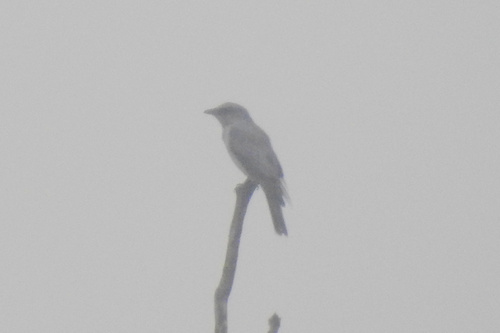
Large Cuckooshrike (Coracina macei) Large Cuckooshrike
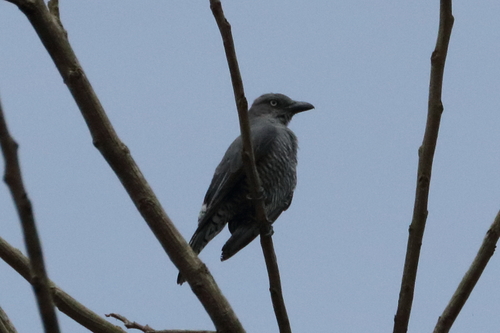
Bar-bellied Cuckooshrike (Coracina striata) Bar-bellied Cuckooshrike

Media

Caricamento…

In breve

The most reliable field mark between Large Cuckooshrike and Bar-bellied Cuckooshrike is the pattern and extent of barring on the underparts, especially in females and juveniles. Large Cuckooshrike males have a broad, well-marked eye-stripe and fine barring only on the abdomen and flanks, while females show more extensive but still fine barring. In contrast, Bar-bellied Cuckooshrike females and juveniles typically have much heavier, more extensive black-and-white barring across the underparts, sometimes reaching the breast or even the entire underside depending on subspecies. Structural differences are subtle, but Bar-bellied is slightly heavier on average. Habitat can help: Large Cuckooshrike is restricted to the Indian subcontinent, while Bar-bellied is found from Thailand through the Malay Archipelago to the Philippines.

Consigli di identificazione

  1. Underpart barring in females and juveniles: Bar-bellied Cuckooshrike females and immatures typically show bold, extensive black-and-white barring across the belly and often the breast or entire underside, especially in subspecies like kochii and panayensis. Large Cuckooshrike females and immatures have finer, less extensive barring, usually limited to the lower belly and flanks.
  2. Adult male eye-stripe: Large Cuckooshrike males have a broad, sharply defined pale eye-stripe, much more prominent than any facial marking on Bar-bellied Cuckooshrike males, which may show some black on the head but lack a strong stripe.
  3. Extent of barring in males: Bar-bellied Cuckooshrike males may show barring on the rump, belly, or breast depending on subspecies, but the barring is generally bolder than the fine, limited barring of Large Cuckooshrike males.
  4. Whitish vent in Large Cuckooshrike males: The vent is distinctly paler in Large Cuckooshrike males, contrasting with the rest of the underparts; Bar-bellied Cuckooshrike does not show this feature.
  5. Juvenile plumage: Juvenile Bar-bellied Cuckooshrikes (especially panayensis, kochii) are heavily barred below and may show brown, white, and black on the upperparts (sumatrensis), while Large Cuckooshrike juveniles resemble females with fine, limited barring.
  6. Geographic range: If seen in India or Sri Lanka, it is almost certainly Large Cuckooshrike; in Southeast Asia, Malaysia, Indonesia, or the Philippines, it is Bar-bellied Cuckooshrike.
  7. Habitat context: Bar-bellied Cuckooshrike is more likely in mangrove, swamp, or secondary forests, while Large Cuckooshrike is typically in dry or moist forest on the Indian subcontinent.
  8. Behavioral cues: Large Cuckooshrike often flicks its closed wings alternately after landing; this behavior is not noted for Bar-bellied Cuckooshrike.
  9. Group size and flight: Large Cuckooshrike is often seen in small groups with a bounding flight just above the canopy; Bar-bellied Cuckooshrike's group and flight behavior is less well described but may be similar.
  10. Size and structure: Both are large, robust cuckooshrikes; Bar-bellied is slightly heavier on average, but this is not a reliable field mark.
  11. Voice: If you hear a loud 'klu-eep' call, this supports Large Cuckooshrike; otherwise, voice is not diagnostic.
  12. Sexual dimorphism: Both species show some sexual dimorphism, but the extent and boldness of barring in females is a key separator—Bar-bellied females are much more heavily barred below than Large Cuckooshrike females.
  13. Subspecies variation: Be cautious with Bar-bellied Cuckooshrike, as some Philippine subspecies (e.g., guillemardi, mindorensis) are more uniformly grey and may resemble Large Cuckooshrike superficially, but still lack the bold eye-stripe and have different barring patterns.
  14. Pitfalls: Immature Bar-bellied Cuckooshrikes with extensive barring can be mistaken for female Large Cuckooshrikes, but the barring is always heavier and more extensive in Bar-bellied. Conversely, adult male Large Cuckooshrike's strong eye-stripe and limited barring are unique.
  15. When in doubt: Focus on the combination of underpart barring (extent and boldness), presence or absence of a strong eye-stripe, and range/habitat context for the most reliable separation.

Taglia

Bar-bellied Cuckooshrike averages about 111 g in body mass [wikidata], with a length range of 24–32 cm [wikipedia]. No direct mass data is available for Large Cuckooshrike, but both are large for cuckooshrikes and overlap in size. In the field, size alone is not a reliable separator, as both are robust, medium-large birds with similar proportions.

Piumaggio

Juvenile and female Bar-bellied Cuckooshrikes are the most heavily barred: in many subspecies, the entire underparts are covered in bold black-and-white bars, sometimes extending up to the breast or even the throat. Juveniles in some subspecies (e.g., panayensis, kochii) are especially striking with fully barred underparts, while in others (sumatrensis) the barring is less extensive and the upperparts show brown, white, and black. Large Cuckooshrike males have a broad, well-marked eye-stripe and grey throat and breast, with fine barring limited to the abdomen and flanks; females have more extensive but still fine barring, lacking the male's whitish vent. The eye-stripe is much more prominent in Large Cuckooshrike males than in any Bar-bellied Cuckooshrike. In Bar-bellied, the amount and placement of barring varies by subspecies, but it is generally bolder and more extensive than in Large Cuckooshrike, especially in females and immatures.

Comportamento

Large Cuckooshrike is often seen flying in small groups with a distinctive bounding flight just above the forest canopy. Upon landing, it flicks its closed wings alternately, a behavior also used in courtship. No such specific behavioral notes are available for Bar-bellied Cuckooshrike, though both species are generally arboreal and may be seen foraging in the mid to upper canopy. Both are primarily insectivorous but will also take fruit.

Habitat

Large Cuckooshrike is found only on the Indian subcontinent, typically in forested areas. Bar-bellied Cuckooshrike is found further east, from Thailand and Malaysia through Indonesia and the Philippines, and occupies a wider range of forest types, including mangrove, dry, swamp, and secondary forests. If you are outside the Indian subcontinent, Large Cuckooshrike can be ruled out.

Voce

Large Cuckooshrike has a loud call described as 'klu-eep.' No specific vocal description is provided for Bar-bellied Cuckooshrike in the available notes, so voice is not a reliable separator unless the call is heard and matches the known Large Cuckooshrike vocalization.

Invia una descrizione migliore

Usa le stesse sezioni del confronto. Il testo viene pubblicato subito.

The most reliable field mark between Large Cuckooshrike and Bar-bellied Cuckooshrike is the pattern and extent of barring on the underparts, especially in females and juveniles. Large Cuckooshrike males have a broad, well-marked eye-stripe and fine barring only on the abdomen and flanks, while females show more extensive but still fine barring. In contrast, Bar-bellied Cuckooshrike females and juveniles typically have much heavier, more extensive black-and-white barring across the underparts, sometimes reaching the breast or even the entire underside depending on subspecies. Structural differences are subtle, but Bar-bellied is slightly heavier on average. Habitat can help: Large Cuckooshrike is restricted to the Indian subcontinent, while Bar-bellied is found from Thailand through the Malay Archipelago to the Philippines.

  1. Underpart barring in females and juveniles: Bar-bellied Cuckooshrike females and immatures typically show bold, extensive black-and-white barring across the belly and often the breast or entire underside, especially in subspecies like kochii and panayensis. Large Cuckooshrike females and immatures have finer, less extensive barring, usually limited to the lower belly and flanks.
  2. Adult male eye-stripe: Large Cuckooshrike males have a broad, sharply defined pale eye-stripe, much more prominent than any facial marking on Bar-bellied Cuckooshrike males, which may show some black on the head but lack a strong stripe.
  3. Extent of barring in males: Bar-bellied Cuckooshrike males may show barring on the rump, belly, or breast depending on subspecies, but the barring is generally bolder than the fine, limited barring of Large Cuckooshrike males.
  4. Whitish vent in Large Cuckooshrike males: The vent is distinctly paler in Large Cuckooshrike males, contrasting with the rest of the underparts; Bar-bellied Cuckooshrike does not show this feature.
  5. Juvenile plumage: Juvenile Bar-bellied Cuckooshrikes (especially panayensis, kochii) are heavily barred below and may show brown, white, and black on the upperparts (sumatrensis), while Large Cuckooshrike juveniles resemble females with fine, limited barring.
  6. Geographic range: If seen in India or Sri Lanka, it is almost certainly Large Cuckooshrike; in Southeast Asia, Malaysia, Indonesia, or the Philippines, it is Bar-bellied Cuckooshrike.
  7. Habitat context: Bar-bellied Cuckooshrike is more likely in mangrove, swamp, or secondary forests, while Large Cuckooshrike is typically in dry or moist forest on the Indian subcontinent.
  8. Behavioral cues: Large Cuckooshrike often flicks its closed wings alternately after landing; this behavior is not noted for Bar-bellied Cuckooshrike.
  9. Group size and flight: Large Cuckooshrike is often seen in small groups with a bounding flight just above the canopy; Bar-bellied Cuckooshrike's group and flight behavior is less well described but may be similar.
  10. Size and structure: Both are large, robust cuckooshrikes; Bar-bellied is slightly heavier on average, but this is not a reliable field mark.
  11. Voice: If you hear a loud 'klu-eep' call, this supports Large Cuckooshrike; otherwise, voice is not diagnostic.
  12. Sexual dimorphism: Both species show some sexual dimorphism, but the extent and boldness of barring in females is a key separator—Bar-bellied females are much more heavily barred below than Large Cuckooshrike females.
  13. Subspecies variation: Be cautious with Bar-bellied Cuckooshrike, as some Philippine subspecies (e.g., guillemardi, mindorensis) are more uniformly grey and may resemble Large Cuckooshrike superficially, but still lack the bold eye-stripe and have different barring patterns.
  14. Pitfalls: Immature Bar-bellied Cuckooshrikes with extensive barring can be mistaken for female Large Cuckooshrikes, but the barring is always heavier and more extensive in Bar-bellied. Conversely, adult male Large Cuckooshrike's strong eye-stripe and limited barring are unique.
  15. When in doubt: Focus on the combination of underpart barring (extent and boldness), presence or absence of a strong eye-stripe, and range/habitat context for the most reliable separation.

Bar-bellied Cuckooshrike averages about 111 g in body mass [wikidata], with a length range of 24–32 cm [wikipedia]. No direct mass data is available for Large Cuckooshrike, but both are large for cuckooshrikes and overlap in size. In the field, size alone is not a reliable separator, as both are robust, medium-large birds with similar proportions.

Juvenile and female Bar-bellied Cuckooshrikes are the most heavily barred: in many subspecies, the entire underparts are covered in bold black-and-white bars, sometimes extending up to the breast or even the throat. Juveniles in some subspecies (e.g., panayensis, kochii) are especially striking with fully barred underparts, while in others (sumatrensis) the barring is less extensive and the upperparts show brown, white, and black. Large Cuckooshrike males have a broad, well-marked eye-stripe and grey throat and breast, with fine barring limited to the abdomen and flanks; females have more extensive but still fine barring, lacking the male's whitish vent. The eye-stripe is much more prominent in Large Cuckooshrike males than in any Bar-bellied Cuckooshrike. In Bar-bellied, the amount and placement of barring varies by subspecies, but it is generally bolder and more extensive than in Large Cuckooshrike, especially in females and immatures.

Large Cuckooshrike is often seen flying in small groups with a distinctive bounding flight just above the forest canopy. Upon landing, it flicks its closed wings alternately, a behavior also used in courtship. No such specific behavioral notes are available for Bar-bellied Cuckooshrike, though both species are generally arboreal and may be seen foraging in the mid to upper canopy. Both are primarily insectivorous but will also take fruit.

Large Cuckooshrike is found only on the Indian subcontinent, typically in forested areas. Bar-bellied Cuckooshrike is found further east, from Thailand and Malaysia through Indonesia and the Philippines, and occupies a wider range of forest types, including mangrove, dry, swamp, and secondary forests. If you are outside the Indian subcontinent, Large Cuckooshrike can be ruled out.

Large Cuckooshrike has a loud call described as 'klu-eep.' No specific vocal description is provided for Bar-bellied Cuckooshrike in the available notes, so voice is not a reliable separator unless the call is heard and matches the known Large Cuckooshrike vocalization.

Scartare le modifiche?

Hai modifiche non salvate. Se esci ora, andranno perse.

Large Cuckooshrike · Bar-bellied Cuckooshrike · I miei uccelli difficili