

Lappet-faced Vulture vs Variable Hawk
Torgos tracheliotos contro Geranoaetus polyosoma
Fai un quiz con Lappet-faced Vulture e Variable Hawk
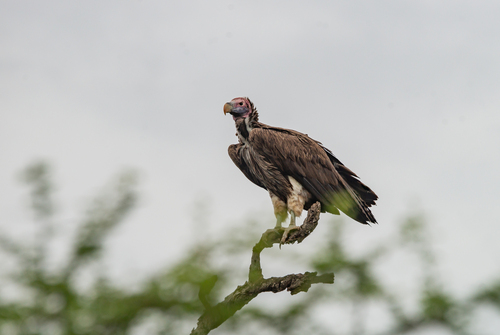 Lappet-faced Vulture
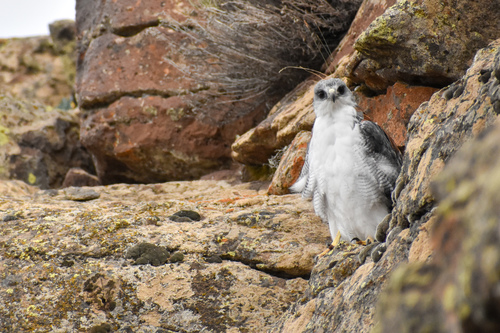 Variable Hawk
In breve
Il segno di campo più affidabile per separare il Lappet-faced Vulture dal Variable Hawk è la pura dimensione e struttura: il avvoltoio è un uccello massiccio e pesante con una enorme testa nuda e colorata e ampie ali, mentre il falco è molto più piccolo, con una testa piumata, proporzioni più snelle e un piumaggio variabile ma mai simile a quello di un avvoltoio. In volo, le ali inferiori dell'avvoltoio sono scure con cosce bianche a contrasto, mentre il falco (indipendentemente dalla morfologia) mostra una coda bianca con una bold band nera e ali inferiori più chiare e barrate. Il becco enorme dell'avvoltoio e le pieghe carnose della testa sono visibili anche a distanza, specialmente quando è posato. La confusione è più probabile con i falchi a morf scuro a distanza, ma la massa e la testa unica dell'avvoltoio sono inconfondibili da vicino.
Consigli di identificazione
- La dimensione è il primo controllo: Il Lappet-faced Vulture è gigantesco, con un'apertura alare fino a 2,9 m e una massa che sovrasta qualsiasi Variable Hawk. Se l'uccello appare grande come un piccolo aquila o più grande, non è un Variable Hawk. Questo segno è affidabile a qualsiasi età o stagione.
- Struttura della testa: L'avvoltoio ha una testa nuda e colorata con lappeti carnosi e un becco massiccio e chiaro. Il Variable Hawk ha sempre una testa piumata e un becco proporzionalmente molto più piccolo. Usa questo a qualsiasi distanza in cui i dettagli della testa siano visibili.
- Schema della coda in volo: Il Variable Hawk mostra sempre una coda bianca con una bold band nera subterminale, visibile dall'alto e dal basso. Il Lappet-faced Vulture non mostra mai questo schema; la sua coda è scura e priva di una band a contrasto. Questo è il miglior segno per i falchi in volo, di tutte le età.
- Cosce bianche: Il Lappet-faced Vulture ha piume delle cosce bianche fortemente contrastanti, visibili in volo e spesso quando è posato. Il Variable Hawk non mostra mai questa caratteristica.
- Schema delle ali inferiori: In volo, il Variable Hawk ha ali inferiori chiare con una fine barratura e una larga punta nera; le ali inferiori del Lappet-faced Vulture sono scure, ampie e prive del pattern del falco.
- Variabilità del piumaggio: Il Variable Hawk è estremamente polimorfo, ma nessuna morfologia mostra mai la combinazione di parti superiori nerastre, cosce bianche e testa nuda dell'avvoltoio. I falchi a morf scuro possono apparire completamente scuri ma mostreranno comunque la band della coda bianca e la testa piumata.
- Dimensione e forma del becco: Il becco dell'avvoltoio è massiccio, profondo e chiaro, adattato per strappare carne. Il becco del falco è molto più piccolo e più tipico dei Buteos.
- Forma dell'ala in volo: Le ali dell'avvoltoio sono molto ampie, con punte seghettate e un bordo anteriore parallelo; le ali del falco sono ampie ma meno massicce e più appuntite.
- Postura posata: L'avvoltoio si siede pesantemente, spesso curvo, con lunghe gambe e una testa enorme. Il falco si posiziona più eretto e appare molto più snello.
- Comportamento alimentare: Gli avvoltoi sono visti su carcasse o mentre si nutrono di animali morti; i falchi sono visti a caccia di prede vive o posati a scrutare il movimento.
- Habitat e distribuzione: Se osservato in Africa o Arabia, è quasi certamente un avvoltoio; in Sud America, un falco. In zoo o situazioni di vagabondaggio, usa altri segni.
- Confusione sesso/età: Le femmine di Variable Hawk possono avere schiene rossastre, ma questo non si sovrappone mai al piumaggio o alla struttura dell'avvoltoio. I falchi giovanili/immaturi mostrano ancora la band della coda bianca.
- Stile di volo: Gli avvoltoi planano con le ali tenute piatte o leggermente sollevate, apparendo pesanti e lenti; i falchi planano più leggermente e possono battere le ali più frequentemente.
- Colore della testa: Il colore della testa dell'avvoltoio varia a seconda della regione ma è sempre nudo e sorprendente; la testa del falco è sempre piumata, indipendentemente dalla morfologia.
- Contesto sociale: Gli avvoltoi possono radunarsi in gruppi su carcasse; i falchi sono solitamente solitari o in coppie.
Taglia
Il Lappet-faced Vulture è uno dei rapaci più grandi del mondo, misurando 95–115 cm di lunghezza con un'apertura alare di 2,5–2,9 m e pesando 4,4–13,6 kg [wikipedia][avonet]. Al contrario, il Variable Hawk è un grande Buteo ma molto più piccolo: 45–62 cm di lunghezza, apertura alare 113–151 cm, peso 0,8–1,8 kg [wikipedia]. L'avvoltoio è almeno due volte più lungo e fino a dieci volte più pesante del falco. Anche a distanza, le ali dell'avvoltoio appaiono più ampie e lunghe, e il suo corpo è molto più massiccio. Nessun Variable Hawk, nemmeno le morfologie più grandi, si avvicina alla dimensione dell'avvoltoio.
Piumaggio
- Volo giovanile/immaturo (ala superiore/ala inferiore):
- Lappet-faced Vulture (tutte le età): In volo, mostra parti superiori scure con piume delle cosce bianche fortemente contrastanti; le parti inferiori variano da bianche a marrone chiaro, ma sempre con una testa nuda e colorata. Le ali sono ampie, con punte che sembrano seghettate e un forte contrasto tra copritrici nerastre e cosce bianche. Non è presente alcuna band della coda chiara o band subterminale nera [wikipedia].
- Variable Hawk (tutte le età/morfologie): Mostra sempre una coda bianca con una bold band nera subterminale, e ali inferiori che sono chiare con fine barratura scura e una larga punta nera. Le parti superiori e inferiori sono altamente variabili (da grigio scuro a biancastro a rossastro), ma il pattern della coda è coerente e diagnostico [wikipedia].
- Adulto posato:
- Lappet-faced Vulture: Nerastro sopra, cosce bianche, testa nuda con pelle colorata e pieghe carnose (lappeti). Il becco è massiccio e chiaro. Gli uccelli arabi sono marrone scuro sopra, gli uccelli africani più nerastri con linee marroni. La parte inferiore è bianca a marrone chiaro. Il colore della testa varia a seconda della regione ma è sempre nudo e sorprendente [wikipedia].
- Variable Hawk: Testa piumata, nessuna pelle nuda. Il piumaggio è altamente variabile, ma non ha mai le cosce bianche dell'avvoltoio o la testa nuda e colorata. Le femmine hanno spesso schiene marrone-rossastro, i maschi più grigi, ma entrambi i sessi hanno sempre la coda bianca con band nera [wikipedia].
- Trappole:
- I falchi a morf scuro possono apparire completamente scuri a distanza, ma non hanno mai le cosce bianche o la testa nuda dell'avvoltoio. Nessun Variable Hawk mostra il becco massiccio dell'avvoltoio o le pieghe carnose della testa.
Comportamento
I Lappet-faced Vultures sono principalmente spazzini, spesso visti planare in alto o posati vicino a carcasse, ma cacciano anche prede vive (specialmente animali giovani o deboli) e possono essere visti scendere da posatoi su prede [wikipedia]. Sono dominanti sulle carcasse e possono scacciare altri avvoltoi. I Variable Hawks sono cacciatori attivi, planando su campi aperti o posati su pali e alberi, predando piccoli mammiferi, uccelli e invertebrati. Raramente si nutrono di carcasse e non sono visti su di esse. Il comportamento dell'avvoltoio è più sociale alle fonti di cibo, mentre il falco è tipicamente solitario o in coppie.
Habitat
Il Lappet-faced Vulture si trova in habitat aperti, aridi o semi-aridi in tutta l'Africa e Arabia, spesso in savane, deserti e pianure aperte [wikipedia]. Il Variable Hawk è diffuso in habitat aperti dell'America meridionale occidentale e meridionale, dalle steppe di bassa quota alla puna e al páramo ad alta quota, ed è assente in Africa e Arabia [wikipedia]. Pertanto, la distribuzione da sola è solitamente diagnostica, ma in situazioni di cattività o vagabondaggio, la preferenza dell'habitat può aiutare: avvoltoi in Africa/Arabia, falchi in Sud America.
Lappet-faced Vulture · Variable Hawk · I miei uccelli difficili