

Motmot

Koklass Pheasant vs Finsch's Wheatear

Pucrasia macrolopha contro Oenanthe finschii

Fai un quiz con Koklass Pheasant e Finsch's Wheatear
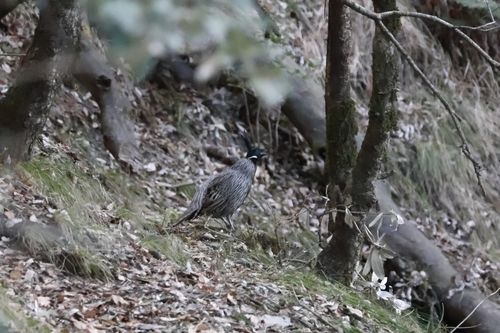
Koklass Pheasant (Pucrasia macrolopha) Koklass Pheasant
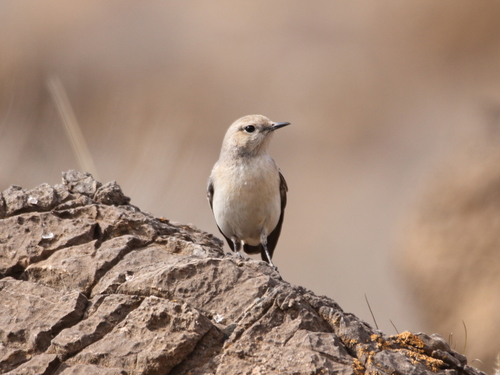
Finsch's Wheatear (Oenanthe finschii) Finsch's Wheatear

Media

Caricamento…

In breve

Koklass Pheasant and Finsch's Wheatear are extremely unlikely to be confused in the field due to their vast difference in size, structure, and typical habitats, but confusion may arise with poor or distant views, especially of females or immatures. The most reliable separation is sheer size: Koklass Pheasant is a large, ground-dwelling gamebird, while Finsch's Wheatear is a small, upright songbird. In flight or at rest, the pheasant's long, graduated tail and cryptic brown or silver-grey plumage contrast sharply with the wheatear's compact build and strong black-and-white tail pattern. Immature Koklass Pheasants resemble adult females, but never show the wheatear's distinctive tail or upright posture. If only a brief view is obtained, focus on overall structure and tail pattern.

Consigli di identificazione

  1. Size is the most immediate clue: Koklass Pheasant is enormous compared to Finsch's Wheatear; even a distant view should reveal a bulky, chicken-like shape versus a small, upright passerine.
  2. Tail pattern is diagnostic: Finsch's Wheatear of all ages and sexes shows a white tail with a broad, even black terminal band, visible in flight and often when perched. Koklass Pheasant has a long, pale-tipped tail with no black-and-white contrast.
  3. Posture and behavior: Finsch's Wheatear stands upright, often on rocks or low perches, and flicks its tail. Koklass Pheasant is horizontal, skulking, and rarely perches in the open except at roost.
  4. Plumage contrast: Adult male Finsch's Wheatear is sharply black-and-white; females are brown-grey above but still show the tail pattern. Koklass males have a black head, chestnut breast, and silver-grey streaked upperparts with white neck patches; females and immatures are pale brown above, never showing strong contrasts.
  5. Wing and upperpart pattern: Finsch's Wheatear has black wings contrasting with a white back and rump (male), or brown-grey above (female), but always with the bold tail. Koklass Pheasant has streaked or plain upperparts, never with black-and-white contrast.
  6. Bill structure: Finsch's Wheatear has a thin, pointed bill for insect-catching; Koklass Pheasant has a thick, gamebird bill for seeds and vegetation.
  7. Leg length and jizz: Wheatear has long legs for its size, giving it a tall, upright look. Koklass has proportionally shorter, thicker legs.
  8. Flight style: Finsch's Wheatear has a bounding, direct flight typical of small passerines; Koklass Pheasant flies only when flushed, with labored, heavy wingbeats and a long tail trailing.
  9. Habitat context: Dense forest or woodland points to Koklass; open, rocky, or semi-desert terrain points to Finsch's Wheatear.
  10. Group size: Koklass is often in pairs or small family groups; Finsch's Wheatear is usually solitary or in loose pairs.
  11. Vocalizations: Whistled or musical calls indicate wheatear; loud, chorus-like predawn calls indicate Koklass.
  12. Sex and age confusion: Immature Koklass Pheasants look like adult females (pale brown, long-tailed), but never show a wheatear's tail pattern or upright stance. Female/immature wheatears are plainer but always have the black-and-white tail.
  13. Roosting behavior: Koklass may roost in trees or under rocks; Finsch's Wheatear roosts in crevices or low vegetation.
  14. If only a brief view: Focus on size, tail pattern, and posture. Even a fleeting glimpse should separate these two if these features are noted.
  15. When in doubt: If you see a small, upright bird with a striking black-and-white tail, it's a wheatear. If you see a large, ground-dwelling bird with a long, plain tail and cryptic plumage, it's Koklass Pheasant.

Taglia

Koklass Pheasant is dramatically heavier (average 1155 g) and longer (58–64 cm) than Finsch's Wheatear (average 27.5 g, 14 cm long). The pheasant is nearly 40 times the mass of the wheatear and stands out as a bulky, chicken-like bird, while the wheatear is a small, slender passerine. Even at a distance, the difference in body bulk, leg length, and tail length is unmistakable if both species are familiar.

Piumaggio

Juvenile and immature Koklass Pheasants resemble adult females, with pale brown upperparts and elongated, pale-tipped tails, lacking any strong pattern on the upperwing or tail. There is no age or sex of Koklass that shows the bold black-and-white tail or wing contrast of Finsch's Wheatear. In all plumages, Finsch's Wheatear (both sexes and ages) shows a striking white rump and tail with a broad, uniform black terminal band, visible in flight and often when perched. Adult male Finsch's Wheatear is sharply patterned with a white crown, back, and belly contrasting with a black face, throat, and wings; females are much plainer but still show the diagnostic tail pattern. Koklass males have a black head, chestnut breast, and silver-grey streaked upperparts with white neck patches, but are never black-and-white overall. Females and immatures are paler brown, always with a long, pale-tipped tail. No Koklass Pheasant shows the upright, clean-cut look or the tail pattern of a wheatear.

Comportamento

Koklass Pheasant is a shy, ground-dwelling bird that skulks under bushes, rarely perching in the open except when roosting in trees or under rocks. It is usually seen walking or running on the ground, sometimes in pairs or small family groups. Finsch's Wheatear is a classic upright, alert passerine, often seen perched on rocks or low shrubs, sallying out to catch insects, and flicking its tail. Its flight is direct and bounding, typical of wheatears, and it is much more likely to be seen in the open.

Habitat

Koklass Pheasant inhabits high-altitude forests, often in dense cover from Afghanistan to central Nepal and parts of China and Mongolia, and does not venture above the tree line. It is rarely seen in open country. Finsch's Wheatear, by contrast, prefers open, rocky slopes, semi-desert, and scrubby hillsides, usually far from dense forest. If the bird is in deep woodland, Koklass is vastly more likely; in open, rocky terrain, Finsch's Wheatear is expected.

Voce

Koklass Pheasant is best detected by its loud, chorus-like predawn calls, especially during breeding and autumn; these calls are not described in detail here, but are distinctive for the species. Finsch's Wheatear gives a whistled 'tsit' call and a song of clear notes, whistles, and crackling, typical of wheatears and quite unlike any gamebird. If you hear a whistled or musical song, it is the wheatear; a loud, chorus-like call at dawn points to Koklass.

Invia una descrizione migliore

Usa le stesse sezioni del confronto. Il testo viene pubblicato subito.

Koklass Pheasant and Finsch's Wheatear are extremely unlikely to be confused in the field due to their vast difference in size, structure, and typical habitats, but confusion may arise with poor or distant views, especially of females or immatures. The most reliable separation is sheer size: Koklass Pheasant is a large, ground-dwelling gamebird, while Finsch's Wheatear is a small, upright songbird. In flight or at rest, the pheasant's long, graduated tail and cryptic brown or silver-grey plumage contrast sharply with the wheatear's compact build and strong black-and-white tail pattern. Immature Koklass Pheasants resemble adult females, but never show the wheatear's distinctive tail or upright posture. If only a brief view is obtained, focus on overall structure and tail pattern.

  1. Size is the most immediate clue: Koklass Pheasant is enormous compared to Finsch's Wheatear; even a distant view should reveal a bulky, chicken-like shape versus a small, upright passerine.
  2. Tail pattern is diagnostic: Finsch's Wheatear of all ages and sexes shows a white tail with a broad, even black terminal band, visible in flight and often when perched. Koklass Pheasant has a long, pale-tipped tail with no black-and-white contrast.
  3. Posture and behavior: Finsch's Wheatear stands upright, often on rocks or low perches, and flicks its tail. Koklass Pheasant is horizontal, skulking, and rarely perches in the open except at roost.
  4. Plumage contrast: Adult male Finsch's Wheatear is sharply black-and-white; females are brown-grey above but still show the tail pattern. Koklass males have a black head, chestnut breast, and silver-grey streaked upperparts with white neck patches; females and immatures are pale brown above, never showing strong contrasts.
  5. Wing and upperpart pattern: Finsch's Wheatear has black wings contrasting with a white back and rump (male), or brown-grey above (female), but always with the bold tail. Koklass Pheasant has streaked or plain upperparts, never with black-and-white contrast.
  6. Bill structure: Finsch's Wheatear has a thin, pointed bill for insect-catching; Koklass Pheasant has a thick, gamebird bill for seeds and vegetation.
  7. Leg length and jizz: Wheatear has long legs for its size, giving it a tall, upright look. Koklass has proportionally shorter, thicker legs.
  8. Flight style: Finsch's Wheatear has a bounding, direct flight typical of small passerines; Koklass Pheasant flies only when flushed, with labored, heavy wingbeats and a long tail trailing.
  9. Habitat context: Dense forest or woodland points to Koklass; open, rocky, or semi-desert terrain points to Finsch's Wheatear.
  10. Group size: Koklass is often in pairs or small family groups; Finsch's Wheatear is usually solitary or in loose pairs.
  11. Vocalizations: Whistled or musical calls indicate wheatear; loud, chorus-like predawn calls indicate Koklass.
  12. Sex and age confusion: Immature Koklass Pheasants look like adult females (pale brown, long-tailed), but never show a wheatear's tail pattern or upright stance. Female/immature wheatears are plainer but always have the black-and-white tail.
  13. Roosting behavior: Koklass may roost in trees or under rocks; Finsch's Wheatear roosts in crevices or low vegetation.
  14. If only a brief view: Focus on size, tail pattern, and posture. Even a fleeting glimpse should separate these two if these features are noted.
  15. When in doubt: If you see a small, upright bird with a striking black-and-white tail, it's a wheatear. If you see a large, ground-dwelling bird with a long, plain tail and cryptic plumage, it's Koklass Pheasant.

Koklass Pheasant is dramatically heavier (average 1155 g) and longer (58–64 cm) than Finsch's Wheatear (average 27.5 g, 14 cm long). The pheasant is nearly 40 times the mass of the wheatear and stands out as a bulky, chicken-like bird, while the wheatear is a small, slender passerine. Even at a distance, the difference in body bulk, leg length, and tail length is unmistakable if both species are familiar.

Juvenile and immature Koklass Pheasants resemble adult females, with pale brown upperparts and elongated, pale-tipped tails, lacking any strong pattern on the upperwing or tail. There is no age or sex of Koklass that shows the bold black-and-white tail or wing contrast of Finsch's Wheatear. In all plumages, Finsch's Wheatear (both sexes and ages) shows a striking white rump and tail with a broad, uniform black terminal band, visible in flight and often when perched. Adult male Finsch's Wheatear is sharply patterned with a white crown, back, and belly contrasting with a black face, throat, and wings; females are much plainer but still show the diagnostic tail pattern. Koklass males have a black head, chestnut breast, and silver-grey streaked upperparts with white neck patches, but are never black-and-white overall. Females and immatures are paler brown, always with a long, pale-tipped tail. No Koklass Pheasant shows the upright, clean-cut look or the tail pattern of a wheatear.

Koklass Pheasant is a shy, ground-dwelling bird that skulks under bushes, rarely perching in the open except when roosting in trees or under rocks. It is usually seen walking or running on the ground, sometimes in pairs or small family groups. Finsch's Wheatear is a classic upright, alert passerine, often seen perched on rocks or low shrubs, sallying out to catch insects, and flicking its tail. Its flight is direct and bounding, typical of wheatears, and it is much more likely to be seen in the open.

Koklass Pheasant inhabits high-altitude forests, often in dense cover from Afghanistan to central Nepal and parts of China and Mongolia, and does not venture above the tree line. It is rarely seen in open country. Finsch's Wheatear, by contrast, prefers open, rocky slopes, semi-desert, and scrubby hillsides, usually far from dense forest. If the bird is in deep woodland, Koklass is vastly more likely; in open, rocky terrain, Finsch's Wheatear is expected.

Koklass Pheasant is best detected by its loud, chorus-like predawn calls, especially during breeding and autumn; these calls are not described in detail here, but are distinctive for the species. Finsch's Wheatear gives a whistled 'tsit' call and a song of clear notes, whistles, and crackling, typical of wheatears and quite unlike any gamebird. If you hear a whistled or musical song, it is the wheatear; a loud, chorus-like call at dawn points to Koklass.

Scartare le modifiche?

Hai modifiche non salvate. Se esci ora, andranno perse.

Koklass Pheasant · Finsch's Wheatear · I miei uccelli difficili