

Japanese Pygmy Woodpecker vs Brown-eared Bulbul
Yungipicus kizuki contro Hypsipetes amaurotis
Fai un quiz con Japanese Pygmy Woodpecker e Brown-eared Bulbul
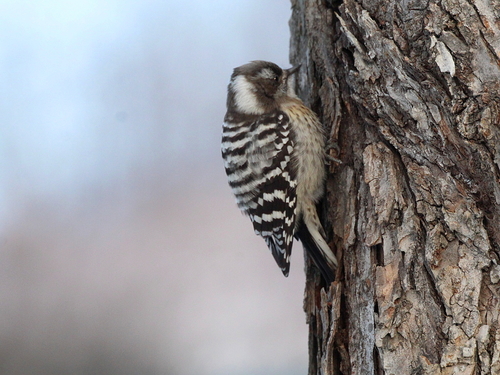 Japanese Pygmy Woodpecker
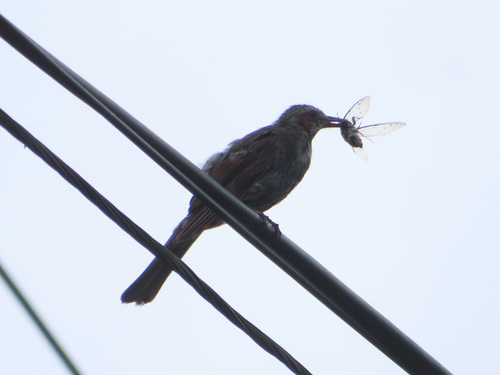 Brown-eared Bulbul
In breve
The most reliable field mark to separate Japanese Pygmy Woodpecker from Brown-eared Bulbul is overall structure and plumage: the woodpecker is a tiny, compact, boldly barred bird with a short bill and stiff tail, while the bulbul is much larger, long-tailed, and plain gray-brown with obvious brown 'ear' patches. In flight or perched, the woodpecker’s white-barred wings and back stand out, contrasting with the bulbul’s uniform, unpatterned plumage. Juvenile woodpeckers may show extra throat streaking, but even then, their size and pattern are distinctive. Calls are also very different, with the woodpecker giving high, quick notes and the bulbul producing loud, harsh squeaks.
Consigli di identificazione
- Size is the first clue: Japanese Pygmy Woodpecker is tiny (13–15 cm), while Brown-eared Bulbul is much larger (about 28 cm). If the bird looks sparrow-sized or smaller, it's the woodpecker; if it's thrush-sized or bigger, it's the bulbul.
- Overall shape and structure: Woodpecker is compact with a short, chisel-like bill and a stiff, short tail. Bulbul is elongated, with a long, rounded tail and a slender, slightly downcurved bill.
- Wing and back pattern: Woodpecker shows bold white barring on dark brown wings and back, visible both perched and in flight. Bulbul is plain gray-brown above with no barring or pattern.
- Facial markings: Woodpecker has a white supercilium (eyebrow), brown ear coverts, and a white moustachial stripe. Bulbul has a plain face except for a prominent brown patch on the ear coverts ('brown ears'), with no supercilium or facial stripes.
- Tail pattern: Woodpecker's tail is blackish with white bars on the outer feathers; bulbul's tail is long, plain, and unmarked.
- Sex differences (woodpecker only): Male woodpecker has a small red mark on the nape; female lacks this but has slightly longer bill, wings, and tail. This is subtle and not always visible.
- Juvenile woodpecker: May show extra throat streaking, but still has barred upperparts and short tail, unlike any bulbul.
- Perching behavior: Woodpecker clings to trunks and branches, often using its tail for support; bulbul perches upright on twigs, wires, or in the open, rarely on trunks.
- Flight style: Woodpecker flies with undulating, bounding flight typical of woodpeckers, often low through trees. Bulbul flies in a more direct, steady manner, often between treetops or across open areas.
- Voice: Listen for soft, high 'tsi-tsi-tsi' or weak drumming for woodpecker; loud, harsh 'shreep' or 'weesp' for bulbul.
- Habitat context: In dense, mature woodland, especially where birds are foraging on bark, woodpecker is more likely. In open parks, gardens, orchards, or noisy flocks, bulbul is the default.
- Feeding behavior: Woodpecker probes bark for insects; bulbul eats fruit, nectar, and insects, often seen in trees with fruit or flowers.
- Seasonal context: Both species are present year-round in much of Japan, but bulbuls may form large flocks in winter, while woodpeckers remain in pairs or small groups.
- Common pitfalls: A quick view of a woodpecker from below may look plain, but look for the small size, barred wings, and stiff tail. Bulbul may seem streaky in poor light, but lacks any barring or white on the back/wings.
- When in doubt: Focus on size, wing/back pattern, and tail length. These three marks will separate all ages and sexes in nearly all situations.
Taglia
Japanese Pygmy Woodpecker is much smaller, weighing about 22g and measuring 13–15 cm in length. In contrast, Brown-eared Bulbul is nearly twice as long at about 28 cm and is substantially heavier (exact mass not given, but much bulkier in the field). The bulbul’s long tail and larger body make it stand out, even at a distance. If both species are seen together or near familiar birds, the woodpecker will appear tiny and compact, while the bulbul will look large and elongated.
Piumaggio
- Juvenile/immature woodpecker: May show extra streaking on the throat, but still has the characteristic white-barred upperparts and wings, and a short, stiff tail.
- Adult woodpecker: Bold white barring across dark brown back and upperwings, white supercilium, brown ear coverts, and a small red nape mark in males. Underparts are pale with brownish streaks. Tail is blackish with white bars on outer feathers.
- Brown-eared Bulbul (all ages): Uniformly grayish-brown overall, with a prominent brown patch on the ear coverts ('brown ears'), and a long, plain tail. Lacks any barring or bold patterning on wings or back. No supercilium or facial stripes. Bill and legs are dark.
- In flight: Woodpecker shows barred wings and back, short tail; bulbul shows plain wings and long tail, with no barring or pattern.
Comportamento
Japanese Pygmy Woodpecker is usually seen singly or in pairs, often hitching along tree trunks and branches, probing for insects, and sometimes joining mixed-species flocks. It moves with short, jerky hops and uses its tail for support against bark. Brown-eared Bulbul is more often seen in noisy flocks, especially outside the breeding season, and is conspicuous in flight between trees or perching in the open. Bulbuls feed on fruit, nectar, and insects, and are much more likely to be seen in open areas, gardens, or even on man-made structures.
Habitat
Both species can occur in forests and wooded areas, but Japanese Pygmy Woodpecker is more tightly associated with coniferous and deciduous forests, including upland and riverine woods, and often forages on tree trunks and branches. Brown-eared Bulbul is highly adaptable, found in forests but also very common in urban parks, gardens, orchards, and even agricultural areas. If seen in a city park or open farmland, bulbul is much more likely; woodpecker prefers more wooded, less disturbed areas but can occur in parks with mature trees.
Voce
Japanese Pygmy Woodpecker gives high, quick 'tsi-tsi-tsi' calls and weak, short drumming bursts. Its calls are soft and unobtrusive. Brown-eared Bulbul is extremely vocal, with loud, harsh 'shreep' and 'weesp' calls that are often described as unattractive or squeaky. Bulbul calls are much more likely to draw attention and are a familiar sound in Japanese towns and countryside.
Japanese Pygmy Woodpecker · Brown-eared Bulbul · I miei uccelli difficili