

Aquila imperiale vs Verreaux's Eagle
Aquila heliaca contro Aquila verreauxii
Fai un quiz con Aquila imperiale e Verreaux's Eagle
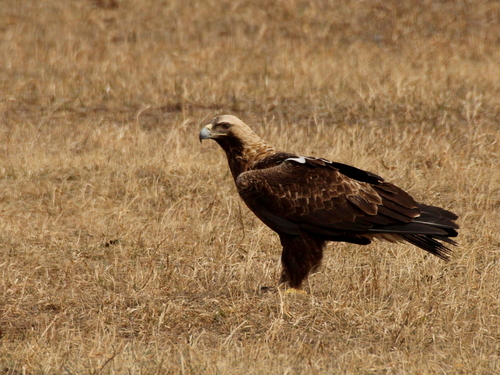 Aquila imperiale
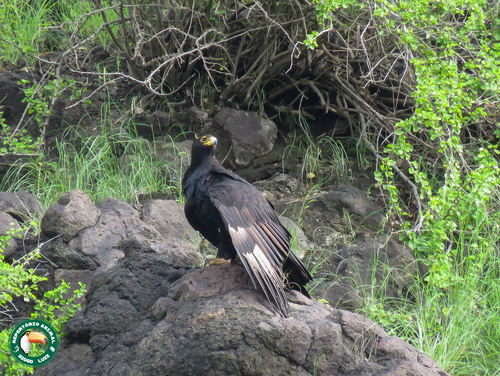 Verreaux's Eagle
In breve
Il segno di campo più affidabile tra Aquila imperiale e Verreaux's Eagle è la colorazione generale: l'adulto di Verreaux's è sorprendentemente nero con audaci macchie bianche, mentre l'Aquila imperiale è marrone scuro con distintive macchie bianche sulle spalle e una coda sottostante grigia più chiara. Gli uccelli giovani e immaturi sono anche separabili per il motivo delle ali e del corpo: i giovani Aquila imperiale sono di un buff chiaro con striature marroni, mai nerastre, mentre gli Aquila di Verreaux's giovani sono marrone scuro con una corona dorata e una vasta maculatura bianca sulle ali. In volo, Verreaux's Eagle ha una postura unica delle ali a dihedro profondo e ali a forma di pala, mentre l'Aquila imperiale vola con ali più piatte e una silhouette più snella e meno ingombrante. La dimensione non è un segno di campo affidabile, ma Verreaux's è più pesante e massiccio. L'habitat può aiutare: Verreaux's è quasi esclusivamente africano e legato a terreni rocciosi e montuosi, mentre l'Aquila imperiale è eurasiatica, preferendo pianure aperte e steppe.
Consigli di identificazione
- Adult coloration: Verreaux's Eagle è nero corvino con audaci macchie bianche sulla schiena e sulle ali; l'Aquila imperiale è marrone scuro con macchie bianche sulle spalle e una coda grigia. Questo è diagnostico in buona luce.
- Juvenile/immature plumage: L'Aquila imperiale giovane è di un buff chiaro con striature marroni e aree scure e chiare contrastanti; il giovane Verreaux's è marrone scuro con una corona dorata, nuca ruggine e una vasta maculatura bianca sulle ali. Nessuna età dell'Aquila imperiale è mai nerastra nel complesso.
- Underwing pattern (immatures): Il giovane e immaturo di Verreaux's mostrano grandi macchie bianche e maculature sulla parte inferiore dell'ala, specialmente alla base delle primarie e secondarie; i giovani Aquila imperiale hanno cunei primari chiari ma non le stesse audaci pannellature bianche.
- Flight profile: Verreaux's Eagle vola con una postura delle ali a dihedro profondo (a forma di V), con le ali tenute sopra la schiena e le primarie sollevate; l'Aquila imperiale vola con ali più piatte e appare più snella.
- Wing shape: Verreaux's ha ali a forma di pala o cucchiaio, ampie secondarie esterne e una pinzatura alla base delle primarie; le ali dell'Aquila sono meno ampie e più uniformemente affusolate.
- Head and neck: L'Aquila imperiale ha una testa e un collo proporzionalmente più grandi, ma appare meno massiccia nel complesso; Verreaux's è più massiccio e compatto.
- Golden nape (immatures): Solo Verreaux's mostra una corona dorata e una nuca ruggine nel piumaggio immaturo; l'Aquila imperiale non mostra mai questa caratteristica.
- White shoulder spots: L'Aquila imperiale adulta mostra macchie bianche sul mantello dell'ala (spalla); l'adulto di Verreaux's mostra bianco sulla schiena e sulle ali ma non come macchie discrete sulle spalle.
- Tail and undertail: L'Aquila imperiale ha una coda grigia e una coda nerastra nei giovani; la coda di Verreaux's è scura con alcune striature bianche nei giovani uccelli.
- Legs and thighs: Il giovane Verreaux's ha cosce e gambe cremosi, leggermente marcati; le gambe dell'Aquila imperiale sono meno contrastanti.
- Habitat context: In Africa, specialmente in terreni rocciosi o montuosi, un grande aquila nera è quasi sempre Verreaux's; in un paese aperto eurasiatico, ci si aspetta l'Aquila imperiale.
- Size impression: Verreaux's è più massiccio e pesante, ma attenzione alla sovrapposizione; la struttura e il piumaggio sono più affidabili.
- Perched jizz: Verreaux's appare più massiccio e imponente quando è posato; l'Aquila imperiale è più eretta e snella.
- Range: Se osservato al di fuori dell'Africa, specialmente in Eurasia, Verreaux's è estremamente improbabile; se in Africa, specialmente nelle Highlands meridionali/orientali, l'Aquila imperiale è molto rara.
- Confusion risk: Entrambi possono mostrare bianco sulle ali, ma il motivo, l'estensione e il colore di fondo differiscono: Verreaux's è nero con audace bianco, l'Aquila è marrone con macchie bianche più piccole.
Taglia
Verreaux's Eagle è il più pesante e robusto dei due, con una massa corporea media adulta di circa 4012,5 g rispetto ai 3215,0 g dell'Aquila imperiale. Sul campo, Verreaux's appare più massiccio e potente, specialmente nel petto e nelle ali, mentre l'Aquila imperiale è più snella e meno imponente, sebbene sia comunque un grande aquila. Tuttavia, la sovrapposizione di dimensioni tra grandi femmine di Aquila imperiale e piccoli maschi di Verreaux's significa che la dimensione da sola non è diagnostica. L'unghia hallux è notevolmente più grande nei parenti di Verreaux's (Aquila reale), ma questo non è un segno di campo pratico per questi due.
Piumaggio
I piumaggi giovani e immaturi sono i più utili per la separazione. I giovani Aquila imperiale sono di un buff chiaro con striature marroni, creando un effetto contrastante: mantello scuro e fascia toracica, corpo posteriore molto chiaro, coda nerastra e remiganti, e cunei primari chiari in volo. Questa combinazione è unica e mai eguagliata da Verreaux's. Gli Aquila di Verreaux's giovani sono complessivamente marrone scuro, con una corona dorata fortemente contrastante, nuca ruggine e ali nerastre con grandi macchie bianche, oltre a striature bianche sulle parti superiori e una vasta maculatura bianca sulle ali inferiori. Man mano che Verreaux's invecchia, le piume nere aumentano, ma le cosce cremose e la nuca dorata rimangono fino all'età adulta. Gli adulti sono inconfondibili: Verreaux's è nero corvino con audace bianco sulla schiena e sulle ali, mentre l'Aquila imperiale è marrone scuro con macchie bianche sulle spalle e una coda grigia. In tutte le età, l'Aquila imperiale manca del contrasto bianco e nero e della nuca dorata di Verreaux's.
Comportamento
In volo, Verreaux's Eagle è distintivo per il suo volo in un dihedro pronunciato (a forma di V) con le ali tenute sopra la schiena e le primarie sollevate, dando un aspetto a forma di pala o cucchiaio. L'Aquila imperiale vola con ali più piatte e appare più snella e meno massiccia. Posato, Verreaux's appare più pesante e imponente, mentre l'Aquila imperiale è più eretta e meno massiccia. Verreaux's è altamente specializzato nella caccia ai procioni di roccia in terreni rocciosi, mentre l'Aquila imperiale è un predatore generalista di paesi aperti.
Habitat
Verreaux's Eagle è quasi interamente ristretto a regioni collinari e montuose dell'Africa sub-sahariana, con una preferenza per affioramenti rocciosi e scogliere, e entra solo marginalmente in Medio Oriente. L'Aquila imperiale è un uccello delle pianure aperte, delle steppe e delle foreste di pianura nel sud-est dell'Europa e nell'Asia centrale, svernando in Medio Oriente, nel nord-est dell'Africa e nel sud/est asiatico. La sovrapposizione è minima e il contesto dell'habitat è un forte indizio: un grande aquila nera nelle montagne africane è quasi certamente Verreaux's; un grande aquila marrone scuro nella steppa eurasiatica è l'Aquila imperiale.
Aquila imperiale · Verreaux's Eagle · I miei uccelli difficili