

Faraona vs Tacchino selvatico
Numida meleagris contro Meleagris gallopavo
Fai un quiz con Faraona e Tacchino selvatico
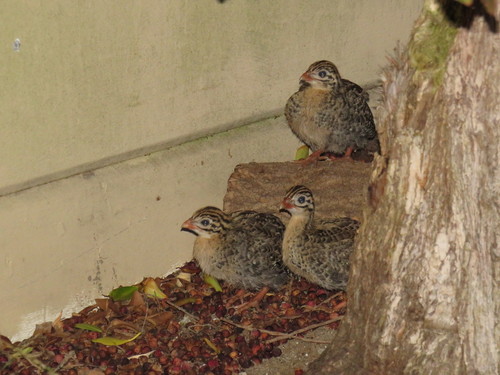 Faraona
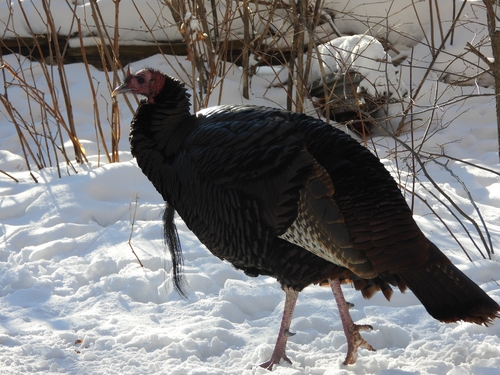 Tacchino selvatico
In breve
Il segno distintivo più affidabile per separare la Faraona dal Tacchino selvatico è la combinazione di forma della testa e del corpo: le faraone hanno una testa piccola, nuda e con un osso prominente e un corpo rotondo e compatto, mentre i tacchini selvatici sono molto più grandi, con gambe lunghe, un collo lungo e una testa proporzionalmente più grande, senza piume, con caruncole e wattles carnosi. In volo o a riposo, le faraone mostrano una coda corta e ali corte e arrotondate, mentre i tacchini hanno una coda lunga e larga e proporzioni complessive molto più grandi. Anche il piumaggio è distintivo: le faraone sono uniformemente macchiate di grigio-nero con bianco, mentre i tacchini sono scuri con un'iridescenza rame o bronzo e ali barrate. I tacchini giovanili e adulti hanno lunghezze diverse delle piume della coda, il che può essere utile per determinare l'età. Entrambe le specie hanno teste nude, ma il casco e la pelle facciale blu/rossa delle faraone sono unici. La differenza di dimensione è estrema, con i tacchini che sono diverse volte più pesanti e più lunghi.
Consigli di identificazione
- Size: I Tacchini selvatici sono drammaticamente più grandi delle Faraone—utile anche a distanza. Se l'uccello è delle dimensioni di un tacchino (paragonabile a un grande oca), non è una faraona. Le faraone sono delle dimensioni di un pollo o più piccole.
- Head shape and ornamentation: Le faraone hanno una testa piccola e nuda con un prominente casco osseo (elmo) e pelle facciale blu/rossa/nera. I tacchini hanno una testa molto più grande e nuda con wattles rossi carnosi, caruncole e (nei maschi) un lungo snood sopra il becco. Solo i tacchini hanno una barba di filamenti simili a peli sul petto (principalmente maschi).
- Body shape: Le faraone hanno un corpo rotondo, compatto e una coda corta; i tacchini hanno gambe lunghe, collo lungo e una coda lunga e larga.
- Plumage pattern: Le faraone sono uniformemente macchiate con punti bianchi su grigio-nero; i tacchini sono scuri con una lucentezza metallica rame e ali barrate, senza alcun motivo macchiato.
- Tail: Le faraone hanno una coda corta e poco appariscente; i tacchini hanno una coda lunga e a ventaglio (soprattutto evidente nei maschi in mostra). I tacchini giovanili hanno lunghezze delle piume della coda irregolari, mentre gli adulti hanno ventagli di coda uniformi.
- Wings: Le ali delle faraone sono corte e arrotondate, in linea con le loro abitudini terrestri. Le ali dei tacchini sono larghe, con barrature bianche audaci, e sono usate per un volo potente verso gli alberi.
- Legs and spurs: I tacchini hanno gambe lunghe e robuste e i maschi hanno uno sperone sul retro di ciascuna gamba; le faraone non hanno affatto speroni.
- Flight style: Le faraone volano raramente e lo fanno solo in modo esplosivo per brevi distanze, scivolando rapidamente verso il basso. I tacchini possono volare fortemente per distanze più lunghe, specialmente per raggiungere i posatoi sugli alberi.
- Group size: Le faraone sono spesso viste in gruppi ristretti di 10–25 uccelli; i tacchini sono più spesso in gruppi più piccoli o solitari, tranne in inverno o nei posatoi comuni.
- Vocalizations: Le faraone emettono richiami aspri e striduli; i tacchini fanno gobble (maschi), yelp e cluck, con un repertorio più vario e musicale.
- Habitat: Nelle Americhe, un grande galliforme scuro in foresta o campo è quasi sempre un tacchino; le faraone sono presenti solo dove sono state introdotte e di solito vicino a fattorie o in cattività.
- Sexual dimorphism: I maschi dei tacchini sono molto più grandi, più iridescenti e hanno un'ornamentazione della testa più elaborata rispetto alle femmine; le faraone mostrano meno dimorfismo sessuale, con entrambi i sessi simmetricamente macchiati e ornati.
- Juvenile marks: I tacchini giovanili (jakes) hanno lunghezze delle piume della coda irregolari, mentre i giovanili delle faraone sono colorati in modo criptico ma ancora macchiati.
- Beard: Solo i tacchini (principalmente maschi) hanno una barba di filamenti grossolani sul petto; le faraone non ce l'hanno mai.
- Spur presence: I maschi dei tacchini hanno uno sperone visibile sulla gamba; le faraone non hanno mai speroni.
Taglia
Il Tacchino selvatico è enormemente più grande della Faraona. Le faraone pesano in media circa 1,6 kg e misurano 53–58 cm di lunghezza, mentre le femmine dei tacchini pesano 2,5–5,4 kg e misurano 76–95 cm, e i maschi pesano 5–11 kg e misurano 100–125 cm di lunghezza. I tacchini sono il galliforme più pesante del Nord America e possono essere fino a sette volte più pesanti di una faraona. Sul campo, i tacchini appaiono molto più alti e robusti, con gambe, collo e coda più lunghi. Le faraone sono compatte e simili ai polli in confronto.
Piumaggio
Nessun motivo specifico per l'età è descritto per nessuna delle due specie, ma il piumaggio complessivo del corpo e delle ali è distintivo. Le Faraone di tutte le età sono grigio-neri con una densa macchiatura bianca su tutto il corpo e le ali; le ali sono corte e arrotondate, e la coda è corta. La testa nuda è coperta da un casco osseo giallo opaco o rossastro e da pelle facciale blu/rossa/nera. I Tacchini selvatici, al contrario, sono di colore marrone scuro o nerastro con un'iridescenza complessa rame o bronzo, specialmente nei maschi adulti. Le loro ali mostrano barrature bianche audaci, e la coda è lunga e a ventaglio negli adulti. I maschi hanno una testa rossa senza piume con wattles carnosi e uno snood, e spesso una 'barba' di filamenti grossolani sul petto. I tacchini giovanili (jakes) hanno lunghezze delle piume della coda irregolari, mentre gli adulti hanno ventagli di coda uniformi. Le femmine sono più opache e marroni ma mancano ancora del motivo macchiato delle faraone. Entrambe le specie hanno teste nude, ma solo le faraone hanno un casco.
Comportamento
Le Faraone sono altamente terrestri, correndo piuttosto che volando quando allarmate, e formano gruppi ristretti al di fuori della stagione di riproduzione. Scavano per cercare cibo come i polli e sono corridori agili, in grado di coprire lunghe distanze a piedi. Il loro volo è breve, esplosivo e transita rapidamente in planata. I Tacchini selvatici sono anche terrestri ma sono più propensi a volare sugli alberi per posarsi, usando le loro gambe forti per correre e le loro ali larghe per un volo potente e sostenuto quando necessario. I maschi si esibiscono aprendo le loro code e gonfiando i loro corpi, un comportamento non osservato nelle faraone. I tacchini sono meno gregari al di fuori della stagione di riproduzione, spesso visti in gruppi più piccoli.
Habitat
Le Faraone sono native dell'Africa sub-sahariana ma sono state ampiamente introdotte altrove, spesso vicino a fattorie, boschi aperti o savane. Sono comunemente viste in aree agricole, nutrendosi di semi, tuberi e invertebrati. I Tacchini selvatici sono nativi del Nord America e preferiscono foreste miste, boschi aperti e bordi, spesso vicino a campi o radure. Entrambe le specie possono essere trovate vicino all'abitazione umana, ma i tacchini sono più strettamente associati agli habitat nordamericani, mentre le faraone sono più probabili in contesti africani o introdotti.
Voce
Le Faraone emettono richiami forti, aspri e striduli quando disturbate, spesso descritti come cackling o clucking. I Tacchini selvatici hanno una vasta gamma di vocalizzazioni, il più famoso è il gobble del maschio, oltre a yelps, clucks e purrs. Il gobble è forte e si sente a lunghe distanze, specialmente durante la stagione di riproduzione. I richiami delle faraone sono generalmente più rauchi e meno musicali rispetto alle vocalizzazioni dei tacchini.