

Gray-winged Francolin vs Quaglia
Scleroptila afra contro Coturnix coturnix
Fai un quiz con Gray-winged Francolin e Quaglia
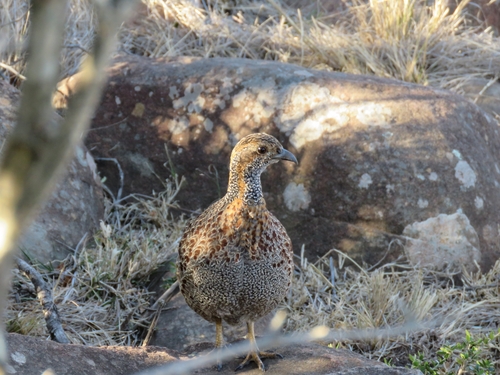 Gray-winged Francolin
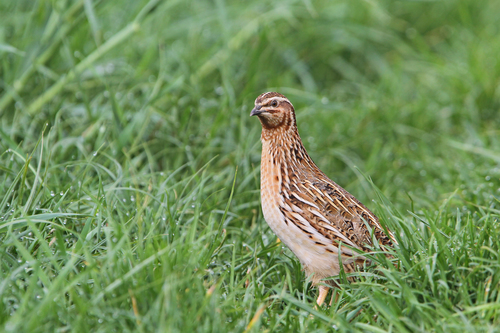 Quaglia
In breve
Il segno di campo più affidabile per separare il Gray-winged Francolin dalla Quaglia è la struttura e la dimensione complessiva: il Gray-winged Francolin è notevolmente più grande e massiccio, con una postura più eretta e ali e coda proporzionalmente più corte, mentre la Quaglia è compatta, con corpo rotondo e decisamente piccola con ali lunghe e appuntite. In volo, le ali della Quaglia sembrano lunghe e appuntite, adatte al suo stile di vita migratorio, mentre le ali del Gray-winged Francolin sono più larghe e meno appuntite. Le differenze nel piumaggio sono sottili a distanza, ma la Quaglia mostra una marcatura bianca audace sopra l'occhio e, nei maschi, un mento bianco, che il Gray-winged Francolin non ha. L'habitat e il contesto possono anche aiutare: il Gray-winged Francolin è residente nelle praterie del Sudafrica e del Lesotho, mentre la Quaglia è un migratore paleartico, presente solo nel sud dell'Africa durante la stagione non riproduttiva.
Consigli di identificazione
- Dimensione e struttura: Il Gray-winged Francolin è molto più grande e massiccio della Quaglia. Usa questo come primo controllo, specialmente se hai un senso di scala da oggetti vicini o altri uccelli.
- Forma dell'ala in volo: La Quaglia mostra ali lunghe e appuntite in volo, riflettendo le sue abitudini migratorie. Il Gray-winged Francolin ha ali più larghe e rotonde e uno stile di volo più pesante. Questo è visibile sia negli adulti che nei giovani.
- Schema facciale: Cerca la marcatura bianca audace sopra l'occhio sulla Quaglia, visibile in entrambi i sessi, e il mento bianco nei maschi. Il Gray-winged Francolin non ha questi forti contrasti facciali e ha un volto più semplice.
- Forma del corpo e postura: La Quaglia è compatta, con corpo rotondo, e si siede bassa a terra. Il Gray-winged Francolin è più eretto ed allungato nella postura.
- Striature del piumaggio: La Quaglia è fortemente striata di marrone sopra, fornendo un forte camuffamento. Il Gray-winged Francolin è meno striato e ha ali grigie più uniformi.
- Coda: La Quaglia ha una coda molto corta, spesso nascosta sotto le ali. La coda del Gray-winged Francolin è proporzionalmente più lunga e più visibile.
- Habitat e altitudine: Se ti trovi in praterie ad alta quota in Lesotho o Sudafrica, è più probabile vedere il Gray-winged Francolin. Nei campi coltivati o nelle praterie di pianura, specialmente al di fuori della stagione riproduttiva, è possibile avvistare la Quaglia.
- Comportamento quando spaventata: La Quaglia si alza in volo con un volo rapido e diretto e torna rapidamente a nascondersi. Il Gray-winged Francolin decolla in modo più pesante e può volare più lontano, spesso chiamando in volo.
- Vocalizzazioni: Ascolta il richiamo ripetuto a tre note della Quaglia. Se lo senti, puoi essere sicuro dell'identificazione, poiché il Gray-winged Francolin non emette questo richiamo.
- Dimensione del gruppo: Il Gray-winged Francolin è spesso visto in piccoli gruppi, mentre la Quaglia è di solito solitaria o in coppie, specialmente al di fuori della migrazione.
- Differenze sessuali: Solo il maschio della Quaglia ha un mento bianco; entrambi i sessi hanno la marcatura bianca sopra l'occhio. Il Gray-winged Francolin non mostra un forte dimorfismo sessuale nel volto.
- Contesto stagionale: La Quaglia è presente nel sud dell'Africa principalmente nella stagione non riproduttiva (estate australe). Il Gray-winged Francolin è residente tutto l'anno.
- Viste in perching: Se vedi un uccello appollaiato su una roccia o un tumulo in una prateria aperta, è più probabile che sia un Gray-winged Francolin; la Quaglia raramente si appollaia in aperto.
- Stile di volo: Il volo più pesante, lento e faticoso del Gray-winged Francolin contrasta con il volo rapido, diretto e basso della Quaglia.
- Abbondanza: Nel sud dell'Africa, il Gray-winged Francolin è un residente locale, mentre la Quaglia è un migratore poco comune, quindi controlla i rapporti locali di eBird per la probabilità.
Taglia
La Quaglia è molto più piccola, misurando 16–18 cm di lunghezza con un'apertura alare di 32–35 cm e pesando 70–140 g [wikipedia]. Il Gray-winged Francolin è più grande e pesante, con una corporatura più massiccia e una postura più eretta (le misure esatte non sono fornite, ma sono facilmente evidenti sul campo). La differenza di dimensione è solitamente ovvia quando viste fianco a fianco o con esperienza, ed è un punto chiave di separazione.
Piumaggio
- Giovanile/immaturo/primo inverno viste in volo: Non ci sono schemi specifici per età descritti per nessuna delle due specie nelle fonti, ma le ali lunghe e appuntite della Quaglia sono distintive in tutti i piumaggi, mentre il Gray-winged Francolin mostra ali più larghe e arrotondate.
- Piumaggio adulto: La Quaglia è striata di marrone in generale con una marcatura bianca audace sopra l'occhio e, nei maschi, un mento bianco. Il Gray-winged Francolin non ha questi forti contrasti facciali e ha invece ali grigie più uniformi e un pattern facciale meno distintivo.
- Differenze sessuali: La femmina della Quaglia è leggermente più pesante e non ha il mento bianco del maschio, ma entrambi i sessi mantengono la marcatura bianca sopra l'occhio. Il Gray-winged Francolin non mostra un forte dimorfismo sessuale nel pattern facciale.
- Viste in perching: La Quaglia è compatta e rotonda, con striature criptiche e una coda corta. Il Gray-winged Francolin appare più grande, più eretto e meno striato, con un volto più semplice.
Comportamento
La Quaglia è segreta, spesso rilevata solo dal suo richiamo, e preferisce correre piuttosto che volare quando disturbata. Quando spaventata, vola basso con battiti d'ala rapidi e diretti, mostrando ali lunghe e appuntite. Il Gray-winged Francolin è più probabile che venga visto camminare in aperto, spesso in piccoli gruppi, e si alza in volo con un volo più pesante e lento, mostrando ali più larghe e un decollo più faticoso. I francolini sono generalmente meno schivi delle quaglie e possono appollaiarsi su rocce o tumuli bassi.
Habitat
Il Gray-winged Francolin è residente in praterie ad alta quota e in campi aperti in Lesotho e Sudafrica. Si trova tipicamente in praterie montane o submontane, spesso sopra i 1.500 metri. La Quaglia è un migratore, che nidifica nel Paleartico e sverna in Africa, incluso il sud dell'Africa. In Africa, favorisce campi coltivati, praterie e campi aperti, ma è meno legata alle praterie ad alta quota rispetto al francolino. L'overlap dell'habitat è possibile in inverno, ma il contesto e l'altitudine possono aiutare a separarli.
Voce
La Quaglia ha un richiamo distintivo: tre cinguettii ripetuti in rapida successione, spesso uditi ma raramente visti. Questo richiamo è un segno di campo chiave e non è eguagliato dal Gray-winged Francolin. I francolini hanno una varietà di richiami, ma nessuno corrisponde alla frase ripetuta a tre note della quaglia. Se senti il richiamo classico della quaglia, è diagnostico per la Quaglia.