

Airone verde vs Chinese Pond-Heron
Butorides virescens contro Ardeola bacchus
Fai un quiz con Airone verde e Chinese Pond-Heron
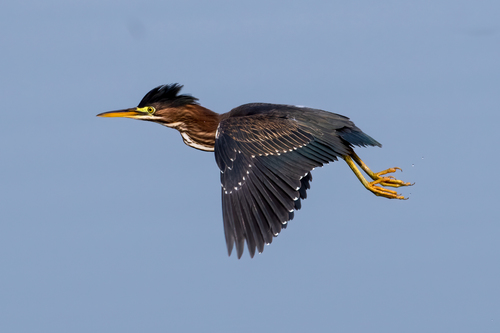 Airone verde
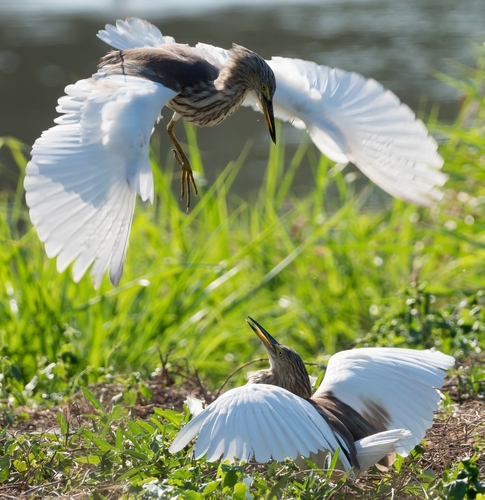 Chinese Pond-Heron
In breve
Il segno di campo più affidabile tra Airone verde e Chinese Pond-Heron è la notevole differenza nella colorazione delle ali in tutte le livree: il Chinese Pond-Heron mostra sempre ali bianche brillanti (soprattutto evidenti in volo), mentre l'Airone verde ha ali grigio scuro-nerastre con toni verdi o blu e nessun bianco. Questo contrasto è particolarmente utile per separare i giovani e gli uccelli non in riproduzione, che altrimenti possono apparire simili con striature e marroni. L'Airone verde è più piccolo, più robusto e spesso appare curvo con un collo corto, mentre il Chinese Pond-Heron è più lungo e più eretto. Il colore del becco e delle gambe, così come il colore generale del corpo negli adulti in riproduzione, aiutano anche, ma l'ala bianca del Chinese Pond-Heron è il segno di campo più veloce e affidabile in qualsiasi stagione o età.
Consigli di identificazione
- Ali Bianche in Volo (Tutte le Età): Il Chinese Pond-Heron mostra sempre ali bianche brillanti, sia in volo che a riposo, indipendentemente dall'età o dalla stagione. L'Airone verde non mostra mai bianco nelle ali; le sue ali sono sempre grigio scuro-nerastre con toni verdi o blu. Questo è il segno di campo più affidabile.
- Confusione Giovanile/Non in Riproduzione: Entrambe le specie possono apparire striate di marrone e bianco sotto come giovani o in livrea non riproduttiva, ma solo il Chinese Pond-Heron mostra ali bianche. I giovani dell'Airone verde hanno schiene e copritrici macchiate di marrone, ma nessun bianco nelle ali.
- Livrea degli Adulti in Riproduzione: Gli adulti del Chinese Pond-Heron in livrea di riproduzione sono colorati in modo audace con rosso, blu e bianco, e hanno ali bianche. Gli adulti dell'Airone verde hanno un collo castano con linee bianche, un cappuccio verde-nerastro e una schiena iridescente verde, ma nessun bianco nelle ali.
- Colore del Becco: Il Chinese Pond-Heron ha un becco giallo con una punta nera. L'Airone verde ha un becco per lo più scuro e appuntito. Questo è meglio utilizzato in buona luce a distanza ravvicinata.
- Colore delle Gambe: Entrambe le specie hanno gambe gialle da adulte, ma i giovani dell'Airone verde hanno gambe giallo-verdi. Il colore delle gambe non è così affidabile come il modello delle ali, ma può aiutare a supportare un'identificazione.
- Dimensioni e Struttura: L'Airone verde è più piccolo, più tozzo e spesso appare curvo con un collo corto, soprattutto quando è posato. Il Chinese Pond-Heron è più lungo e più eretto, con un collo e un corpo proporzionalmente più lunghi.
- Postura da Posato: L'Airone verde spesso si siede con il collo ritratto, dando un aspetto compatto e tozzo. Il Chinese Pond-Heron è più propenso a stare eretto, soprattutto quando è all'erta.
- Comportamento di Caccia: L'Airone verde è solitario e territoriale quando si nutre, raramente visto in gruppi. Il Chinese Pond-Heron può essere visto con altri aironi, soprattutto nelle colonie di nidificazione.
- Areale: L'Airone verde è nativo delle Americhe, il Chinese Pond-Heron dell'Asia orientale. Se visto al di fuori dell'areale normale, fare affidamento sulla livrea e sulla struttura, non sull'areale.
- Voce: I richiami 'kyow' e 'kuk' dell'Airone verde sono distintivi se uditi, ma i richiami del Chinese Pond-Heron non sono descritti qui, quindi usare con cautela.
- Dimorfismo Sessuale: Le femmine di Airone verde sono leggermente più piccole e opache rispetto ai maschi, ma questa differenza è sottile e meno utile rispetto al colore delle ali.
- Cambiamenti Stagionali: Entrambe le specie cambiano livrea con la stagione, ma l'ala bianca del Chinese Pond-Heron è presente tutto l'anno ed è sempre diagnostica.
- Colore delle Parti Superiori: Gli adulti dell'Airone verde hanno una schiena iridescente verdastra, mentre il Chinese Pond-Heron è marrone all'esterno della stagione di riproduzione e colorato in modo audace in livrea di riproduzione.
- Contesto dell'Habitat: L'Airone verde è più probabile che venga trovato da solo lungo i bordi d'acqua boschivi; il Chinese Pond-Heron è più probabile in zone umide aperte e a volte in colonie.
- Trappola: Non fare affidamento sull'aspetto complessivo marrone o striato nei giovani—controllare sempre la presenza di bianco nelle ali (presente solo nel Chinese Pond-Heron).
Taglia
L'Airone verde è leggermente più piccolo e più compatto, misurando 41–46 cm di lunghezza con un'apertura alare di 64–68 cm e pesando circa 240 g [wikipedia]. Il Chinese Pond-Heron è un po' più grande con 47 cm di lunghezza [wikipedia]. Entrambi sono piccoli aironi, ma il Chinese Pond-Heron tende a sembrare più lungo e meno tozzo, soprattutto quando è posato. L'Airone verde appare spesso con collo corto e tozzo, soprattutto quando il collo è ritratto.
Piumaggio
- Livrea Giovanile/Non in Riproduzione: I giovani del Chinese Pond-Heron e gli adulti non in riproduzione sono marroni e striati con macchie bianche, ma mostrano sempre ali bianche brillanti in volo e a riposo. I giovani dell'Airone verde sono marroni e bianchi striati sotto, con schiene e copritrici macchiate di marrone, ma le loro ali sono grigio scuro-nerastre con toni verdastri o bluastre e nessuna macchia bianca. Questo contrasto delle ali è diagnostico in tutte le età e stagioni.
- Livrea degli Adulti in Riproduzione: Gli adulti del Chinese Pond-Heron in livrea di riproduzione sono colorati in modo audace con rosso, blu e bianco, e le ali bianche risaltano ancora di più. Gli adulti dell'Airone verde hanno un cappuccio verde-nerastro lucido, una schiena iridescente verdastra, ali grigio-nerastre, un collo castano con linee bianche e parti inferiori grigie. Le femmine di Airone verde sono più opache e più chiare, soprattutto in stagione di riproduzione.
- Becco e Gambe: Il Chinese Pond-Heron ha un becco giallo con una punta nera e gambe gialle. L'Airone verde ha un becco scuro e appuntito e gambe gialle corte (giallo-verdi nei giovani).
Comportamento
L'Airone verde è solitario e intollerante verso altri uccelli mentre si nutre, raramente cerca cibo in gruppi. Spesso sta fermo al bordo dell'acqua o si posa sui rami, aspettando la preda, ed è noto per usare esche per pescare. Il Chinese Pond-Heron è più probabile che venga visto in colonie miste di aironi, soprattutto durante la nidificazione, e può essere meno solitario in generale. Entrambe le specie cacciano in acque poco profonde e usano tecniche di caccia simili, ma la pesca con esche dell'Airone verde è notevole.
Habitat
L'Airone verde si trova in Nord e Centro America, preferendo zone ripariali, zone umide, stagni, laghi e a volte canali e fossati creati dall'uomo. Il Chinese Pond-Heron è una specie dell'Asia orientale, trovata in zone umide e stagni di acqua dolce e salata poco profonde, principalmente in aree di pianura. Le due specie non si sovrappongono nel loro areale nativo, ma la vagabondaggio è possibile, quindi i segni di campo sono ancora importanti. L'Airone verde è più probabile che venga visto da solo, mentre il Chinese Pond-Heron spesso nidifica in colonie.
Voce
L'Airone verde emette un forte e improvviso richiamo 'kyow' e una serie di richiami 'kuk' sommessi. Durante il corteggiamento, i maschi producono battiti d'ali rumorosi e vari richiami, tra cui 'raah-rahh', 'whoom-whoom-whoom' e 'roo-roo.' I richiami del Chinese Pond-Heron non sono descritti nelle note fornite, quindi la vocalizzazione non è un separatore affidabile basato sulle informazioni disponibili.
Airone verde · Chinese Pond-Heron · I miei uccelli difficili