

Motmot

Corriere di Leschenault vs Corriere di Kittlitz

Anarhynchus leschenaultii contro Anarhynchus pecuarius

Fai un quiz con Corriere di Leschenault e Corriere di Kittlitz
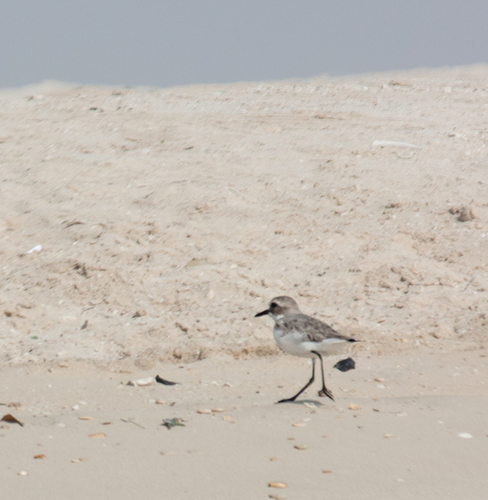
Corriere di Leschenault (Anarhynchus leschenaultii) Corriere di Leschenault
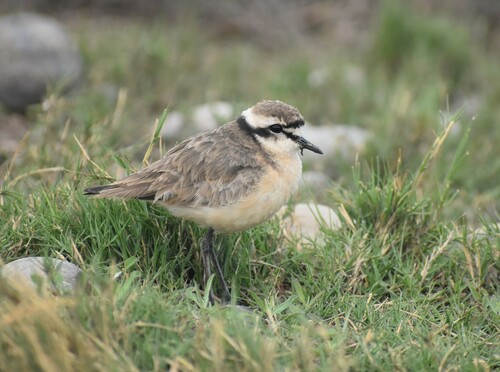
Corriere di Kittlitz (Anarhynchus pecuarius) Corriere di Kittlitz

Media

Caricamento…

In breve

The most reliable field mark between Greater Sand Plover and Kittlitz's Plover is overall structure: Greater Sand Plover is noticeably bulkier, with a thicker bill and longer legs, while Kittlitz's Plover is daintier with a slim, short bill and finer build. In all plumages, Greater Sand Plover shows a chunkier jizz and, in breeding males, a variable orange breast band and black mask, while Kittlitz's Plover has a striking white forehead, black eye-stripe, and lacks any orange tones. Juvenile and non-breeding birds can be trickier, but Kittlitz's Plover always keeps a more delicate look and never shows the heavy bill or strong orange tones of Greater Sand Plover. Size and structure are the most consistent separators, especially in mixed flocks or when seen side-by-side.

Consigli di identificazione

  1. Size and structure: Greater Sand Plover is much larger and bulkier, with a thick bill and long legs; Kittlitz's Plover is petite, fine-billed, and delicate. This is the most reliable separator in all plumages and ages.
  2. Bill shape: Greater Sand Plover has a noticeably thick, robust bill, while Kittlitz's Plover's bill is slim and short. Bill thickness is especially useful when birds are feeding or seen in profile.
  3. Leg color: Greater Sand Plover has greenish-yellow legs; Kittlitz's Plover usually has black legs, but they can sometimes appear greenish or grey, so this is only a supporting mark.
  4. Breast band (breeding males): Greater Sand Plover males show a variable orange breast band and orange on the forehead/nape; Kittlitz's Plover never shows orange tones, instead having a white forehead and yellowish underparts.
  5. Face pattern (breeding): Kittlitz's Plover has a sharp black eye-stripe running from bill to neck, forming a partial collar, and a white supercilium; Greater Sand Plover has a black eye mask but lacks the crisp collar and supercilium pattern.
  6. Crown and forehead: Kittlitz's Plover shows a white forehead with a blackish bar and sandy-tipped brown crown; Greater Sand Plover's head is more uniformly sandy or orange-toned in breeding males.
  7. Non-breeding/juvenile plumage: Both species become duller, but Kittlitz's Plover juveniles lack black face marks, have a buff collar, and remain fine-billed; Greater Sand Plover juveniles are browner, chunkier, and may show a hint of rufous on the head.
  8. Tail pattern: Kittlitz's Plover has blackish central tail feathers with white outer pairs; this can be seen in flight or when preening, but is subtle.
  9. Underparts: Kittlitz's Plover has yellowish underparts with a pale belly; Greater Sand Plover is white below, with orange only in breeding males.
  10. Jizz in flight: Greater Sand Plover appears broad-winged and heavy, with long legs trailing; Kittlitz's Plover is quick, agile, and light on the wing.
  11. Habitat context: In Africa, a small, fine-billed plover away from the coast is almost always Kittlitz's; Greater Sand Plover is rare inland and much larger.
  12. Sexual dimorphism: Kittlitz's Plover is monomorphic (males and females look alike), while Greater Sand Plover females are duller than males in breeding plumage.
  13. Subspecies variation (Greater Sand Plover): Some western subspecies of Greater Sand Plover have smaller bills and stronger orange breast bands, which can make them look more like other sand plovers, but never as dainty as Kittlitz's.
  14. Mixed flocks: When both species are present, the size and bill differences are especially obvious; confusion is more likely with lone birds.
  15. Pitfalls: Beware of non-breeding or juvenile Kittlitz's Plover, which can look very plain, but always check for the small size and fine bill to avoid confusion with a young Greater Sand Plover.

Taglia

Greater Sand Plover is significantly larger, measuring 19–22 cm in length and appearing chunky with long legs and a thick bill. Kittlitz's Plover is much smaller and lighter (35–40 g), with a wing length of 100–110 mm, a bill of 15–23 mm, and a tarsus of 26–33 mm. In the field, Greater Sand Plover stands taller and bulkier, while Kittlitz's Plover is petite and more delicate overall. This size difference is often obvious even at a distance, especially when both species are present.

Piumaggio

Juvenile and non-breeding Kittlitz's Plovers lack the black face marks of adults, have brown upperparts, a buff hindneck collar, and white underparts, but still retain a fine-billed, dainty look. Juvenile Greater Sand Plovers are browner overall, sometimes with a hint of rufous on the head, but are always chunkier and have a thicker bill. In breeding season, male Greater Sand Plovers show a variable orange breast band, orange on the forehead and nape, and a bold black eye mask; females are duller and greyer. Kittlitz's Plover in breeding plumage has a white forehead, black bar on the forecrown, black eye-stripe forming a collar, and sandy-tipped brown crown, with yellowish underparts and a white belly. Non-breeding Kittlitz's Plover loses the black frontal bar and the eye-stripe becomes browner, but the bird remains pale below and never gains orange tones. The tail of Kittlitz's Plover has blackish central feathers and white outer pairs, a subtle but sometimes visible mark.

Comportamento

Greater Sand Plover typically moves with a purposeful, steady gait, often in loose flocks on open mudflats or beaches, and can appear more robust and upright. Kittlitz's Plover is more active and dainty, often running quickly with short stops, and may be seen performing distraction displays if approached near the nest. Both species forage on open ground, but Kittlitz's Plover's movements are lighter and more frenetic.

Habitat

Greater Sand Plover favors coastal mudflats, sandy beaches, and sometimes inland saline flats, especially during migration and winter. Kittlitz's Plover is mostly found in sub-Saharan Africa and Madagascar, using a wider range of habitats including saltmarshes, sandy or muddy riverbanks, alkaline grasslands, and sometimes coastal areas. In Africa, a small, fine-billed plover away from the coast is much more likely to be Kittlitz's Plover.

Invia una descrizione migliore

Usa le stesse sezioni del confronto. Il testo viene pubblicato subito.

The most reliable field mark between Greater Sand Plover and Kittlitz's Plover is overall structure: Greater Sand Plover is noticeably bulkier, with a thicker bill and longer legs, while Kittlitz's Plover is daintier with a slim, short bill and finer build. In all plumages, Greater Sand Plover shows a chunkier jizz and, in breeding males, a variable orange breast band and black mask, while Kittlitz's Plover has a striking white forehead, black eye-stripe, and lacks any orange tones. Juvenile and non-breeding birds can be trickier, but Kittlitz's Plover always keeps a more delicate look and never shows the heavy bill or strong orange tones of Greater Sand Plover. Size and structure are the most consistent separators, especially in mixed flocks or when seen side-by-side.

  1. Size and structure: Greater Sand Plover is much larger and bulkier, with a thick bill and long legs; Kittlitz's Plover is petite, fine-billed, and delicate. This is the most reliable separator in all plumages and ages.
  2. Bill shape: Greater Sand Plover has a noticeably thick, robust bill, while Kittlitz's Plover's bill is slim and short. Bill thickness is especially useful when birds are feeding or seen in profile.
  3. Leg color: Greater Sand Plover has greenish-yellow legs; Kittlitz's Plover usually has black legs, but they can sometimes appear greenish or grey, so this is only a supporting mark.
  4. Breast band (breeding males): Greater Sand Plover males show a variable orange breast band and orange on the forehead/nape; Kittlitz's Plover never shows orange tones, instead having a white forehead and yellowish underparts.
  5. Face pattern (breeding): Kittlitz's Plover has a sharp black eye-stripe running from bill to neck, forming a partial collar, and a white supercilium; Greater Sand Plover has a black eye mask but lacks the crisp collar and supercilium pattern.
  6. Crown and forehead: Kittlitz's Plover shows a white forehead with a blackish bar and sandy-tipped brown crown; Greater Sand Plover's head is more uniformly sandy or orange-toned in breeding males.
  7. Non-breeding/juvenile plumage: Both species become duller, but Kittlitz's Plover juveniles lack black face marks, have a buff collar, and remain fine-billed; Greater Sand Plover juveniles are browner, chunkier, and may show a hint of rufous on the head.
  8. Tail pattern: Kittlitz's Plover has blackish central tail feathers with white outer pairs; this can be seen in flight or when preening, but is subtle.
  9. Underparts: Kittlitz's Plover has yellowish underparts with a pale belly; Greater Sand Plover is white below, with orange only in breeding males.
  10. Jizz in flight: Greater Sand Plover appears broad-winged and heavy, with long legs trailing; Kittlitz's Plover is quick, agile, and light on the wing.
  11. Habitat context: In Africa, a small, fine-billed plover away from the coast is almost always Kittlitz's; Greater Sand Plover is rare inland and much larger.
  12. Sexual dimorphism: Kittlitz's Plover is monomorphic (males and females look alike), while Greater Sand Plover females are duller than males in breeding plumage.
  13. Subspecies variation (Greater Sand Plover): Some western subspecies of Greater Sand Plover have smaller bills and stronger orange breast bands, which can make them look more like other sand plovers, but never as dainty as Kittlitz's.
  14. Mixed flocks: When both species are present, the size and bill differences are especially obvious; confusion is more likely with lone birds.
  15. Pitfalls: Beware of non-breeding or juvenile Kittlitz's Plover, which can look very plain, but always check for the small size and fine bill to avoid confusion with a young Greater Sand Plover.

Greater Sand Plover is significantly larger, measuring 19–22 cm in length and appearing chunky with long legs and a thick bill. Kittlitz's Plover is much smaller and lighter (35–40 g), with a wing length of 100–110 mm, a bill of 15–23 mm, and a tarsus of 26–33 mm. In the field, Greater Sand Plover stands taller and bulkier, while Kittlitz's Plover is petite and more delicate overall. This size difference is often obvious even at a distance, especially when both species are present.

Juvenile and non-breeding Kittlitz's Plovers lack the black face marks of adults, have brown upperparts, a buff hindneck collar, and white underparts, but still retain a fine-billed, dainty look. Juvenile Greater Sand Plovers are browner overall, sometimes with a hint of rufous on the head, but are always chunkier and have a thicker bill. In breeding season, male Greater Sand Plovers show a variable orange breast band, orange on the forehead and nape, and a bold black eye mask; females are duller and greyer. Kittlitz's Plover in breeding plumage has a white forehead, black bar on the forecrown, black eye-stripe forming a collar, and sandy-tipped brown crown, with yellowish underparts and a white belly. Non-breeding Kittlitz's Plover loses the black frontal bar and the eye-stripe becomes browner, but the bird remains pale below and never gains orange tones. The tail of Kittlitz's Plover has blackish central feathers and white outer pairs, a subtle but sometimes visible mark.

Greater Sand Plover typically moves with a purposeful, steady gait, often in loose flocks on open mudflats or beaches, and can appear more robust and upright. Kittlitz's Plover is more active and dainty, often running quickly with short stops, and may be seen performing distraction displays if approached near the nest. Both species forage on open ground, but Kittlitz's Plover's movements are lighter and more frenetic.

Greater Sand Plover favors coastal mudflats, sandy beaches, and sometimes inland saline flats, especially during migration and winter. Kittlitz's Plover is mostly found in sub-Saharan Africa and Madagascar, using a wider range of habitats including saltmarshes, sandy or muddy riverbanks, alkaline grasslands, and sometimes coastal areas. In Africa, a small, fine-billed plover away from the coast is much more likely to be Kittlitz's Plover.

Scartare le modifiche?

Hai modifiche non salvate. Se esci ora, andranno perse.

Corriere di Leschenault · Corriere di Kittlitz · I miei uccelli difficili