

Greater Necklaced Laughingthrush vs Chinese Babax
Pterorhinus pectoralis contro Pterorhinus lanceolatus
Fai un quiz con Greater Necklaced Laughingthrush e Chinese Babax
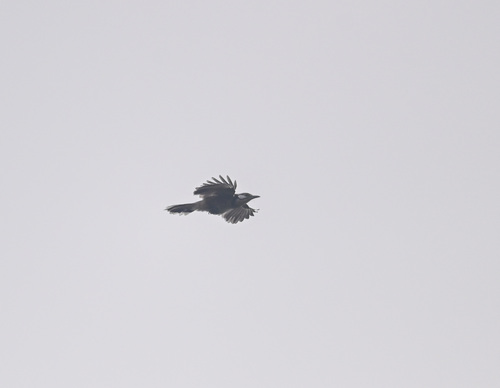 Greater Necklaced Laughingthrush
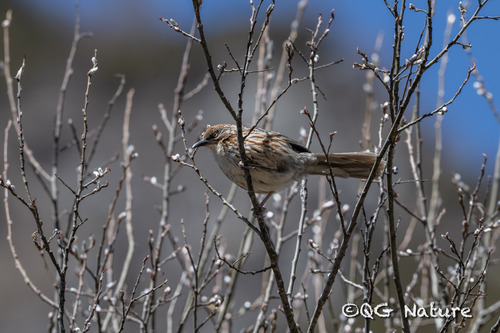 Chinese Babax
In breve
Greater Necklaced Laughingthrush and Chinese Babax are both large, social Leiothrichidae of overlapping forest habitats in southern and eastern Asia, but they differ mainly in plumage and range. The most reliable separation in the field is the distinctive 'necklace'—a bold black band across the upper breast—of the Greater Necklaced Laughingthrush, which the Chinese Babax lacks. Both species can appear similar in structure and behavior, and their habitats overlap in parts of China and India, so careful attention to plumage is essential. Age-specific wing pattern differences are not documented in available sources, so focus on adult plumage and overall coloration.
Consigli di identificazione
- Look for the 'necklace': The Greater Necklaced Laughingthrush shows a bold black band across the upper breast, sharply separating the white throat from the buffy underparts. This is the single most reliable field mark and is absent in Chinese Babax of all ages.
- Check the throat and breast: Greater Necklaced Laughingthrush has a clean white throat bordered by the black necklace, while Chinese Babax has a less contrasting, streaked or spotted breast and lacks a sharply defined white throat.
- Assess overall contrast: The Greater Necklaced Laughingthrush tends to appear warmer brown above and more contrasting below, while Chinese Babax is generally plainer, with less sharp color transitions.
- Ignore size and shape: Both species are similar in size, structure, and jizz, so do not use these features for separation.
- No distinctive wing pattern: There are no documented age-specific upperwing or flight marks for either species; focus on plumage details visible when perched or foraging.
- Observe flocking behavior: Both species are social and move in groups; behavior is not useful for separation.
- Use range with caution: If outside China, especially in Southeast Asia or the Indian subcontinent (Nepal, Bhutan, Bangladesh, Laos, Thailand, Vietnam), the bird is almost certainly Greater Necklaced Laughingthrush. In China, India, and Myanmar, both species can occur.
- Habitat overlap: Both species use similar forest habitats, so do not rely on vegetation type or elevation for separation.
- Sex and season: No sexual dimorphism or seasonal plumage changes are documented for either species; field marks are reliable year-round and for both sexes.
- Juvenile confusion: While no specific juvenile marks are described, young birds likely follow the same pattern—look for the presence or absence of the black necklace.
- Voice: No diagnostic vocal differences are available in the sources; do not rely on calls or songs for separation.
- Plumage pitfalls: In poor light or at distance, the necklace may be hard to see; look for the overall contrast and sharpness of the throat and breast pattern.
- Introduced range: In Hawaii, only Greater Necklaced Laughingthrush is present.
- Community tip: If you see a boldly marked, contrasting bird with a black breast band in a flock, it is Greater Necklaced Laughingthrush; a plainer, streaked-breasted bird is Chinese Babax.
- Summary: Always prioritize the presence or absence of the black necklace and the sharpness of the throat-breast contrast for reliable identification.
Taglia
Both species are large, robust babblers typical of the genus Pterorhinus, and there are no documented size or mass differences in the available sources. Expect similar overall length and bulk, so do not rely on size for separation in the field.
Piumaggio
No sources describe distinctive juvenile or immature wing patterns for either species, so separation must rely on adult plumage. The Greater Necklaced Laughingthrush is named for its bold black 'necklace'—a broad, dark band across the upper breast, contrasting with a white throat and buffy underparts. The Chinese Babax lacks this necklace and instead shows a more uniform, streaked or spotted breast without a sharp band. Both species are brownish above, but the Greater Necklaced Laughingthrush often appears warmer and more contrasting, while the Chinese Babax is generally plainer and less sharply marked. These differences are present in adults and likely in immatures, but confirmation for young birds is lacking.
Comportamento
Both species are gregarious, often moving in noisy flocks through dense undergrowth or mid-levels of forest. Their foraging and social behavior are similar, and both can be difficult to see clearly as they move quickly through cover. No behavioral differences are documented that would reliably separate them in the field.
Habitat
Both species inhabit subtropical or tropical moist lowland and montane forests, with overlapping ranges in China, India, and Myanmar. The Greater Necklaced Laughingthrush has a broader range, extending west to Nepal, Bhutan, Bangladesh, Laos, Thailand, Vietnam, and even introduced populations in Hawaii. The Chinese Babax is more restricted, found mainly in China, Hong Kong, India, and Myanmar. In areas of overlap, habitat preferences are similar, so context alone is not diagnostic.
Greater Necklaced Laughingthrush · Chinese Babax · I miei uccelli difficili