

Greater Coucal vs Lesser Coucal
Centropus sinensis contro Centropus bengalensis
Fai un quiz con Greater Coucal e Lesser Coucal
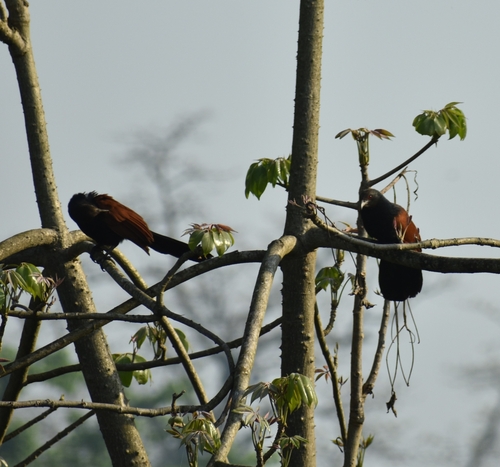 Greater Coucal
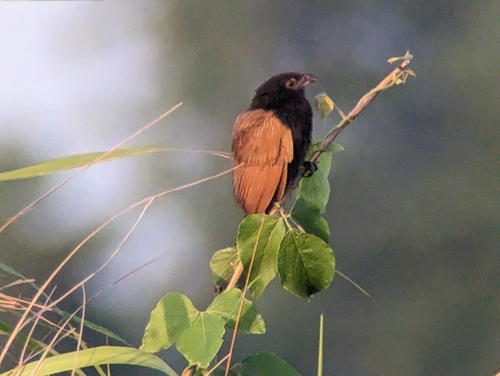 Lesser Coucal
In breve
Il segno distintivo più affidabile tra Greater Coucal e Lesser Coucal è la presenza di strisce chiare sul fusto delle piume nella Lesser Coucal (specialmente nel piumaggio non riproduttivo), che sono assenti nel Greater Coucal. I giovani Lesser Coucal mostrano parti inferiori e coda barrate e macchiate, mentre i giovani Greater Coucal (razze settentrionali) hanno una barratura biancastra sotto ma sono altrimenti di un nero più opaco. Gli adulti di Greater Coucal sono nettamente più grandi, con una struttura più pesante e simile a quella di un corvo, occhi rosso rubino e parti superiori nere lucide non marcate che contrastano con ali castagne ricche. La Lesser Coucal è visibilmente più piccola, con un becco più corto, iride marrone scuro e un artiglio posteriore molto più lungo. Entrambe le specie possono sovrapporsi nell'habitat, ma la Lesser Coucal si trova più spesso in prati paludosi, mentre il Greater Coucal è più adattabile a giardini e coperture più dense.
Consigli di identificazione
- Strisce chiare sul fusto (solo Lesser Coucal): Nel piumaggio non riproduttivo, la Lesser Coucal mostra evidenti strisce chiare sul fusto della testa, della schiena e delle copritrici delle ali; il Greater Coucal non mostra mai queste a qualsiasi età o stagione.
- Colore dell'iride: Il Greater Coucal ha occhi rosso rubino sorprendenti negli adulti, mentre l'iride della Lesser Coucal è marrone scuro. Questo è visibile da vicino o in buona luce.
- Dimensioni e struttura: Il Greater Coucal è molto più grande e pesante, con una coda più lunga e una struttura più robusta e simile a quella di un corvo. La Lesser Coucal è più piccola, più snella, con un becco più corto e un artiglio posteriore molto lungo (a volte visibile quando è posata).
- Forma del becco: Il Greater Coucal ha un becco più pesante e profondo; il becco della Lesser Coucal è più corto e meno voluminoso.
- Schema giovanile: Il giovane Greater Coucal (razze settentrionali) mostra una barratura biancastra sotto e sulla coda, mentre i giovani delle razze meridionali sono di un nero opaco non marcato sotto. Il giovane Lesser Coucal è più marrone con macchie nere e barre sul corpo e sulla coda.
- Colore delle ali: Entrambi hanno ali rufous o castagne, ma le ali del Greater Coucal sono di un marrone rame più ricco, mentre quelle della Lesser Coucal sono più chiare e possono mostrare strisce chiare sul fusto (specialmente nel piumaggio non riproduttivo).
- Lucentezza della coda: La coda del Greater Coucal è lucida con una sfumatura viola o verdognola; la coda della Lesser Coucal è meno lucida e può mostrare barrature nei giovani.
- Artiglio posteriore: L'artiglio posteriore della Lesser Coucal è eccezionalmente lungo (il più lungo del genere), a volte visibile negli uccelli posati; quello del Greater Coucal è più corto.
- Habitat: Se visto in prati paludosi o canneti, è più probabile che si tratti di una Lesser Coucal; nei giardini, in cespugli densi o al margine della foresta, è più probabile che si tratti di un Greater Coucal, ma entrambi possono sovrapporsi.
- Stile di volo: Il Greater Coucal vola con battiti d'ala pesanti e flosci e lunghe planate; la Lesser Coucal è più riservata e raramente vola lontano in spazi aperti.
- Voce: Il profondo e risonante 'coop-coop-coop' del Greater Coucal contrasta con le note più morbide e doppie 'whoot-woot' o 'kurook' della Lesser Coucal.
- Sessi: Entrambi i sessi sono simili nel piumaggio; la differenza di dimensioni non è utile sul campo.
- Cambiamento stagionale: Solo la Lesser Coucal mostra un marcato cambiamento stagionale del piumaggio (riproduzione vs non riproduzione) con strisce chiare sul fusto che appaiono negli uccelli non riproduttivi.
- Confusione tra sottospecie: Alcune razze di Greater Coucal (ad es., parroti) possono avere parti inferiori più marroni o con lucentezza blu, ma mancano comunque di strisce chiare sul fusto e hanno occhi rossi.
- Trappole comuni: Il giovane Greater Coucal (razze meridionali) può apparire molto scuro e non marcato, ma mancherà comunque delle strisce chiare sul fusto e avrà una struttura più robusta e occhi rossi; le strisce chiare sul fusto e l'artiglio posteriore lungo della Lesser Coucal sono i migliori indizi.
Taglia
Il Greater Coucal è significativamente più grande e pesante (massa corporea ~283g) con una struttura più robusta e simile a quella di un corvo e una coda più lunga. La Lesser Coucal è più piccola e più snella, con un becco visibilmente più corto e un artiglio posteriore molto più lungo (il più lungo del genere). La differenza di dimensioni è solitamente evidente quando si vedono fianco a fianco, ma può essere sottile se viene osservato solo un uccello. Le femmine di entrambe le specie sono leggermente più grandi dei maschi, ma questo non è utile per la separazione sul campo.
Piumaggio
Gli uccelli giovani e immaturi sono spesso confusi. Il giovane Greater Coucal (razze settentrionali) mostra un piumaggio nero più opaco con macchie sulla corona e barre bianche sulla parte inferiore e sulla coda; i giovani delle razze meridionali sono di un nero opaco non marcato sotto e hanno ali castagne scure. Il giovane Lesser Coucal è complessivamente più marrone, con macchie e barre nere sul corpo e sulla coda. Negli adulti, il Greater Coucal ha una testa nera lucida, un mantello superiore e parti inferiori con una sfumatura viola, e ali castagne ricche (marrone rame); non ci sono strisce chiare sul fusto. Gli adulti della Lesser Coucal in piumaggio riproduttivo hanno una testa e una schiena nerastra lucida con fusti di piume scuri, ma nel piumaggio non riproduttivo, i fusti di piume chiari sulla testa e sulla schiena creano evidenti strisce bianche, e le copritrici delle ali mostrano anche fusti chiari. L'iride è rosso rubino nel Greater Coucal e marrone scuro nella Lesser Coucal. Entrambi hanno ali rufous, ma il colore delle ali è rufous più chiaro in alcune razze di Greater Coucal (ad es., bubutus).
Comportamento
Il Greater Coucal è spesso visto muoversi lentamente in vegetazione densa, giardini o campagna aperta, a volte volando con battiti d'ala pesanti e flosci e lunghe planate. La Lesser Coucal è più riservata, di solito trovata singolarmente o in coppie basse in prati paludosi o canneti, raramente avventurandosi in spazi aperti. L'artiglio posteriore estremamente lungo della Lesser Coucal è a volte visibile quando è posata. Entrambe le specie sono cuculi non parassiti e costruiscono nidi a cupola in copertura densa.
Habitat
Entrambe le specie si sovrappongono ampiamente nel subcontinente indiano e nel sud-est asiatico. Il Greater Coucal è più un generalista dell'habitat, trovato in giungle, coltivazioni e giardini urbani, mentre la Lesser Coucal preferisce terreni paludosi con erba e alberi sparsi, ed è meno probabile che si trovi in aree urbane o fortemente boscose. Nei Ghati Occidentali e in alcune altre regioni, entrambe possono verificarsi insieme, ma la Lesser Coucal è più legata a habitat umidi e erbosi.
Voce
Le chiamate del Greater Coucal variano a seconda della razza ma sono generalmente note profonde e risonanti 'coop-coop-coop' o 'whoop', spesso ripetute e che si sentono lontano. La Lesser Coucal emette una serie di note basse, doppie 'whoot-woot' o 'kurook' che accelerano e scendono di tono. La differenza è sottile ma, con esperienza, la chiamata della Lesser Coucal è più morbida e meno risonante di quella del Greater Coucal.