

Greater Blue-eared Starling vs Storno viola
Lamprotornis chalybaeus contro Lamprotornis purpureus
Fai un quiz con Greater Blue-eared Starling e Storno viola
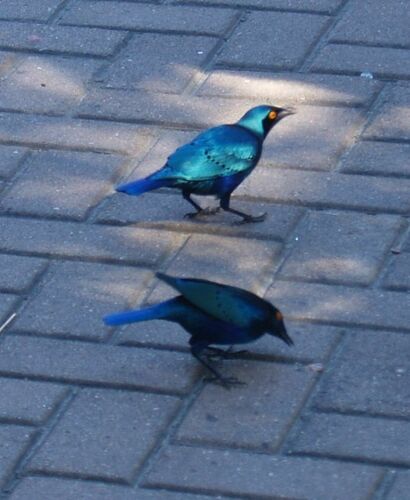 Greater Blue-eared Starling
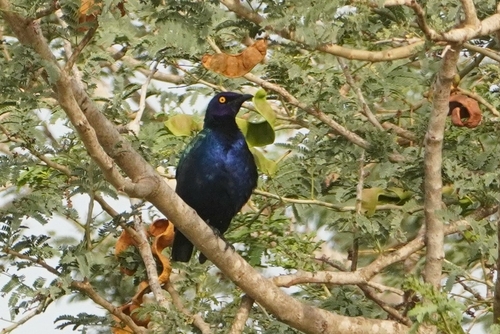 Storno viola
In breve
Il segno distintivo più affidabile per separare il Greater Blue-eared Starling dallo Storno viola è il colore complessivo delle parti inferiori: il Greater Blue-eared Starling mostra un corpo blu-verde lucido con un ventre blu-viola distinto e una macchia auricolare blu, mentre lo Storno viola è di un viola metallico in tutto il capo e il corpo, con ali verdi lucide. I giovani di entrambe le specie sono più opachi, ma i giovani del Greater Blue-eared hanno parti inferiori marrone scuro, mentre i giovani dello Storno viola sono grigi sotto con un'iride marrone. Entrambe le specie sono simili in dimensioni e hanno code corte e occhi gialli da adulti, quindi prestare attenzione al colore e all'estensione del blu o del viola sul ventre e sul viso è fondamentale. Sul campo, l'errata identificazione è più probabile con immaturi opachi o in scarsa luce, quindi concentrati sul colore delle parti inferiori e sulla macchia auricolare.
Consigli di identificazione
- Colore delle parti inferiori (adulti): Il Greater Blue-eared Starling ha un corpo blu-verde lucido con un ventre blu-viola, mentre lo Storno viola è di un viola metallico in tutto il capo e il corpo. Cerca l'estensione e la tonalità del blu o del viola sul ventre e sui fianchi.
- Macchia auricolare: Solo il Greater Blue-eared Starling ha una macchia auricolare blu distinta; lo Storno viola non ha questa caratteristica. In buona luce, controlla l'area dietro l'occhio per questo segno.
- Colore delle ali e della schiena: Lo Storno viola ha ali verdi lucide che contrastano con il corpo viola, mentre il Greater Blue-eared Starling è più uniformemente blu-verde sopra. In volo o posato, nota eventuali contrasti tra ali e corpo.
- Parti inferiori dei giovani: Il giovane Greater Blue-eared Starling è opaco con parti inferiori marrone scuro; il giovane Storno viola è opaco con parti inferiori grigie. Questa è una differenza sottile e potrebbe essere difficile da giudicare se non da vicino.
- Colore degli occhi (adulti): Entrambe le specie hanno occhi gialli brillanti da adulti, quindi questo non è un segno distintivo, ma nota che il giovane Storno viola ha un'iride marrone, mentre il giovane Greater Blue-eared Starling è più scuro ma non specificamente marrone.
- Coda e struttura: Entrambi hanno code corte e sono robusti; la lunghezza della coda e la forma del corpo non aiutano nella separazione.
- Differenze sessuali: Entrambe le specie sono sessualmente simili, quindi non fare affidamento sul sesso per l'identificazione.
- Comportamento: Se vedi uno storno posato su bestiame e che si nutre di insetti disturbati dall'animale, è più probabile che sia un Greater Blue-eared Starling, ma questo non è esclusivo.
- Habitat: Entrambe le specie si trovano in boschi aperti e habitat simili; non usare l'habitat da solo per la separazione.
- Vocalizzazioni: Solo il richiamo del Greater Blue-eared Starling è descritto ('squee-ar'); se senti questo, supporta il Greater Blue-eared, ma il silenzio o i richiami sconosciuti non sono utili.
- Viste in volo: Non è descritto alcun modello distintivo della parte superiore dell'ala o segno di volo per entrambe le specie, quindi fai affidamento sul colore del corpo e sulla tonalità delle parti inferiori anche in volo.
- Condizioni di illuminazione: Entrambe le specie possono apparire scure o simili in scarsa luce; prova sempre a osservare in buona luce per valutare accuratamente il colore.
- Fagotti misti: Entrambi possono unirsi a fagotti misti di storni; non assumere una singola specie in un gruppo.
- Gamma geografica: Entrambi hanno ampie gamme in Africa con sovrapposizioni; la gamma non è un separatore affidabile in gran parte della loro area condivisa.
- Trappole comuni: Il rischio maggiore è quello di giudicare male il colore all'ombra o su giovani opachi; concentrati sull'estensione del blu rispetto al viola sul ventre e sulla presenza o assenza di una macchia auricolare blu.
Taglia
Entrambe le specie sono molto simili in dimensioni, con il Greater Blue-eared Starling lungo circa 22 cm e una massa corporea di 85,8 g [wikidata]. Lo Storno viola è elencato come lungo 22–23 cm [wikipedia], quindi non c'è alcuna differenza significativa in dimensioni o struttura da utilizzare sul campo. Entrambi sono storni robusti e a coda corta.
Piumaggio
- Giovani: I giovani del Greater Blue-eared Starling sono più opachi degli adulti, con parti inferiori marrone scuro e un'iride più scura, mentre i giovani dello Storno viola sono molto più opachi nel complesso, con parti inferiori grigie e un'iride marrone. La differenza nel colore delle parti inferiori (marrone scuro vs. grigio) è sottile ma può aiutare in buone visuali.
- Adulti: Gli adulti del Greater Blue-eared Starling sono complessivamente blu-verde lucido, con un ventre blu-viola e una macchia auricolare blu. Il blu del ventre è esteso, raggiungendo in avanti rispetto alle gambe. Al contrario, gli adulti dello Storno viola hanno una testa e un corpo viola metallico, con ali verdi lucide, privi della macchia auricolare blu e con una parte inferiore viola più uniforme. Entrambi hanno occhi gialli brillanti da adulti.
- Viste in volo: Non è descritto alcun modello distintivo della parte superiore dell'ala o segno di volo per entrambe le specie, quindi la separazione si basa sul colore del corpo e sulla tonalità delle parti inferiori anche in volo.
- Sessi: Entrambe le specie sono sessualmente simili, quindi il sesso non è un segno utile sul campo.
Comportamento
Entrambe le specie sono gregarie e si uniranno a fagotti misti, spesso posandosi in modo appariscente. Il Greater Blue-eared Starling è noto per posarsi su bestiame per nutrirsi di insetti, un comportamento non specificamente menzionato per lo Storno viola. Entrambi si nutrono principalmente a terra di insetti e frutta. Riposare in grandi gruppi è tipico per il Greater Blue-eared Starling, a volte con altri storni, ma questo non è specificato per lo Storno viola.
Habitat
Il Greater Blue-eared Starling è un uccello molto comune di boschi aperti su un'ampia gamma che va dal Senegal all'Etiopia e a sud fino al sud-est del Sudafrica e all'Angola. L'habitat dello Storno viola non è specificato nelle note, ma entrambi sono generalmente uccelli di campagna aperta e boschi. È probabile che ci sia sovrapposizione degli habitat, quindi l'habitat da solo non è un separatore affidabile.
Voce
Il Greater Blue-eared Starling ha una gamma di richiami musicali o stridenti, con il più familiare che è un nasale 'squee-ar.' Non sono fornite informazioni sulla vocalizzazione dello Storno viola, quindi la voce non è un separatore affidabile in questo caso.
Greater Blue-eared Starling · Storno viola · I miei uccelli difficili