

Airone bianco maggiore vs Airone cenerino
Ardea alba contro Ardea cinerea
Fai un quiz con Airone bianco maggiore e Airone cenerino
 Airone bianco maggiore
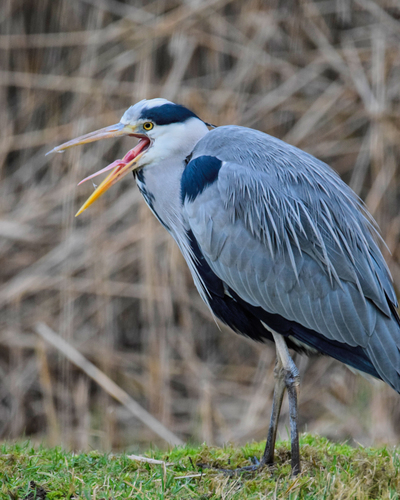 Airone cenerino
In breve
Il segno distintivo più affidabile che separa l'Airone bianco maggiore dall'Airone cenerino è il piumaggio: l'Airone bianco maggiore è completamente bianco a tutte le età, mentre l'Airone cenerino non è mai completamente bianco, mostrando parti superiori grigie e una testa e un collo bianchi in contrasto con segni neri. In volo, entrambe le specie ritirano il collo, ma l'airone bianco appare più snello e di un bianco lucente, mentre l'airone cenerino sembra più massiccio con evidenti tonalità grigie e nere. Anche il colore del becco e delle gambe aiuta: l'Airone bianco maggiore ha un becco giallo e gambe nere, mentre l'Airone cenerino ha un becco giallo-rosato e gambe marroni. I giovani di entrambe le specie somigliano agli adulti in questi aspetti chiave, quindi l'età di solito non complica l'identificazione.
Consigli di identificazione
- Il colore del piumaggio è decisivo: L'Airone bianco maggiore è sempre di un bianco puro; l'Airone cenerino è sempre grigio sopra e bianco sotto, con una testa e un collo bianchi e segni neri. Questo vale per tutte le età e stagioni.
- Colore del becco: L'Airone bianco maggiore ha un becco giallo (può scurirsi leggermente durante la stagione di riproduzione); l'Airone cenerino ha un becco giallo-rosato, che diventa più luminoso negli adulti in riproduzione. Il becco è anche più spesso e potente nell'Airone cenerino.
- Colore delle gambe: L'Airone bianco maggiore ha gambe e piedi neri; l'Airone cenerino ha gambe marroni. Durante la stagione di riproduzione, le gambe inferiori dell'airone possono diventare più chiare, ma mai marroni.
- Schema della testa: L'Airone cenerino mostra un bold supercilium nero e una cresta che si estende dall'occhio fino alla parte posteriore della testa; la testa dell'Airone bianco maggiore è completamente bianca, priva di nero.
- Segni sul collo: L'Airone cenerino ha strisce bluastre e nere sulla parte anteriore del collo; il collo dell'Airone bianco maggiore è completamente bianco senza striature.
- Dimensioni e struttura: L'Airone cenerino è leggermente più grande e pesante, con un corpo più massiccio e un becco più spesso, ma la sovrapposizione delle dimensioni è significativa e non affidabile a meno che gli uccelli non siano affiancati.
- Jizz in volo: Entrambi volano con il collo ritratto, ma l'airone bianco appare più snello e completamente bianco; l'airone cenerino appare più pesante, con ampie ali grigie e collo/testa bianchi.
- Confusione giovanile: I giovani Aironi cenerini sono più opachi e grigi, ma non sono mai bianchi; i giovani Aironi bianchi maggiori sono identici agli adulti non in riproduzione (completamente bianchi). Nessuno schema di ali specifico per l'età complica l'identificazione.
- Piume da riproduzione: Entrambe le specie sviluppano piume ornamentali durante la stagione di riproduzione, ma solo l'airone rimane completamente bianco; le piume dell'airone cenerino sono grigie o nere.
- Sovrapposizione dell'habitat: Entrambi si trovano in habitat umidi simili, quindi non utilizzare l'habitat da solo per la separazione.
- Vocalizzazioni: Entrambi emettono crocchi e grida aspre, ma i richiami non sono affidabilmente separabili sul campo.
- Comportamento: Entrambi cacciano stando in piedi o stalkando in acque poco profonde; l'airone può apparire più aggraziato e dritto, l'airone cenerino più curvo e deliberato.
- Postura in perching: L'airone sta in piedi alto e snello, l'airone cenerino è più massiccio con una curva a S più pronunciata nel collo.
- Contesto: In aree dove una specie è rara (ad esempio, l'Airone bianco maggiore in alcune parti dell'Europa settentrionale), la rarità può aiutare, ma confermare sempre con piumaggio e struttura.
- Trappole comuni: Non confondere il piumaggio completamente bianco dell'airone con l'airone dalla testa chiara; controllare sempre la presenza di grigio nelle ali/schiena e nero sulla testa per l'airone.
Taglia
Entrambi sono grandi aironi, ma l'Airone cenerino è leggermente più grande e pesante: raggiunge un'altezza di 100 cm, con una lunghezza di 84–102 cm e un'apertura alare di 155–195 cm, e pesa 1,02–2,08 kg. L'Airone bianco maggiore raggiunge fino a 1 m, misura 80–104 cm di lunghezza, con un'apertura alare di 131–170 cm, e pesa 700–1.500 g (media 1.000 g). Sul campo, la sovrapposizione delle dimensioni è sostanziale, e a meno che gli uccelli non siano affiancati, la dimensione da sola non è affidabile per la separazione.
Piumaggio
Il piumaggio è la differenza più chiara a tutte le età. L'Airone bianco maggiore è di un bianco puro in tutti i piumaggi, compresi i giovani, gli adulti non in riproduzione e quelli in riproduzione. Durante la stagione di riproduzione, sviluppa piume ornamentali sulla schiena, ma rimane completamente bianco. L'Airone cenerino non è mai completamente bianco: gli adulti hanno parti superiori grigio cenere, parti inferiori grigio-bianco, una testa e un collo bianchi con un bold supercilium nero e una cresta, e strisce nere sul collo. Gli Aironi cenerini immaturi sono più opachi, con strisce grigie sulla testa e un volto grigio più chiaro, ma mostrano comunque parti superiori grigie e non sono mai bianchi nel complesso. In volo, l'airone è un uccello bianco lucente, mentre l'airone cenerino mostra un pattern bicolore con ali e schiena grigie e collo e testa bianchi. Non ci sono schemi distintivi di ali giovanili (come triangoli neri o bordi posteriori) in nessuna delle due specie che possano confondere la questione; il contrasto tra completamente bianco e grigio-bianco è coerente in tutte le età.
Comportamento
Entrambe le specie sono tipicamente viste guadando in acque poco profonde, stando ferme o muovendosi lentamente mentre cacciano. In volo, entrambe ritirano il collo, dando un profilo compatto e curvo. L'airone bianco appare spesso più aggraziato e snello, con battiti d'ali più lenti e costanti. L'airone cenerino appare più pesante e più goffo, con ali più ampie. Quando sono in perching, l'airone sta in piedi alto e snello, mentre l'airone cenerino appare più massiccio, con una curva a S più pronunciata nel collo. Entrambe le specie possono essere viste singolarmente o in gruppi sciolti, e entrambe si riproducono in colonie.
Habitat
La sovrapposizione dell'habitat è estesa: entrambe le specie frequentano zone umide, laghi, fiumi, paludi, stagni e aree costiere. L'Airone bianco maggiore ha una distribuzione globale più ampia, ma in Europa e in gran parte dell'Eurasia, entrambe possono essere trovate negli stessi habitat. Il contesto di solito non è utile per la separazione, tranne in regioni dove una specie è molto più rara.
Voce
Nessuna delle due specie è molto vocale lontano dalle colonie. L'Airone bianco maggiore emette un crocchio basso e rauco quando disturbato, e nelle colonie emette crocchi 'cuk cuk cuk' e grida più acute. L'Airone cenerino è generalmente silenzioso ma può emettere crocchi o grida aspre, specialmente in volo o nel nido. I richiami sono simili nel tono e non sono affidabili per la separazione sul campo.
Airone bianco maggiore · Airone cenerino · I miei uccelli difficili