

Picchio rosso maggiore vs Gracchio alpino
Dendrocopos major contro Pyrrhocorax graculus
Fai un quiz con Picchio rosso maggiore e Gracchio alpino
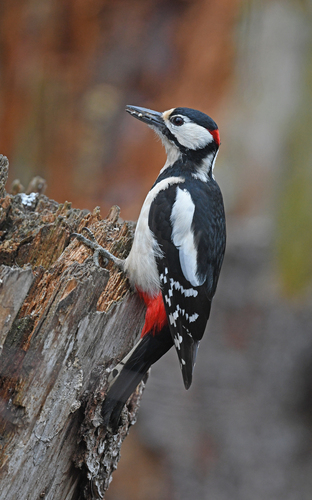 Picchio rosso maggiore
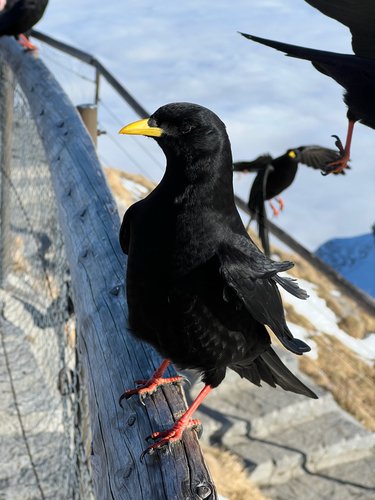 Gracchio alpino
In breve
Il segno distintivo più affidabile per separare il Picchio rosso maggiore dal Gracchio alpino è la colorazione e la struttura complessiva: il Picchio rosso maggiore è un uccello compatto, nero e bianco, con una grande macchia bianca sulla spalla e rosso sul ventre (più rosso sulla testa nei maschi e nei giovani), mentre il Gracchio alpino è un uccello lucido, nero, simile a un corvo, con un becco giallo e zampe rosse. In volo o a riposo, il picchio mostra un forte contrasto nero e bianco e un becco corto a scalpello, mentre il gracchio è uniformemente nero con un becco giallo sottile e ricurvo e ali e coda più lunghe. I picchi giovani possono essere confusi con altri picchi ma non con i gracchi, e viceversa. L'habitat è anche un forte indizio: i picchi si trovano nei boschi, i gracchi in aree aperte ad alta montagna.
Consigli di identificazione
- Colore generale: Il Picchio rosso maggiore è nero e bianco con un'area ventrale rossa; il Gracchio alpino è completamente nero lucido senza piumaggio bianco o rosso.
- Colore e forma del becco: Il picchio ha un becco dritto, a scalpello, di colore grigio scuro; il gracchio ha un becco giallo sottile e ricurvo (adulti) o giallo opaco (giovani).
- Colore delle zampe: Le zampe del picchio sono grigio-verdi; le zampe del gracchio sono rosso brillante (adulti) o marroni (giovani).
- Macchia bianca sulla spalla: Solo il Picchio rosso maggiore ha una grande macchia bianca sulla spalla, visibile a riposo e in volo.
- Rosso sulla testa: I picchi maschi hanno una nuca rossa; i giovani hanno una corona rossa. I gracchi non mostrano mai rosso sulla testa.
- Rosso sul ventre: Solo il picchio ha un ventre inferiore rosso (adulto) o rosato (giovane) e una sottocoda. Il gracchio è completamente nero sotto.
- Schema delle ali in volo: Il picchio mostra ali e coda barrate in nero e bianco; il gracchio è uniformemente nero senza barre o bianco.
- Forma della coda: Il picchio ha una coda corta e rigida usata per sostenersi sugli alberi; il gracchio ha una coda più lunga e flessibile, spesso aperta in volo.
- Stile di volo: Il picchio vola in archi ondulati e saltellanti; il gracchio plana, scivola e compie manovre acrobatiche con battiti d'ali profondi e sciolti.
- Habitat: Picchio nei boschi, gracchio in aree aperte ad alta montagna. Se vedi un 'picchio' su una scogliera sopra la linea degli alberi, ripensaci.
- Comportamento di posarsi: Il picchio scala tronchi e rami; il gracchio si posa su rocce, scogliere o sul terreno, senza mai arrampicarsi sugli alberi.
- Voce: Il picchio emette richiami acuti 'kick' e tambureggia; il gracchio emette richiami ondulati e fischiati, mai tamburi.
- Differenze sessuali: Solo il picchio mostra dimorfismo sessuale (nuca rossa nei maschi); i sessi dei gracchi sono identici.
- Confusione giovanile: La corona rossa e il piumaggio più opaco del picchio giovane sono unici; il gracchio giovane è semplicemente un uccello nero più opaco con un becco giallo opaco.
- Dimensioni: Il gracchio è quasi due volte più lungo e molto più pesante del picchio; in un confronto diretto, il gracchio è delle dimensioni di un corvo, il picchio è molto più piccolo.
Taglia
Il Picchio rosso maggiore è un picchio di dimensioni medie, lungo circa 20–24 cm e pesante circa 89 g [wikidata]. Il Gracchio alpino è molto più grande, con una lunghezza di 37–39 cm e un'apertura alare di 75–85 cm, ed è quasi due volte più lungo del picchio. Il gracchio è anche molto più pesante (massa adulta non fornita in AVONET, ma Wikipedia indica 188–252 g), con una coda e ali proporzionalmente più lunghe. Sul campo, il gracchio appare delle dimensioni di un corvo e slanciato, mentre il picchio è compatto e con una coda più corta.
Piumaggio
- Uccelli giovani/immaturi: Il Picchio rosso maggiore giovane ha una corona rossa (meno estesa nelle femmine), parti superiori più opache e marroni, e marcature meno definite rispetto agli adulti. Il ventre inferiore è rosato piuttosto che rosso. Il Gracchio alpino giovane è semplicemente una versione più opaca dell'adulto: è ancora tutto nero ma con un becco giallo opaco e zampe marroni. Non ci sono macchie bianche audaci o rosse sulle parti inferiori nei gracchi di qualsiasi età.
- Adulti: Il Picchio rosso maggiore è nero sopra con grandi macchie bianche sulle spalle, viso e parti inferiori bianche (eccetto per un ventre inferiore e una sottocoda scarlatti), e ali e coda barrate in nero e bianco. I maschi hanno una nuca rossa, le femmine non ce l'hanno. Il Gracchio alpino è completamente nero lucido, senza bianco o rosso nel piumaggio, con un becco giallo corto e zampe rosse. I sessi sono identici nei gracchi.
- In volo: Il Picchio rosso maggiore mostra un forte contrasto nero e bianco sulla parte superiore dell'ala e una macchia bianca sulla spalla; il Gracchio alpino è tutto nero senza bianco.
Comportamento
Il Picchio rosso maggiore è spesso visto arrampicarsi sui tronchi e sui rami degli alberi, risalendo in brevi salti, e tambureggiando o beccando il legno. Raramente trascorre tempo a terra e vola in modo saltellante e ondulato, tipico dei picchi. Il Gracchio alpino è altamente aereo, spesso visto planare, scivolare o compiere manovre di volo acrobatico in correnti ascensionali vicino alle scogliere. A terra, cammina o salta in aree aperte, spesso in gruppi. Non si arrampica sugli alberi né tambureggia.
Habitat
Il Picchio rosso maggiore è un uccello di bosco, trovato in foreste, parchi e giardini in tutto il Paleartico, comprese le foreste di pianura e montane. Raramente si trova in aree aperte o senza alberi. Il Gracchio alpino è strettamente una specie di alta montagna, che nidifica e cerca cibo sopra la linea degli alberi su scogliere, pendii rocciosi e prati alpini dalla Spagna al Nepal. Non si trova in foreste o habitat di pianura. Se vedi un uccello nero con un becco giallo in alta montagna, è quasi certamente un Gracchio alpino; se in bosco, un picchio.
Voce
Il Picchio rosso maggiore emette richiami acuti 'kick' o 'chik' e tambureggia sul legno; i suoi richiami sono brevi, duri e non simili a quelli di un corvo. Il Gracchio alpino ha un 'preep' ondulato e un 'sweeeooo' fischiato, di tono più alto e più musicale rispetto ai corvi tipici, oltre a un richiamo d'allerta a churr. I suoi richiami non sono mai tamburi o simili a quelli del picchio. La voce è un forte indizio se udita.
Picchio rosso maggiore · Gracchio alpino · I miei uccelli difficili