

Aquila reale vs Steller's Sea-Eagle
Aquila chrysaetos contro Haliaeetus pelagicus
Fai un quiz con Aquila reale e Steller's Sea-Eagle
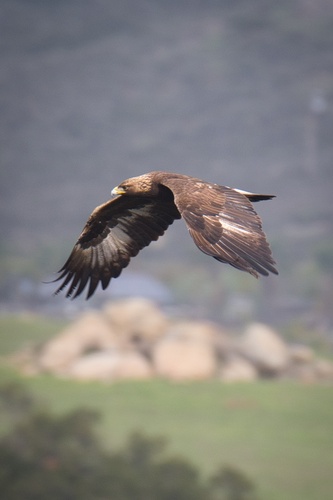 Aquila reale
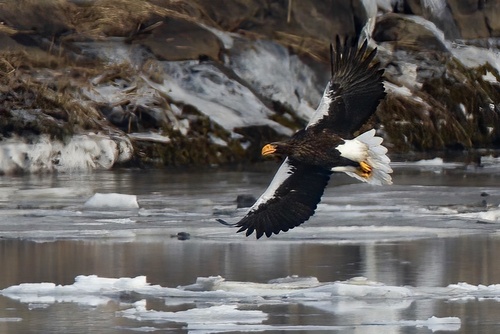 Steller's Sea-Eagle
In breve
Il segno di campo più affidabile per separare l'Aquila reale dallo Steller's Sea-Eagle è la combinazione di struttura generale e piumaggio: lo Steller's Sea-Eagle è più massiccio con un becco giallo massiccio, macchie bianche audaci sulle ali e sulla coda (negli adulti) e un aspetto notevolmente variegato, mentre l'Aquila reale è più uniformemente marrone scuro con una nuca dorata e manca di bianco evidente nel piumaggio adulto. Le aquile reali juvenile mostrano grandi macchie bianche ben definite sulle ali e sulla coda, ma queste differiscono per forma e posizione rispetto al bianco più esteso e a forte contrasto degli adulti Steller's. In volo, lo Steller's appare più pesante, con ali a forma di pala e una coda a forma di diamante; l'Aquila reale è più aerodinamica, con una coda proporzionalmente più lunga e ali più simili a quelle di un falco. La dimensione e la forma del becco sono anche una differenza strutturale chiave a qualsiasi età.
Consigli di identificazione
- Dimensione e colore del becco: Lo Steller's Sea-Eagle ha un becco massiccio, profondo e giallo brillante a tutte le età, che è molto più grande e prominente rispetto al becco scuro e proporzionato dell'Aquila reale. Questo è spesso il segno strutturale più facile a distanza ravvicinata o media.
- Piumaggio adulto: Lo Steller's Sea-Eagle adulto è audacemente variegato, con ampie macchie bianche sulle spalle (copritori delle ali), sulla coda, sulle cosce e sulle parti inferiori, in contrasto con un corpo nerastro. Gli adulti dell'Aquila reale sono uniformemente marrone scuro con una nuca dorata e mancano di macchie bianche.
- Piumaggio juvenile/immaturo: Le aquile reali juvenile mostrano grandi macchie bianche ben definite alla base delle primarie e sulla coda, ma il resto del piumaggio è marrone scuro. Gli Steller's Sea-Eagles juvenile sono più uniformemente marrone scuro, con solo alcune striature sulla testa/collo e una coda bianca con maculature nere all'estremità. Il bianco nello Steller's è meno ben definito e più esteso negli adulti rispetto a qualsiasi Aquila reale.
- Forma della coda: In volo, la coda dell'Aquila reale è lunga e con bordi dritti, spesso apparendo due o tre volte la lunghezza della testa. La coda dello Steller's è più corta, più larga e a forma di diamante, particolarmente evidente negli uccelli in volo.
- Forma delle ali: Le ali dell'Aquila reale sono lunghe, abbastanza snelle e più simili a quelle di un falco, mentre le ali dello Steller's sono più larghe, a forma di pala e appaiono pesanti in volo.
- Stile di volo: L'Aquila reale vola con ali leggermente sollevate (dihedrale poco profondo) e mostra un volo potente e controllato. Lo Steller's Sea-Eagle ha battiti d'ali più lenti e profondi e spesso tiene le ali più piatte.
- Testa e collo: Lo Steller's ha una testa e un becco più grandi e sporgenti, dando un profilo massiccio. La testa dell'Aquila reale è più piccola e meno prominente in volo.
- Colore della nuca: L'Aquila reale mostra una nuca dorata a ruggine (specialmente in buona luce), che è assente nello Steller's Sea-Eagle.
- Zampe e piedi: Lo Steller's adulto ha piedi e zampe gialli brillanti, mentre quelli dell'Aquila reale sono più opachi.
- Postura in perching: Lo Steller's appare più massiccio e più eretto quando è posato, con un becco massiccio e una struttura pesante. L'Aquila reale è più aerodinamica e meno massiccia.
- Contesto dell'habitat: Se visto vicino a grandi corpi d'acqua, specialmente nel nord-est asiatico, lo Steller's è molto più probabile. Le aquile reali si trovano di solito in altipiani aperti o montagne, lontano dall'acqua.
- Impressione di dimensione: Lo Steller's è visibilmente più grande e pesante dell'Aquila reale, ma fai attenzione alla distanza e agli uccelli solitari, poiché la dimensione può essere difficile da giudicare.
- Bianco nelle ali e nella coda: In volo, controlla il modello di bianco: macchie ben definite nell'Aquila reale juvenile (base delle primarie e base della coda) contro un bianco più esteso e a forte contrasto negli adulti Steller's (spalle, coda, cosce, copritori delle ali inferiori).
- Colore del becco nei giovani uccelli: Anche lo Steller's juvenile ha un grande becco scuro che è ancora proporzionalmente più grande di quello dell'Aquila reale alla stessa età.
- Rischio di confusione: Se vedi un grande aquila scura con bianco nelle ali o nella coda, controlla il modello, la dimensione del becco e il contesto. Il bianco dell'Aquila reale è limitato e ben definito nei juvenile; l'adulto Steller's è audacemente variegato, e anche i juvenile sono più massicci con un becco più grande.
Taglia
Lo Steller's Sea-Eagle è significativamente più grande e pesante dell'Aquila reale, con una massa corporea media di 6675 g rispetto ai 4383 g dell'Aquila reale ([wikidata]). Lo Steller's appare più massiccio nel complesso, con un becco massiccio e profondo che è molto più grande rispetto al becco più proporzionato e simile a un rapace dell'Aquila reale. Sul campo, questa differenza di dimensione è sorprendente quando entrambe le specie sono viste insieme, ma può essere più difficile da giudicare a distanza o singolarmente. La coda dell'Aquila reale è proporzionalmente più lunga rispetto alla testa, mentre la coda dello Steller's è più corta e a forma di diamante. Lo Steller's ha anche ali più larghe e a forma di pala rispetto alle ali più affusolate e simili a quelle di un falco dell'Aquila reale.
Piumaggio
Le aquile reali juvenile e immature (fino a subadulte) mostrano grandi macchie bianche ben definite alla base delle primarie e sulla coda, ma queste sono ristrette e contrastano con un piumaggio altrimenti marrone scuro. Il bianco è tipicamente limitato alle primarie interne e alla base della coda, formando un modello netto che è diverso dal bianco casuale e maculato delle juvenile Haliaeetus. Al contrario, gli Steller's Sea-Eagles juvenile sono per lo più uniformemente marrone scuro con alcune striature grigio-marroni sulla testa e sul collo, e la coda è bianca con maculature nere all'estremità. Man mano che lo Steller's matura, il bianco nel piumaggio aumenta, specialmente sui copritori delle ali, cosce, copritori delle ali inferiori e coda, risultando in un aspetto audacemente variegato negli adulti. Le aquile reali adulte sono di un ricco marrone scuro nel complesso, con una nuca dorata a ruggine, e mancano del bianco esteso degli adulti Steller's. L'adulto Steller's Sea-Eagle è inconfondibile con le sue spalle, coda e cosce bianche sorprendenti contro un corpo nerastro, mentre l'Aquila reale rimane più uniforme nel colore. Anche il colore del becco è diagnostico: l'adulto Steller's ha un becco giallo brillante, mentre quello dell'Aquila reale è scuro.
Comportamento
In volo, le aquile reali sono più aerodinamiche e agili, spesso planando con ali leggermente sollevate in un dihedrale poco profondo, che ricorda grandi falchi. Il loro volo è potente e controllato. Lo Steller's Sea-Eagle, d'altra parte, appare più pesante e più ponderoso, con battiti d'ali lenti e profondi e ali più larghe e a forma di pala. Lo Steller's spesso si posa in modo evidente vicino all'acqua, mentre le aquile reali sono più propense a essere viste planare su terreni aperti o posate su scogliere e grandi alberi. Entrambe le specie sono tipicamente solitarie o in coppie, ma lo Steller's può essere visto in gruppi sciolti in fonti di cibo ricche, specialmente in inverno.
Habitat
Le aquile reali sono uccelli di terreni aperti, montagne e altipiani, spesso lontano dall'acqua. Si trovano raramente vicino a coste o grandi corpi d'acqua, tranne durante la migrazione o l'inverno. Lo Steller's Sea-Eagle è fortemente associato ad aree costiere, grandi fiumi e laghi, quasi sempre vicino all'acqua dove pesci e uccelli acquatici sono abbondanti. Se visto nell'entroterra e lontano dall'acqua, l'Aquila reale è molto più probabile; se vicino a grandi fiumi, estuari o alla costa, specialmente nel nord-est asiatico, lo Steller's è favorito.
Aquila reale · Steller's Sea-Eagle · I miei uccelli difficili