

Mignattaio vs Hadada Ibis
Plegadis falcinellus contro Bostrychia hagedash
Fai un quiz con Mignattaio e Hadada Ibis
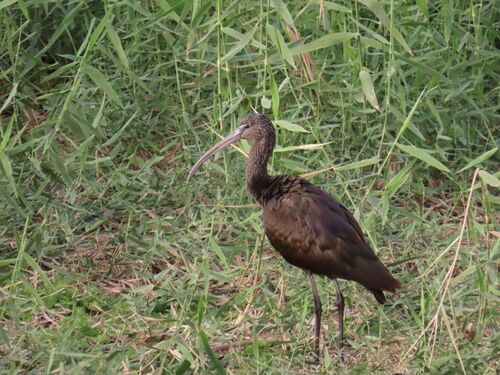 Mignattaio
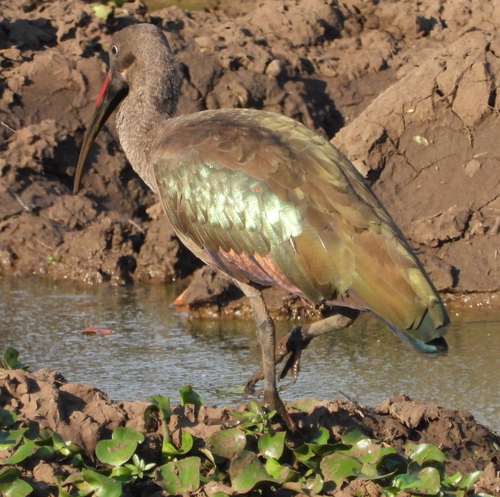 Hadada Ibis
In breve
Il segno di campo più affidabile per separare il Mignattaio dall'Hadada Ibis è la colorazione generale: il Mignattaio è un uccello molto più piccolo e snello con un corpo di un ricco marrone-rossastro e un forte riflesso metallico verde o viola sulle ali, mentre l'Hadada Ibis è un ibis grande e massiccio, per lo più grigio-marrone, con solo una sottile lucentezza viola sulle ali e una audace striscia bianca sulla guancia. In volo, il Mignattaio mostra un aspetto uniforme scuro con ali iridescenti, mentre l'Hadada Ibis è più massiccio con ali larghe e manca delle tonalità castano profondo. Il colore del becco e il motivo del viso sono anche chiave: il Mignattaio ha un becco marrone, snello e uniformemente curvato e un bordo facciale sottile e poco evidente, mentre l'Hadada Ibis ha un becco spesso, grigio-nero con una base rossa durante la stagione di riproduzione e un distintivo 'baffo' bianco sulla guancia. La voce è decisiva: l'Hadada Ibis è estremamente forte e rauco, mentre il Mignattaio è generalmente silenzioso. La differenza di dimensioni è sorprendente quando sono visti insieme, ma attenzione agli uccelli solitari.
Consigli di identificazione
- Dimensioni e struttura complessive: L'Hadada Ibis è molto più grande e massiccio del Mignattaio. Se l'uccello appare delle dimensioni di un'oca o ha un aspetto pesante e robusto, è probabile che sia un Hadada. Il Mignattaio è più snello e di dimensioni medie.
- Colore e lucentezza: Il Mignattaio (tutte le età) mostra un piumaggio corporeo marrone-rossastro ricco con un forte riflesso metallico verde, bronzo o viola sulle ali, specialmente in buona luce. L'Hadada Ibis è di un grigio-marrone uniforme, con solo una limitata lucentezza viola sulle ali, mai rossastra o castano.
- Motivo facciale: L'Hadada Ibis ha una audace striscia bianca orizzontale sulla guancia ('baffo'), visibile in tutte le età e stagioni. Il Mignattaio ha solo un sottile bordo facciale bianco sopra e sotto il becco, molto meno evidente e non forma una striscia sulla guancia.
- Forma e colore del becco: Il Mignattaio ha un becco marrone snello e uniformemente curvato. L'Hadada Ibis ha un becco spesso, pesante, grigio-nero con una base rossa (stagione di riproduzione), e il becco appare più massiccio e meno uniformemente curvato.
- Colore delle zampe: Il Mignattaio mostra zampe rosso-marroni; l'Hadada Ibis ha zampe nerastre, con le dita a volte rossastre negli uccelli in riproduzione.
- Silhouette in volo: Il Mignattaio è snello, con collo e zampe allungati, ali strette e appuntite, volo elegante e spesso in formazione a V. L'Hadada Ibis è più massiccio, con ali larghe e un volo più pesante e meno elegante, spesso accompagnato da forti richiami.
- Motivo delle ali in volo: Entrambe le specie appaiono scure in volo, ma il Mignattaio ha un aspetto uniforme scuro con riflesso metallico, mentre l'Hadada è più semplice e manca delle tonalità castano profondo.
- Segni giovanili: I giovani Mignattaio sono più opachi, con sottili striature bianche sulla testa e sul collo; i giovani Hadada sono simili agli adulti ma possono essere leggermente più opachi, sempre con la striscia bianca sulla guancia.
- Vocalizzazioni: L'Hadada Ibis è estremamente forte e rauco, richiamando frequentemente in volo e al posatoio. Il Mignattaio è generalmente silenzioso o molto quieto.
- Contesto dell'habitat: Il Mignattaio è quasi sempre vicino all'acqua, in paludi o zone umide. L'Hadada Ibis è spesso trovato in campi asciutti, prati, giardini e parchi urbani, a volte lontano dall'acqua.
- Comportamento sociale: Il Mignattaio è spesso in stormi, specialmente quando migra o si posa. L'Hadada Ibis è solitamente in coppie o piccoli gruppi, a volte da solo, ed è più probabile vederlo in ambienti urbani o suburbani.
- Segni della stagione di riproduzione: L'Hadada Ibis mostra una base rossa sul becco e rosso sulle dita durante la riproduzione; il Mignattaio può mostrare un bordo facciale blu cobalto in condizioni di riproduzione.
- Postura in perching: Il Mignattaio sta più eretto e appare più delicato; l'Hadada Ibis è più pesante, con una postura più orizzontale.
- Comportamento di foraggiamento: Il Mignattaio cerca in acque poco profonde prede acquatiche; l'Hadada Ibis cerca nel terreno vermi di terra e insetti, spesso in prati e giardini.
- Rischio di confusione: A distanza o in scarsa luce, un Hadada solitario può apparire scuro e potrebbe essere scambiato per un Mignattaio, ma la mancanza di tonalità castano, la striscia audace sulla guancia e i forti richiami sono indizi forti.
Taglia
Il Mignattaio è significativamente più piccolo e leggero dell'Hadada Ibis. Il Mignattaio ha una lunghezza media di circa 59 cm e una massa di 633 g [wikidata], mentre l'Hadada Ibis è molto più grande, raggiungendo circa 76 cm di lunghezza e una media di 1,2 kg [wikipedia]. Sul campo, l'Hadada appare più massiccio, con una struttura più pesante e ali più larghe, mentre il Mignattaio è più snello ed elegante sia a riposo che in volo. La differenza è particolarmente evidente quando entrambe le specie sono viste insieme, ma può essere sottovalutata a distanza o senza un confronto diretto.
Piumaggio
- Uccelli giovanili/immaturi: Non sono descritti schemi specifici delle ali superiori unici per età per nessuna delle due specie, ma i giovani Mignattaio e i non riproduttori sono complessivamente più opachi, con teste e colli marroni scuri finemente striati di bianco. I giovani Hadada somigliano agli adulti ma possono essere leggermente più opachi; la striscia bianca sulla guancia è presente fin dalla giovane età.
- Mignattaio adulto in riproduzione: Mostra un corpo marrone-rossastro ricco con ali iridescenti straordinarie (verde bottiglia, bronzo o viola a seconda della luce). È presente una sottile banda facciale bianca, ma è sottile. Le zampe sono rosso-marroni.
- Hadada Ibis adulto: Complessivamente grigio-marrone, privo di qualsiasi tonalità castano o rossastra. Le ali hanno una limitata lucentezza iridescente viola, ma il resto del piumaggio è semplice. La striscia bianca orizzontale sulla guancia è audace e diagnostica. Il becco è grigio-nero con una base rossa durante la stagione di riproduzione. Le zampe sono nerastre, le dita possono mostrare rosso in condizioni di riproduzione.
- In volo: Il Mignattaio appare uniformemente scuro con riflesso metallico sulle ali, snello ed elegante. L'Hadada Ibis è più massiccio, con ali larghe e un corpo più chiaro e semplice, privo delle tonalità di lucentezza profonda e castano.
Comportamento
Il Mignattaio è spesso visto in stormi, specialmente durante la migrazione o nei posatoi comuni, e si nutre in zone umide poco profonde, tipicamente cercando prede acquatiche. Vola con il collo disteso in formazioni eleganti, a volte a forma di V. L'Hadada Ibis è più spesso incontrato in coppie o piccoli gruppi, foraggiando rumorosamente in giardini, prati e aree coltivate, cercando insetti e vermi di terra. Il suo volo è potente e diretto, con ali larghe e frequenti richiami forti, specialmente all'alba e al tramonto. L'Hadada è altamente tollerante alla presenza umana ed è spesso visto in ambienti urbani.
Habitat
Il Mignattaio è uno specialista delle zone umide, preferendo paludi, canneti, pianure alluvionali e i margini di laghi e fiumi, ma può anche utilizzare terreni agricoli irrigati e laghetti di scarico. È meno comune in aree secche o urbane. L'Hadada Ibis, al contrario, è molto meno legato alle zone umide ed è frequentemente trovato in prati aperti, campi coltivati, giardini e persino parchi cittadini, così come vicino all'acqua. Se l'uccello sta foraggiando su un prato suburbano o chiama da un albero cittadino, è molto più probabile che sia un Hadada.
Voce
L'Hadada Ibis è famosamente rumoroso, emettendo richiami estremamente forti e aspri, a tre o quattro note 'haa-haa-haa-de-dah', specialmente in volo all'alba e al tramonto, e un forte 'haaaa' quando è in posatoio. Il Mignattaio è generalmente silenzioso o emette solo richiami tranquilli e poco notevoli, e non vocalizza in modo evidente in volo o al posatoio.