
Motmot

Beccafico vs Sterpazzola

Sylvia borin contro Curruca communis

Fai un quiz con Beccafico e Sterpazzola
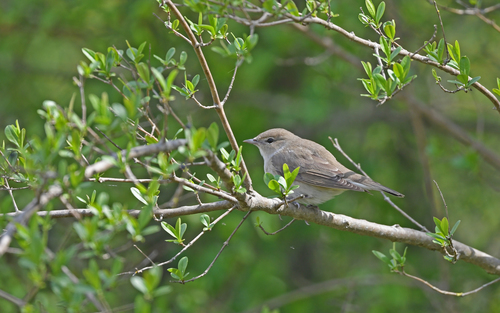
Beccafico (Sylvia borin) Beccafico
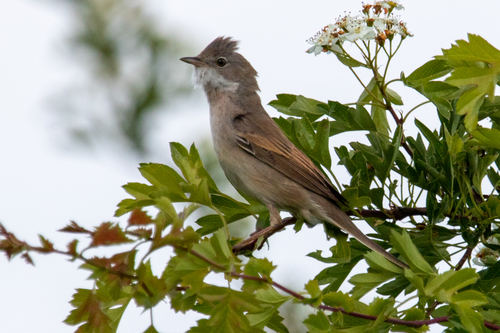
Sterpazzola (Curruca communis) Sterpazzola

Media

Caricamento…

In breve

The most reliable way to separate Garden Warbler from Common Whitethroat is by focusing on head and throat pattern: Garden Warbler is very plain-faced and lacks any strong contrast, while Common Whitethroat (especially adult males) shows a distinct white throat and, in males, a contrasting grey head. Juvenile and female Common Whitethroats are duller but still show a paler throat set off from the breast. Garden Warbler is overall plainer and more uniform, with no strong facial or throat contrasts. Both species are similar in size and structure, but the subtle plumage differences, especially around the head and throat, are key in the field.

Consigli di identificazione

  1. Head and throat contrast: Garden Warbler always looks plain-faced with no strong contrast between the throat and breast; Common Whitethroat (especially adult males) shows a bright white throat and, in males, a grey head. Females and juveniles still have a paler throat than breast, though less striking.
  2. Facial pattern: Garden Warbler has a faint, pale supercilium and a weak whitish eyering, but otherwise a featureless face. Common Whitethroat lacks a strong supercilium but has a more open-faced look due to the white throat and, in males, the grey head.
  3. Plumage uniformity: Garden Warbler is uniformly olive-brown above and dull white below, with only a subtle buff wash to the throat and flanks. Common Whitethroat is brown above and buff below, with chestnut fringes on the wing feathers (visible at close range).
  4. Sex differences: Garden Warbler sexes are identical in the field. Common Whitethroat males have a grey head and brighter white throat; females and juveniles are browner and duller but still show a paler throat.
  5. Juvenile confusion: Juvenile Garden Warblers are even plainer and greyer above, with a buffier tone below, but lack any strong head or throat pattern. Juvenile Common Whitethroats are dull but still show a paler throat than the rest of the underparts.
  6. Wing pattern: Neither species shows strong wingbars, panels, or distinctive juvenile upperwing patterns. Both have plain wings, so do not rely on wing pattern for separation.
  7. Bill color: Garden Warbler has a strong bill with a grey upper and paler lower mandible. Common Whitethroat's bill is not described in detail but is not a strong field mark for separation.
  8. Leg color: Garden Warbler has bluish-grey legs, but this is subtle and not a reliable field mark at a distance.
  9. Behavior: Common Whitethroat is more likely to perch up and sing from exposed branches; Garden Warbler is shyer and stays in dense cover.
  10. Habitat: Garden Warbler prefers dense, low vegetation in open woodland; Common Whitethroat is more often in scrub, hedgerows, and bushy open areas.
  11. Vocalizations: Garden Warbler's song is rich and melodic; Common Whitethroat's is scratchy and scolding. Calls differ, but are less useful unless heard well.
  12. Size and structure: Both are slim, long-tailed warblers of similar size; size is not a reliable field mark.
  13. Seasonal context: Both are migratory and can overlap in time and place, but Whitethroat is more likely in open scrubby areas, especially during migration.
  14. Pitfalls: The main confusion arises from dull female or juvenile Whitethroats, which can look plain, but even then, the throat is usually paler than the breast. Garden Warbler is always plain and lacks any strong contrast.
  15. When in doubt: If the bird is extremely plain, with no obvious throat contrast and no grey on the head, Garden Warbler is more likely. If there is any hint of a white or paler throat, especially with a greyish head (male), lean toward Common Whitethroat.

Taglia

Both species are small, slim warblers of similar overall size. Garden Warbler averages slightly heavier (typically 16–22 g, sometimes up to 35.5 g pre-migration [wikipedia]) compared to Common Whitethroat (14.5 g [wikidata]), but this difference is not apparent in the field. Wing and tail lengths are also similar and not reliably separable with binoculars. Do not rely on size alone to distinguish these species.

Piumaggio

Juvenile and adult Garden Warblers are very plain, with unstreaked olive-brown upperparts and dull white underparts, a faint pale supercilium, and a subtle buff wash to the throat and flanks. The face is uniformly plain with only a weak eyering, and there is no strong contrast between throat and breast. Juvenile Garden Warblers are even paler and greyer above, with a buffier tone below, but remain featureless. In contrast, Common Whitethroat (especially adult males) shows a crisp white throat sharply set off from the buff underparts and a grey head, making the throat stand out. Females and juveniles are browner and less contrasting, but still have a paler throat that is distinct from the rest of the underparts, and lack the grey head. Both sexes of Common Whitethroat have chestnut fringes to the wing feathers, which can be visible at close range. No strong wingbars or panels are present in either species, and both lack obvious streaking or barring at all ages.

Comportamento

Both species are active, often skulking warblers, but Common Whitethroat is more likely to perch up on exposed branches or sing from the tops of bushes, especially males. Garden Warbler tends to stay lower in dense vegetation and is more secretive, rarely showing itself in the open for extended periods. In flight, both appear slim and long-tailed, but behavioral differences are subtle and not always reliable for identification.

Habitat

Garden Warbler favors open woodland with dense low cover and is less likely to be found in gardens despite its name. It prefers areas with thick undergrowth for nesting. Common Whitethroat is more often found in scrub, hedgerows, and bushy areas, including rough grassland and sometimes gardens, especially during migration. Overlap does occur, but Whitethroat is more tolerant of open, shrubby habitats.

Voce

Garden Warbler's song is rich and melodic, somewhat similar to Blackcap, with a flowing, warbling quality. Common Whitethroat's song is faster, scratchier, and more scolding, with a hoarse, slightly nasal call and a rough warning cry. These vocal differences are useful when birds are singing, but both species can be silent or give only brief calls, especially outside the breeding season.

Invia una descrizione migliore

Usa le stesse sezioni del confronto. Il testo viene pubblicato subito.

The most reliable way to separate Garden Warbler from Common Whitethroat is by focusing on head and throat pattern: Garden Warbler is very plain-faced and lacks any strong contrast, while Common Whitethroat (especially adult males) shows a distinct white throat and, in males, a contrasting grey head. Juvenile and female Common Whitethroats are duller but still show a paler throat set off from the breast. Garden Warbler is overall plainer and more uniform, with no strong facial or throat contrasts. Both species are similar in size and structure, but the subtle plumage differences, especially around the head and throat, are key in the field.

  1. Head and throat contrast: Garden Warbler always looks plain-faced with no strong contrast between the throat and breast; Common Whitethroat (especially adult males) shows a bright white throat and, in males, a grey head. Females and juveniles still have a paler throat than breast, though less striking.
  2. Facial pattern: Garden Warbler has a faint, pale supercilium and a weak whitish eyering, but otherwise a featureless face. Common Whitethroat lacks a strong supercilium but has a more open-faced look due to the white throat and, in males, the grey head.
  3. Plumage uniformity: Garden Warbler is uniformly olive-brown above and dull white below, with only a subtle buff wash to the throat and flanks. Common Whitethroat is brown above and buff below, with chestnut fringes on the wing feathers (visible at close range).
  4. Sex differences: Garden Warbler sexes are identical in the field. Common Whitethroat males have a grey head and brighter white throat; females and juveniles are browner and duller but still show a paler throat.
  5. Juvenile confusion: Juvenile Garden Warblers are even plainer and greyer above, with a buffier tone below, but lack any strong head or throat pattern. Juvenile Common Whitethroats are dull but still show a paler throat than the rest of the underparts.
  6. Wing pattern: Neither species shows strong wingbars, panels, or distinctive juvenile upperwing patterns. Both have plain wings, so do not rely on wing pattern for separation.
  7. Bill color: Garden Warbler has a strong bill with a grey upper and paler lower mandible. Common Whitethroat's bill is not described in detail but is not a strong field mark for separation.
  8. Leg color: Garden Warbler has bluish-grey legs, but this is subtle and not a reliable field mark at a distance.
  9. Behavior: Common Whitethroat is more likely to perch up and sing from exposed branches; Garden Warbler is shyer and stays in dense cover.
  10. Habitat: Garden Warbler prefers dense, low vegetation in open woodland; Common Whitethroat is more often in scrub, hedgerows, and bushy open areas.
  11. Vocalizations: Garden Warbler's song is rich and melodic; Common Whitethroat's is scratchy and scolding. Calls differ, but are less useful unless heard well.
  12. Size and structure: Both are slim, long-tailed warblers of similar size; size is not a reliable field mark.
  13. Seasonal context: Both are migratory and can overlap in time and place, but Whitethroat is more likely in open scrubby areas, especially during migration.
  14. Pitfalls: The main confusion arises from dull female or juvenile Whitethroats, which can look plain, but even then, the throat is usually paler than the breast. Garden Warbler is always plain and lacks any strong contrast.
  15. When in doubt: If the bird is extremely plain, with no obvious throat contrast and no grey on the head, Garden Warbler is more likely. If there is any hint of a white or paler throat, especially with a greyish head (male), lean toward Common Whitethroat.

Both species are small, slim warblers of similar overall size. Garden Warbler averages slightly heavier (typically 16–22 g, sometimes up to 35.5 g pre-migration [wikipedia]) compared to Common Whitethroat (14.5 g [wikidata]), but this difference is not apparent in the field. Wing and tail lengths are also similar and not reliably separable with binoculars. Do not rely on size alone to distinguish these species.

Juvenile and adult Garden Warblers are very plain, with unstreaked olive-brown upperparts and dull white underparts, a faint pale supercilium, and a subtle buff wash to the throat and flanks. The face is uniformly plain with only a weak eyering, and there is no strong contrast between throat and breast. Juvenile Garden Warblers are even paler and greyer above, with a buffier tone below, but remain featureless. In contrast, Common Whitethroat (especially adult males) shows a crisp white throat sharply set off from the buff underparts and a grey head, making the throat stand out. Females and juveniles are browner and less contrasting, but still have a paler throat that is distinct from the rest of the underparts, and lack the grey head. Both sexes of Common Whitethroat have chestnut fringes to the wing feathers, which can be visible at close range. No strong wingbars or panels are present in either species, and both lack obvious streaking or barring at all ages.

Both species are active, often skulking warblers, but Common Whitethroat is more likely to perch up on exposed branches or sing from the tops of bushes, especially males. Garden Warbler tends to stay lower in dense vegetation and is more secretive, rarely showing itself in the open for extended periods. In flight, both appear slim and long-tailed, but behavioral differences are subtle and not always reliable for identification.

Garden Warbler favors open woodland with dense low cover and is less likely to be found in gardens despite its name. It prefers areas with thick undergrowth for nesting. Common Whitethroat is more often found in scrub, hedgerows, and bushy areas, including rough grassland and sometimes gardens, especially during migration. Overlap does occur, but Whitethroat is more tolerant of open, shrubby habitats.

Garden Warbler's song is rich and melodic, somewhat similar to Blackcap, with a flowing, warbling quality. Common Whitethroat's song is faster, scratchier, and more scolding, with a hoarse, slightly nasal call and a rough warning cry. These vocal differences are useful when birds are singing, but both species can be silent or give only brief calls, especially outside the breeding season.

Scartare le modifiche?

Hai modifiche non salvate. Se esci ora, andranno perse.

Beccafico · Sterpazzola · I miei uccelli difficili