
Astore vs Nibbio bruno
Astur gentilis contro Milvus migrans
Fai un quiz con Astore e Nibbio bruno
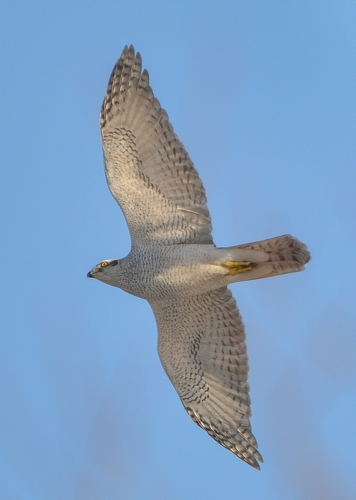 Astore
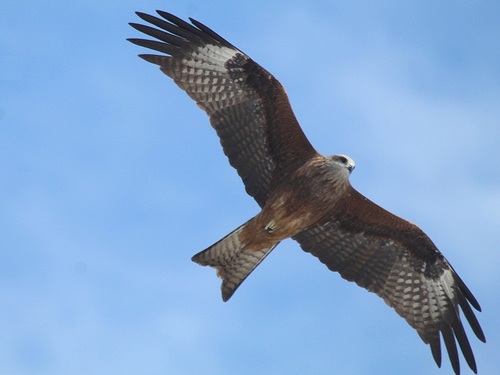 Nibbio bruno
In breve
Il segno distintivo più affidabile per separare Astore da Nibbio bruno è la forma della coda in volo: l'Astore mostra una coda lunga, con bordi dritti o leggermente arrotondati, con forti barre scure, mentre il Nibbio bruno ha una coda distintamente poco biforcuta. Gli Astore giovani possono essere confusi con altri rapaci, ma non con il Nibbio bruno, che è complessivamente più scuro e non mostra mai il supercilium chiaro dell'Astore. In volo, l'Astore ha ali più larghe e corte e un battito d'ali più potente e profondo, mentre il Nibbio bruno è più leggero e planano su ali lunghe e leggermente angolate. L'Astore è un cacciatore di bosco, spesso visto sfrecciare tra gli alberi o planare con battiti d'ali deliberati, mentre il Nibbio bruno è più spesso visto planare o circolare in campagna aperta, specialmente vicino all'acqua o all'abitazione umana.
Consigli di identificazione
- Forma della coda in volo: L'Astore ha una coda lunga, con bordi dritti o leggermente arrotondati, con forti barre scure (tutte le età); il Nibbio bruno ha una coda poco biforcuta, mai quadrata o arrotondata, e manca di forti barre sulla coda.
- Supercilium (sopracciglio): L'Astore (tutte le età, specialmente gli adulti) mostra un prominente supercilium bianco; il Nibbio bruno non mostra mai questa caratteristica.
- Forma dell'ala: L'Astore ha ali relativamente corte e larghe con una punta arrotondata; il Nibbio bruno ha ali lunghe e leggermente angolate con un aspetto più appuntito in volo.
- Stile di volo: L'Astore usa battiti d'ali profondi e potenti intervallati da brevi planate; il Nibbio bruno è leggero, planando e sorvolando per lunghi periodi con meno battiti.
- Piumaggio (giovani): L'Astore giovane è marrone sopra, fortemente striato o barrato sotto, con una coda barrata e occhi gialli pallidi; il Nibbio bruno giovane è complessivamente marrone scuro, con testa più chiara, parti inferiori striate e una coda poco biforcuta.
- Piumaggio (adulti): L'Astore adulto è blu-grigio o grigio-marrone sopra, finemente barrato sotto, con un supercilium bianco e occhi arancioni/gialli; il Nibbio bruno adulto è marrone scuro con testa e collo più chiari, una macchia scura dietro l'occhio e zampe gialle.
- Becco e cere: Il Nibbio bruno ha una cere gialla e un'apertura con un becco nero; il becco dell'Astore è relativamente grande e potente, ma il colore della cere è meno distintivo sul campo.
- Colore delle zampe: Il Nibbio bruno ha zampe gialle e artigli neri; le zampe dell'Astore sono robuste e spesse, ma il colore non è un segno distintivo primario.
- Dimensioni e struttura: L'Astore è più robusto e potente, con una coda più corta rispetto al corpo e dita più spesse; il Nibbio bruno è più snello ed elegante, con una coda più lunga e biforcuta.
- Habitat: L'Astore è quasi sempre in o vicino a boschi; il Nibbio bruno è comune in campagna aperta, aree urbane e vicino all'acqua.
- Comportamento: L'Astore caccia sfrecciando tra gli alberi o lungo i bordi del bosco; il Nibbio bruno è spesso visto planare, circolare o cercare cibo in aree aperte.
- Vocalizzazione: Il Nibbio bruno emette un richiamo acuto e fischiante; i richiami dell'Astore sono più ruvidi e meno probabili da sentire lontano dal nido.
- Colore degli occhi: Il colore degli occhi dell'Astore cambia con l'età (giallo pallido nei giovani, arancione/giallo negli adulti); il colore degli occhi del Nibbio bruno non è distintivo sul campo.
- Muta: Il momento della muta dell'Astore può portare a lacune nelle piume delle ali, specialmente nelle femmine durante l'incubazione, ma questo è raramente un segno utile sul campo.
- Trappole comuni: La femmina di Sparviero può essere confusa con il maschio dell'Astore a causa delle dimensioni, ma il Nibbio bruno è raramente confuso con entrambi, tranne a grande distanza o in scarsa luce. Controlla sempre la forma della coda, il supercilium e lo stile di volo per conferma.
Taglia
L'Astore è leggermente più pesante in media (926 g contro 828 g), ma la differenza è sottile e difficile da giudicare sul campo. Strutturalmente, l'Astore è più robusto e robusto, con una coda più corta rispetto al corpo e ali più larghe, mentre il Nibbio bruno appare più snello, con ali più lunghe e una coda più lunga e poco biforcuta. Entrambi sono rapaci di dimensioni medie-grandi, ma l'Astore dà un'impressione più potente e compatta, specialmente quando è posato.
Piumaggio
Gli Astore giovani sono marroni sopra con striature o barre scure variabili, spesso audaci, sotto, e mostrano sempre una coda barrata (3–5 barre scure) e un prominente supercilium bianco (sopracciglio). Gli adulti sono blu-grigio o grigio-marrone sopra, con fine barratura scura sotto e un pulito supercilium bianco. Il colore degli occhi cambia da giallo pallido nei giovani a arancione o giallo negli adulti. Il Nibbio bruno, in tutti i piumaggi, è complessivamente marrone scuro con testa e collo più chiari, una macchia scura dietro l'occhio e una coda poco biforcuta. Le parti superiori sono marroni, le piume di volo sono nere con barre scure, e le parti inferiori sono marroni chiare con striature scure. Il Nibbio bruno non mostra mai un supercilium bianco o barre audaci sulla coda. I giovani Nibbio bruno sono simili agli adulti ma possono essere leggermente più chiari e striati, specialmente sulla testa. In volo, l'ala inferiore dell'Astore è più chiara con barre audaci, mentre l'ala inferiore del Nibbio bruno è più uniformemente scura con meno contrasto.
Comportamento
L'Astore caccia con stealth, spesso volando basso e veloce attraverso il bosco, con battiti d'ali profondi e potenti e brevi planate. Può planare ma è meno leggero del Nibbio bruno. Il Nibbio bruno è altamente aereo, spesso visto circolare o planare su termiche, a volte in gruppi, ed è più probabile vederlo in campagna aperta, vicino all'acqua o in aree urbane. Il suo volo è più leggero e meno diretto, con frequenti planate e meno battiti. L'Astore raramente plana per lunghi periodi tranne durante la migrazione, mentre il Nibbio bruno è quasi sempre visto planare o volare.
Habitat
L'Astore è uno specialista del bosco, solitamente trovato in foreste o ai loro margini, e raramente si avventura lontano in campagna aperta. Il Nibbio bruno preferisce habitat aperti, inclusi terreni agricoli, zone umide e aree urbane, ed è particolarmente comune vicino all'acqua o agli insediamenti umani. Vedere un rapace planare sopra una città, una discarica o un fiume è molto più probabile che sia un Nibbio bruno piuttosto che un Astore.
Voce
Il Nibbio bruno emette un fischio acuto distintivo seguito da un rapido richiamo, spesso udito quando circola o vicino al nido. I richiami dell'Astore sono meno probabili da sentire tranne che vicino al nido e non sono descritti nelle note; sono generalmente più ruvidi e meno musicali rispetto a quelli del Nibbio bruno.