

Piviere tortolino vs Corriere piccolo
Eudromias morinellus contro Thinornis dubius
Fai un quiz con Piviere tortolino e Corriere piccolo
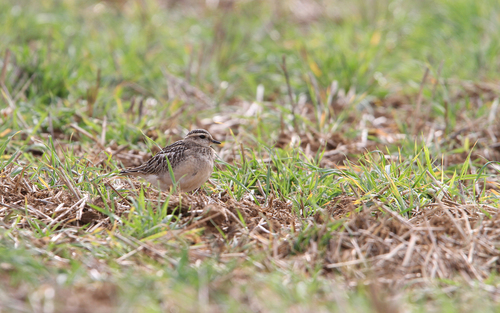 Piviere tortolino
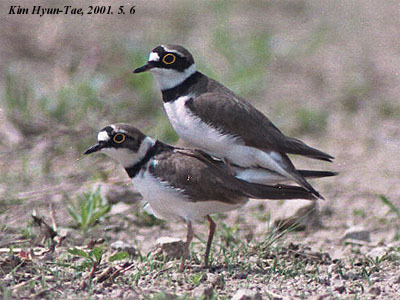 Corriere piccolo
In breve
The most reliable field mark to separate Eurasian Dotterel from Little Ringed Plover is the bold, broad white supercilium (eyebrow) of the dotterel, which is present in all plumages and contrasts with the Little Ringed Plover’s black mask and yellow eyering. In flight, Eurasian Dotterel of all ages shows plain, unmarked wings, while Little Ringed Plover has no distinctive wing pattern either, but the dotterel’s compact, dumpy build and unique head pattern stand out. Breeding dotterels are unmistakable with their chestnut breast and black belly, but even in non-breeding or juvenile plumage, the combination of strong supercilium and plain wings is distinctive. Leg color (yellow in dotterel, flesh in plover) and the presence of a yellow eyering in the plover are also key. Both are small plovers, but dotterel is slightly more compact and has a shorter bill.
Consigli di identificazione
- Supercilium: Eurasian Dotterel always shows a broad, strong white supercilium (eyebrow) in all plumages and ages, which is much more prominent than the thin white above the eye of Little Ringed Plover.
- Head pattern: Little Ringed Plover has a black mask through the eye, bordered above by white, and a clear yellow eyering; dotterel lacks the yellow eyering and mask, instead showing a more open-faced look with the bold supercilium.
- Breast band: Dotterel in breeding plumage has a chestnut-orange breast band bordered above by white and a black belly; Little Ringed Plover always has a single, neat black neckband and white underparts—never any orange or black belly.
- Leg color: Dotterel has yellow legs; Little Ringed Plover has flesh-colored legs. This is visible at close range or in good light.
- Bill: Dotterel’s bill is short and black; Little Ringed Plover’s bill is also short and dark, but the difference is subtle and not usually diagnostic.
- Wing pattern in flight: Both species have plain wings, but dotterel’s wings are especially featureless and lack any contrasting panels or trailing edges. This is a subtle but useful mark in flight, especially for juveniles and non-breeding birds.
- Juvenile back pattern: Juvenile dotterel shows a scaly pattern on the back, but always with a strong supercilium; juvenile Little Ringed Plover is plainer above and lacks the bold eyebrow.
- Eyering: Little Ringed Plover always shows a clear yellow eyering in all plumages and ages; dotterel never shows a yellow eyering.
- Structure: Dotterel is more compact and dumpy, with a shorter bill and legs, and stands more upright; Little Ringed Plover is slimmer and lower to the ground.
- Behavior: Dotterel is often tame and slow-moving, sometimes allowing very close approach; Little Ringed Plover is more active, running and stopping frequently.
- Habitat: Dotterel is found in upland tundra or open moorland, especially on breeding grounds, and in open fields or coastal flats on migration; Little Ringed Plover prefers lowland gravel, sand, or mud near water.
- Sex differences: Female dotterel is brighter than the male, especially in breeding plumage; Little Ringed Plover shows little sexual dimorphism.
- Seasonal changes: Dotterel loses its bright underparts in winter but keeps the supercilium; Little Ringed Plover remains similar year-round, with only subtle changes in the mask intensity.
- Vocalization: Dotterel’s call is a soft 'pyurr'; Little Ringed Plover’s calls are sharper. Use with caution, as calls can be hard to hear or distinguish at a distance.
- Confusion risk: In poor light or at a distance, the strong supercilium of dotterel and the yellow eyering of Little Ringed Plover are the most reliable marks. Always check for the presence or absence of the yellow eyering and the width of the supercilium.
Taglia
Both species are small plovers, but the Eurasian Dotterel is slightly more compact and dumpier than the Little Ringed Plover. The dotterel has a shorter bill and yellow legs, while the plover has flesh-colored legs and a more delicate structure. The difference is subtle at a distance, but dotterel often appears rounder and more upright when standing, compared to the plover’s lower profile.
Piumaggio
-
Juvenile/immature birds: Eurasian Dotterel juveniles have a scaly appearance to the back and always show a strong white supercilium; wings are plain in flight, with no contrasting panels or trailing edge. Little Ringed Plover juveniles have a similar brown upperpart but lack the dotterel’s bold supercilium and instead show a black mask with a yellow eyering and a single black breast band.
-
Adult breeding plumage: Dotterel is unmistakable: chestnut-orange breast, bordered above by white, with a black belly and warm brown back. The supercilium is very broad and obvious. Little Ringed Plover adults have a brown back, white underparts, a single black neckband, and a black mask with a yellow eyering; no orange or black belly.
-
Non-breeding/winter: Dotterel loses the rich underpart colors but retains the white breast line and strong supercilium; upperparts become greyer. Little Ringed Plover remains similar year-round, though the mask can be less intense; always shows the yellow eyering and single neckband.
Comportamento
Eurasian Dotterel is known for its tame, confiding behavior, often allowing close approach. It tends to stand upright and appears rather tame and slow-moving. Little Ringed Plover is more active and wary, often running in short bursts and bobbing its head. In flight, both species are agile, but the dotterel’s compact shape and plain wings contrast with the plover’s more typical plover-like flight and head pattern.
Habitat
Eurasian Dotterel breeds in upland, open tundra or moorland, often above the treeline, and is seen on migration in open fields or coastal flats. Little Ringed Plover prefers lowland habitats: gravel pits, riverbanks, lakeshores, and sandy or muddy margins, rarely venturing into upland tundra. Habitat overlap is possible on migration, but dotterel is rarely found in the typical breeding habitats of Little Ringed Plover.
Voce
Eurasian Dotterel’s flight call is a soft 'pyurr', and the female’s song is a simple, repetitive whistle. Little Ringed Plover’s calls are not described in the notes, but its typical plover calls are sharper and more insistent. Vocalizations are not the most reliable way to separate these two unless the dotterel’s soft call is heard.
Piviere tortolino · Corriere piccolo · I miei uccelli difficili