

Motmot

Folaga vs American Coot

Fulica atra contro Fulica americana

Fai un quiz con Folaga e American Coot
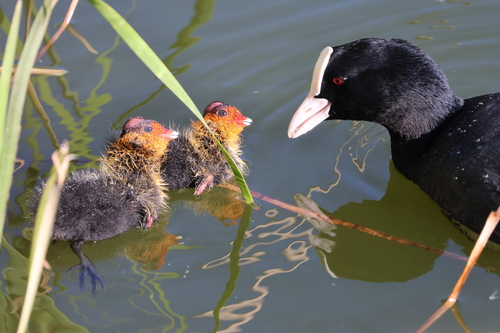
Folaga (Fulica atra) Folaga
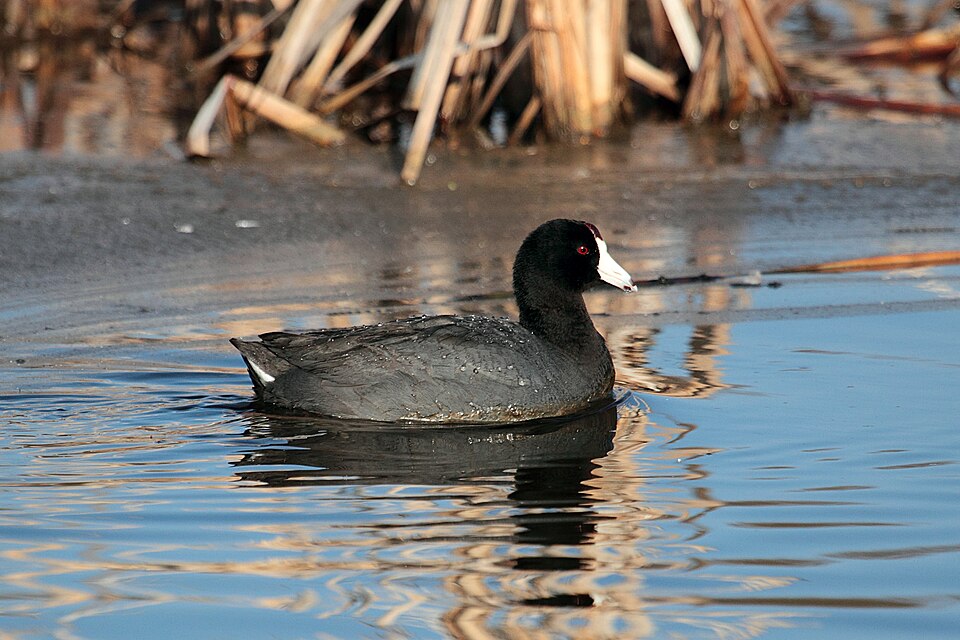
American Coot (Fulica americana) American Coot

Media

Caricamento…

In breve

The most reliable field mark between Eurasian Coot and American Coot is the coloration of the bill and frontal shield: Eurasian Coots have a pure white bill and shield, while American Coots usually show a white bill with a reddish-brown spot near the top of the shield. Juveniles differ as well: young Eurasian Coots are paler with a whitish breast and lack the facial shield, while juvenile American Coots have olive-brown crowns and gray bodies. Both species are similar in size and overall dark color, but careful attention to bill pattern and subtle plumage differences, especially in young birds, will help separate them. Structure and behavior are broadly similar, so focus on the head and bill for the most reliable separation.

Consigli di identificazione

  1. Bill and shield color (adults): Eurasian Coots have a pure white bill and frontal shield, while American Coots usually show a white bill with a reddish-brown spot or smudge near the top of the shield. This is the most reliable field mark in close views.
  2. Juvenile plumage: Juvenile Eurasian Coots are paler than adults, with a whitish breast and lacking the facial shield; juvenile American Coots have an olive-brown crown and gray body, without the pale breast. Use this for young birds in late summer and autumn.
  3. Facial shield shape and extent: The Eurasian Coot's shield is broad, smooth, and strikingly white, often appearing larger and cleaner than the American Coot's, which is smaller and usually marked with a reddish-brown spot.
  4. Head and body color (adults): Eurasian Coots have a glossy black head and slaty-black body; American Coots are dark gray to blackish, but often appear slightly paler or more uniform gray, especially on the flanks.
  5. Chick appearance: Eurasian Coot chicks are black with yellow and orange-red hair-like tips on the head and a bright red shield; American Coot chick down is not described here, so use with caution.
  6. Feet and toes: Both have lobed toes, but American Coots' toes are described as having broad, lobed scales that fold back with each step, visible when walking on land. This is not a reliable separator from Eurasian Coot in the field, as both have similar adaptations.
  7. Sex differences: Both species are sexually monomorphic in plumage; females are slightly smaller, but this is not useful in the field.
  8. Size and structure: Overlap is extensive; Eurasian Coots may average slightly heavier, but both are medium-sized, chunky waterbirds with similar jizz.
  9. Habitat: Both use similar habitats; do not rely on habitat alone for separation, especially in urban or migratory contexts.
  10. Flight and wing pattern: No distinctive upperwing or flight pattern differences are described for either species in these sources; do not rely on this feature.
  11. Voice: Not described here; do not use for separation with these notes.
  12. Seasonal context: Eurasian Coots are not native to the Americas, and American Coots are not native to Eurasia, so geographic context is helpful, but vagrancy and introductions can occur.
  13. Pitfalls: Immature birds are most often confused; focus on the bill and shield pattern, and the presence or absence of a pale breast in juveniles. Avoid relying on overall darkness or size, as these are variable and overlapping.
  14. Urban parks: Both species are well-adapted to urban lakes and ponds; do not use urban context as a separator.
  15. Group composition: Both species may occur in mixed flocks with ducks or other rails, but not with each other except as rare vagrants.

Taglia

Both species are similar in overall size and shape, with Eurasian Coots averaging around 775 g in body mass (males up to 890 g, females around 750 g) [wikidata], and American Coots ranging from 427–848 g depending on sex [wikipedia]. Eurasian Coots are 36–38 cm long with a 70–80 cm wingspan, while American Coots are 34–43 cm long with a 58–71 cm wingspan. In the field, size is not a reliable separator, as overlap is extensive and both are medium-sized, chunky waterbirds.

Piumaggio

Juvenile and immature plumage provides the best separation when visible: juvenile Eurasian Coots are paler overall, with a whitish breast and lacking the adult's white facial shield; their body is dusky but not as dark as adults. Juvenile American Coots have an olive-brown crown and a gray body, not the pale breast of Eurasian Coots, and their bill and shield are less distinct but may show a duller version of the adult's pattern. Adults of both species are mostly blackish, but Eurasian Coots have a glossy black head and slaty-black body, with a pure white bill and shield. Adult American Coots are dark gray to blackish, with a white bill and shield that usually has a reddish-brown spot near the top. The shield is more extensive and cleaner white on Eurasian Coots. In chicks, Eurasian Coots are black with yellow and orange-red hair-like tips on the head and a bright red shield, while American Coot chick down is not described in detail here.

Comportamento

Both species are aquatic and often swim in open water, diving and dabbling for food. Their movements and posture are very similar, with both showing partial webbing or lobed toes adapted for swimming. Both can be aggressive in defense of territory and young. American Coots are noted for their boldness outside the breeding season, and both species can be found in urban parks and lakes. Behavior is not a reliable separator in the field.

Habitat

Habitat overlap is extensive: both species are found on freshwater lakes, ponds, and marshes, often with reedbeds or aquatic vegetation. Eurasian Coots are widespread in Europe, Asia, Australia, New Zealand, and North Africa, while American Coots are found throughout North America, breeding from southern Canada to northern South America. Both can be found in urban and rural settings, and both may winter in more southern or coastal areas when northern waters freeze. Habitat alone is not diagnostic.

Invia una descrizione migliore

Usa le stesse sezioni del confronto. Il testo viene pubblicato subito.

The most reliable field mark between Eurasian Coot and American Coot is the coloration of the bill and frontal shield: Eurasian Coots have a pure white bill and shield, while American Coots usually show a white bill with a reddish-brown spot near the top of the shield. Juveniles differ as well: young Eurasian Coots are paler with a whitish breast and lack the facial shield, while juvenile American Coots have olive-brown crowns and gray bodies. Both species are similar in size and overall dark color, but careful attention to bill pattern and subtle plumage differences, especially in young birds, will help separate them. Structure and behavior are broadly similar, so focus on the head and bill for the most reliable separation.

  1. Bill and shield color (adults): Eurasian Coots have a pure white bill and frontal shield, while American Coots usually show a white bill with a reddish-brown spot or smudge near the top of the shield. This is the most reliable field mark in close views.
  2. Juvenile plumage: Juvenile Eurasian Coots are paler than adults, with a whitish breast and lacking the facial shield; juvenile American Coots have an olive-brown crown and gray body, without the pale breast. Use this for young birds in late summer and autumn.
  3. Facial shield shape and extent: The Eurasian Coot's shield is broad, smooth, and strikingly white, often appearing larger and cleaner than the American Coot's, which is smaller and usually marked with a reddish-brown spot.
  4. Head and body color (adults): Eurasian Coots have a glossy black head and slaty-black body; American Coots are dark gray to blackish, but often appear slightly paler or more uniform gray, especially on the flanks.
  5. Chick appearance: Eurasian Coot chicks are black with yellow and orange-red hair-like tips on the head and a bright red shield; American Coot chick down is not described here, so use with caution.
  6. Feet and toes: Both have lobed toes, but American Coots' toes are described as having broad, lobed scales that fold back with each step, visible when walking on land. This is not a reliable separator from Eurasian Coot in the field, as both have similar adaptations.
  7. Sex differences: Both species are sexually monomorphic in plumage; females are slightly smaller, but this is not useful in the field.
  8. Size and structure: Overlap is extensive; Eurasian Coots may average slightly heavier, but both are medium-sized, chunky waterbirds with similar jizz.
  9. Habitat: Both use similar habitats; do not rely on habitat alone for separation, especially in urban or migratory contexts.
  10. Flight and wing pattern: No distinctive upperwing or flight pattern differences are described for either species in these sources; do not rely on this feature.
  11. Voice: Not described here; do not use for separation with these notes.
  12. Seasonal context: Eurasian Coots are not native to the Americas, and American Coots are not native to Eurasia, so geographic context is helpful, but vagrancy and introductions can occur.
  13. Pitfalls: Immature birds are most often confused; focus on the bill and shield pattern, and the presence or absence of a pale breast in juveniles. Avoid relying on overall darkness or size, as these are variable and overlapping.
  14. Urban parks: Both species are well-adapted to urban lakes and ponds; do not use urban context as a separator.
  15. Group composition: Both species may occur in mixed flocks with ducks or other rails, but not with each other except as rare vagrants.

Both species are similar in overall size and shape, with Eurasian Coots averaging around 775 g in body mass (males up to 890 g, females around 750 g) [wikidata], and American Coots ranging from 427–848 g depending on sex [wikipedia]. Eurasian Coots are 36–38 cm long with a 70–80 cm wingspan, while American Coots are 34–43 cm long with a 58–71 cm wingspan. In the field, size is not a reliable separator, as overlap is extensive and both are medium-sized, chunky waterbirds.

Juvenile and immature plumage provides the best separation when visible: juvenile Eurasian Coots are paler overall, with a whitish breast and lacking the adult's white facial shield; their body is dusky but not as dark as adults. Juvenile American Coots have an olive-brown crown and a gray body, not the pale breast of Eurasian Coots, and their bill and shield are less distinct but may show a duller version of the adult's pattern. Adults of both species are mostly blackish, but Eurasian Coots have a glossy black head and slaty-black body, with a pure white bill and shield. Adult American Coots are dark gray to blackish, with a white bill and shield that usually has a reddish-brown spot near the top. The shield is more extensive and cleaner white on Eurasian Coots. In chicks, Eurasian Coots are black with yellow and orange-red hair-like tips on the head and a bright red shield, while American Coot chick down is not described in detail here.

Both species are aquatic and often swim in open water, diving and dabbling for food. Their movements and posture are very similar, with both showing partial webbing or lobed toes adapted for swimming. Both can be aggressive in defense of territory and young. American Coots are noted for their boldness outside the breeding season, and both species can be found in urban parks and lakes. Behavior is not a reliable separator in the field.

Habitat overlap is extensive: both species are found on freshwater lakes, ponds, and marshes, often with reedbeds or aquatic vegetation. Eurasian Coots are widespread in Europe, Asia, Australia, New Zealand, and North Africa, while American Coots are found throughout North America, breeding from southern Canada to northern South America. Both can be found in urban and rural settings, and both may winter in more southern or coastal areas when northern waters freeze. Habitat alone is not diagnostic.

Scartare le modifiche?

Hai modifiche non salvate. Se esci ora, andranno perse.

Folaga · American Coot · I miei uccelli difficili