

Eastern Woodhaunter vs Tawny Tit-Spinetail
Automolus subulatus contro Sylviorthorhynchus yanacensis
Fai un quiz con Eastern Woodhaunter e Tawny Tit-Spinetail
 Eastern Woodhaunter
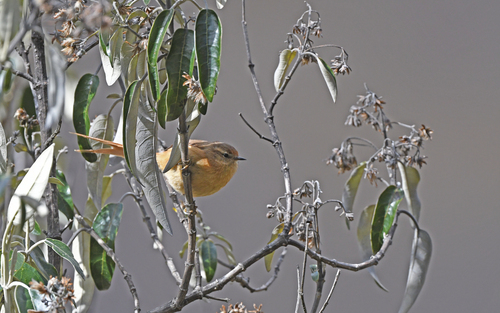 Tawny Tit-Spinetail
In breve
Il segno di campo più affidabile per separare l'Eastern Woodhaunter dal Tawny Tit-Spinetail è la struttura complessiva: il Woodhaunter ha un corpo molto più pesante con un becco corto e spesso, mentre il Tit-Spinetail è snello, con una lunga coda e un becco fine. Nel piumaggio, il Woodhaunter mostra un volto e una corona scuri e striati con un anello oculare pallido, in contrasto con il volto brillante color cannella del Tit-Spinetail e le tonalità fulve diffuse. In volo o posato, la lunga coda rufous e graduata del Tit-Spinetail è distintiva, mentre la coda del Woodhaunter è più corta e più uniforme. Entrambe le specie sono brune con rufous nelle ali e nella coda, ma le loro forme e i modelli facciali sono abbastanza diversi. L'habitat è anche un forte indizio: il Woodhaunter è un uccello della foresta amazzonica di pianura, mentre il Tit-Spinetail è limitato alle foreste di Polylepis ad alta quota e ai cespugli adiacenti.
Consigli di identificazione
- La struttura è l'indizio più immediato: il Woodhaunter è pesante con un becco corto e spesso; il Tit-Spinetail è snello, con un becco fine e una lunga coda. Questo è evidente sia in vista posata che in volo.
- Forma e lunghezza della coda: la coda del Tit-Spinetail è lunga, rufous e fortemente graduata (le piume esterne sono molto più corte di quelle centrali), spesso aperta o inclinata. La coda del Woodhaunter è più corta, castagna e più squadrata.
- Modello facciale: il Woodhaunter ha un volto bruno scuro con striature color oro-fulvo, un anello oculare pallido e una striscia pallida dietro l'occhio. Il Tit-Spinetail ha un volto brillante color cannella-fulvo, con una fronte rufous fulva e (in Perù) un supercilio color fulvo stretto o (in Bolivia) biancastro.
- Corona e dorso: la corona del Woodhaunter è bruno scuro con striature dorate, che si fondono in un ricco dorso bruno scuro. La corona del Tit-Spinetail è bruno fulvo, abbinata al dorso, senza striature.
- Parte inferiore: il petto del Woodhaunter è bruno opaco con ampie striature dorate sfocate, che sfumano in un ventre bruno fulvo. Le parti inferiori del Tit-Spinetail sono di un brillante color cannella-fulvo, più chiare negli uccelli boliviani e senza striature.
- Rump e coda superiore: entrambe le specie hanno rufous/castano ricco rumps e code, ma quella del Tit-Spinetail è più estesa e luminosa, abbinata alla coda, mentre quella del Woodhaunter è più limitata e scura.
- Colore e forma del becco: il becco del Woodhaunter è corto, spesso e scuro sopra con una mandibola inferiore più chiara. Quello del Tit-Spinetail è fine, appuntito e bruno scuro fino al nero.
- Modello delle ali: entrambe hanno rufous nelle ali, ma non sono descritti pannelli distintivi o segni specifici per età; concentrati sul colore e sulla struttura complessiva.
- Confusione giovanile: il giovane Woodhaunter è più chiaro sotto e meno striato, ma è comunque più robusto e con un volto più scuro rispetto al Tit-Spinetail. Il giovane Tit-Spinetail non è descritto ma è probabilmente simile all'adulto.
- Comportamento: il Tit-Spinetail è attivo, acrobatico, spesso in piccoli gruppi, e può rimanere a testa in giù; il Woodhaunter è solitario o in stormi misti, più pesante e cerca in modo metodico.
- Habitat: il Woodhaunter è strettamente un uccello della foresta amazzonica di pianura; il Tit-Spinetail si trova solo nelle foreste di Polylepis andine ad alta quota e nei cespugli.
- Voce: se senti un chiacchierio rapido e accelerato, è il Tit-Spinetail. Le vocalizzazioni del Woodhaunter non sono descritte qui.
- Gamma geografica: la sovrapposizione è limitata a parti del Perù e della Bolivia, ma solo in habitat e altitudini molto diversi.
- Sessi: entrambe le specie sono sessualmente monomorfiche: maschi e femmine si somigliano.
- Stagione: non è descritta alcuna variazione di piumaggio stagionale per entrambe le specie.
Taglia
L'Eastern Woodhaunter è significativamente più robusto, misurando 17–18 cm di lunghezza e pesando 25–38 g. Al contrario, il Tawny Tit-Spinetail è leggermente più corto a 16–17,5 cm ma molto più leggero, solo 10–12 g. Questa differenza è evidente sul campo: il Woodhaunter appare robusto e pesante, mentre il Tit-Spinetail è snello e delicato. Anche la struttura del becco è molto diversa: il becco del Woodhaunter è corto e spesso, mentre quello del Tit-Spinetail è fine e appuntito. La forma della coda li distingue ulteriormente: il Tit-Spinetail ha una lunga coda graduata, mentre la coda del Woodhaunter è più corta e più squadrata.
Piumaggio
Non sono descritti segni specifici per età sulle ali superiori o di volo per entrambe le specie, quindi la separazione si basa sul piumaggio e sulla struttura complessivi. L'Eastern Woodhaunter adulto ha un volto bruno scuro con striature dorate-fulve, un anello oculare pallido e una corona bruno scuro con striature dorate. Il dorso è bruno scuro, con il basso dorso e la coda castani. Le parti inferiori sono brune con striature dorate-fulve sfocate sul petto, che sfumano in un ventre bruno fulvo. I giovani sono simili ma con striature meno distinte e parti inferiori più chiare. Al contrario, gli adulti del Tawny Tit-Spinetail hanno un volto brillante color cannella-fulvo, una fronte rufous fulva e una corona bruno fulvo. Il dorso è bruno fulvo, il rump e la coda sono rufous, e le parti inferiori sono di un brillante color cannella-fulvo. La coda è lunga, rufous e graduata. Gli uccelli peruviani mostrano un supercilio color fulvo stretto, mentre gli uccelli boliviani hanno uno biancastro. Il piumaggio giovanile non è descritto, ma non sono notate differenze significative. In sintesi, il Woodhaunter è più scuro, più striato e meno rufous nel complesso, mentre il Tit-Spinetail è più luminoso, più cannella/fulvo e ha una coda rufous molto più lunga.
Comportamento
L'Eastern Woodhaunter cerca il cibo singolarmente o in stormi misti, di solito nel sottobosco della foresta e nei livelli medi, cercando prede lungo grandi rami e viti, spesso setacciando tra foglie morte ed epifite. È metodico e a volte 'scava' in cumuli di detriti. Il Tawny Tit-Spinetail cerca il cibo in coppie o piccoli gruppi, spesso in stormi misti, raccogliendo insetti da foglie, rametti e corteccia, a volte rimanendo a testa in giù o cercando cibo a terra. Il Tit-Spinetail è più attivo e acrobatico, mentre il Woodhaunter è più pesante e si muove più lentamente.
Habitat
L'habitat è un forte separatore. L'Eastern Woodhaunter si trova nelle foreste amazzoniche di pianura in Bolivia, Brasile, Colombia, Ecuador, Perù e Venezuela, preferendo gli interni delle foreste dense. Il Tawny Tit-Spinetail si trova solo nelle foreste di Polylepis ad alta quota (2.800–4.600 m), nei cespugli montani e nelle praterie delle Ande di Perù, Bolivia e Argentina. Se ti trovi in una foresta pluviale umida di pianura, è quasi certamente un Woodhaunter; se sei in Polylepis andine alte o in cespugli, è un Tit-Spinetail.
Voce
Solo il canto del Tawny Tit-Spinetail è descritto: una serie di colpi rapidi, forti e acuti che accelerano in un chiacchierio, con ulteriori chiacchierii e note brevi. Le vocalizzazioni del Woodhaunter non sono dettagliate nelle note fornite. Pertanto, il canto è utile solo se senti il distintivo chiacchierio del Tit-Spinetail.
Eastern Woodhaunter · Tawny Tit-Spinetail · I miei uccelli difficili