

Eastern Woodhaunter vs Golden-breasted Fruiteater
Automolus subulatus contro Pipreola aureopectus
Fai un quiz con Eastern Woodhaunter e Golden-breasted Fruiteater
 Eastern Woodhaunter
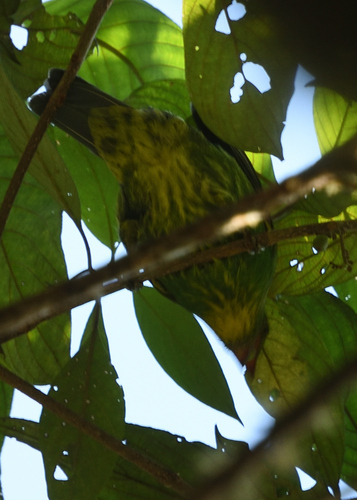 Golden-breasted Fruiteater
In breve
Il segno distintivo più affidabile è il forte dimorfismo sessuale del Golden-breasted Fruiteater: i maschi adulti mostrano un vivace petto giallo e parti superiori verdi, mentre le femmine hanno parti inferiori verdi con striature gialle—entrambi molto diversi dalle tonalità striate marroni e castanee dell'Eastern Woodhaunter, che non mostra differenze sessuali. I giovani Woodhaunters sono meno striati ma ancora marroni, mai verdi o gialli. Anche la struttura aiuta: il Woodhaunter ha un becco corto e robusto e una coda castanea, mentre il Fruiteater è più compatto con un becco piccolo e colorato e una coda verde. Entrambe le specie possono trovarsi in stormi misti, ma il Woodhaunter è un foraggiatore di terra/sottobosco, mentre il Fruiteater è solitamente più in alto e si nutre di frutta. L'areale è un'ultima risorsa: il Fruiteater si trova solo in Colombia e Venezuela, mentre il Woodhaunter è diffuso nel bacino amazzonico.
Consigli di identificazione
- Dimorfismo sessuale: Solo il Fruiteater mostra forti differenze sessuali: i maschi sono gialli e verdi brillanti, le femmine sono verdi con striature gialle. I sessi del Woodhaunter sono identici (marroni e striati).
- Colore generale: Il Fruiteater (entrambi i sessi) è prevalentemente verde sopra, con giallo sulle parti inferiori (maschio: giallo solido, femmina: striata). Il Woodhaunter è marrone sopra con groppone/coda castanei e striature giallo-buff, mai verdi o gialli.
- Schema del petto: I maschi del Fruiteater hanno un petto giallo brillante e chiaro; le femmine hanno parti inferiori verdi con striature gialle. Il Woodhaunter ha un petto marrone opaco con striature giallo-buff sfocate che svaniscono verso la pancia.
- Coda e groppone: Il Woodhaunter mostra un ricco groppone e coda castanei, visibili sia in perching che in volo. La coda del Fruiteater è verde, abbinata alla schiena.
- Colore del becco: Il Fruiteater ha un becco arancione o rosso-arancione sorprendente; il becco del Woodhaunter è nerastro sopra, più chiaro sotto, mai arancione.
- Colore dell'iride: L'iride del Fruiteater è giallo-arancione; quella del Woodhaunter è sempre marrone scuro.
- Schema delle ali: Il Fruiteater ha piccole punte bianche sulle terziali (sottile, meglio visibile da vicino). Le ali del Woodhaunter sono marroni rufescenti senza bianco.
- Confusione giovanile: Il giovane Woodhaunter è più chiaro sotto e meno striato, ma ancora marrone, non verde. Nessuna età del Fruiteater è marrone o striata come il Woodhaunter.
- Comportamento di foraggiamento: Il Woodhaunter è attivo, fruga e 'scava' nei detriti, spesso in basso nella foresta. Il Fruiteater è più probabile che venga visto appollaiato silenziosamente o muovendosi in coppie, più in alto, nutrendosi di frutta.
- Areale: Il Fruiteater si trova solo in Colombia e Venezuela; il Woodhaunter è diffuso nel bacino amazzonico. Fuori dall'areale del Fruiteater, si torna al Woodhaunter.
- Habitat: Il Woodhaunter preferisce il sottobosco denso e i livelli medi della foresta di pianura; il Fruiteater è più un uccello della foresta montana di livello medio.
- Impressione di dimensione: Il Fruiteater è più pesante e compatto, ma entrambi sono simili in lunghezza; usa la struttura e il piumaggio rispetto alla dimensione.
- Nessun cambiamento stagionale: Entrambe le specie hanno poco o nessun cambiamento stagionale del piumaggio; usa le differenze di età e sesso invece.
- Stormi misti: Entrambi si uniscono a stormi di specie miste, quindi il comportamento di stormo non è diagnostico.
- Voce: Non descritta nelle note; non fare affidamento sulla vocalizzazione per la separazione qui.
Taglia
Entrambe le specie sono simili in lunghezza (Woodhaunter: 17–18 cm; Fruiteater: 16.5–17.5 cm), ma il Fruiteater è notevolmente più pesante (46–50 g contro 25–38 g del Woodhaunter) [wikipedia][avonet]. Sul campo, il Fruiteater può apparire più compatto e robusto, mentre il Woodhaunter è più snello con un becco proporzionalmente più pesante. Tuttavia, la dimensione da sola non è un separatore sicuro a meno che entrambe le specie non siano viste fianco a fianco.
Piumaggio
- Giovani: Il giovane Woodhaunter è più chiaro sotto e meno distintamente striato rispetto agli adulti, ma è ancora marrone nel complesso con alcune striature e castano nella coda e nel groppone. Il giovane Fruiteater non è descritto, ma entrambi i sessi del Fruiteater (anche le femmine) sono verdi sopra e sotto, con le femmine che mostrano striature gialle sulle parti inferiori—mai marroni o castanei.
- Maschi adulti: I maschi del Golden-breasted Fruiteater hanno una testa, un dorso e una coda verde erba, con una gola e un petto giallo brillante (il petto inferiore giallo limone che si fonde in verde sui fianchi). Gli adulti del Woodhaunter sono marroni sopra con striature giallo-buff sulla corona e sul dorso, groppone e coda castanei, e un petto marrone striato opaco che svanisce in una pancia fulva.
- Femmine adulte: Le femmine del Fruiteater sono verdi sopra e sotto, con striature gialle sulle parti inferiori. Le femmine del Woodhaunter sono identiche ai maschi (nessun dimorfismo sessuale), sempre marroni e striate, mai verdi o gialle.
- Ali: Le ali del Fruiteater hanno piccole punte bianche sulle terziali (sottile), mentre le ali del Woodhaunter sono marroni rufescenti senza bianco. Entrambi hanno ali scure in volo, ma la coda e il groppone castanei del Woodhaunter sono distintivi.
- Becco e iride: Il Fruiteater ha un becco arancione o rosso-arancione e un'iride giallo-arancione; il Woodhaunter ha un becco nero o scuro (più chiaro sotto) e un'iride marrone scuro.
Comportamento
Il Woodhaunter foraggia singolarmente o in stormi misti, di solito nel sottobosco della foresta o a livelli medi, frugando attivamente tra foglie morte, epifite e detriti lungo i rami—talvolta 'scavando' in ciuffi. Il Fruiteater foraggia in coppie o in stormi misti, tipicamente a livelli medi, e si nutre di frutta, non di insetti. Il Fruiteater è più probabile che venga visto appollaiato silenziosamente, mentre il Woodhaunter è più attivo e metodico nei suoi movimenti.
Habitat
Il Woodhaunter si trova nel bacino amazzonico (Bolivia, Brasile, Colombia, Ecuador, Perù, Venezuela) e preferisce il sottobosco della foresta ai livelli medi, spesso vicino a grandi rami e vegetazione densa. Il Fruiteater è ristretto a Colombia e Venezuela, di solito in foreste montane umide, e tipicamente foraggia a livelli medi. Se visto nella foresta amazzonica di pianura al di fuori di Colombia/Venezuela, è quasi certamente un Woodhaunter.
Eastern Woodhaunter · Golden-breasted Fruiteater · I miei uccelli difficili