

Eared Dove vs Spectacled Thrush
Zenaida auriculata contro Turdus nudigenis
Fai un quiz con Eared Dove e Spectacled Thrush
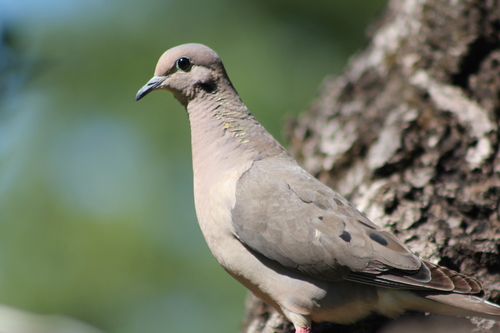 Eared Dove
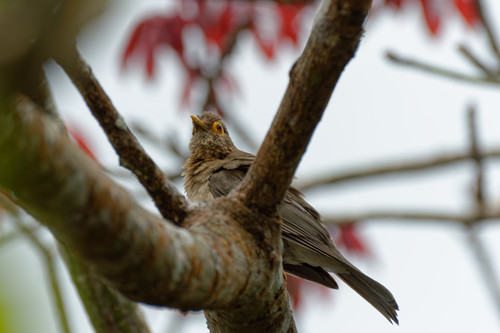 Spectacled Thrush
In breve
Il modo più affidabile per separare Eared Dove da Spectacled Thrush è concentrarsi sul motivo della testa: Eared Dove ha una linea nera distintiva dietro l'occhio e una macchia scura sulle copritrici auricolari inferiori, mentre Spectacled Thrush mostra un anello oculare giallo audace senza marcature facciali nere. In volo o posato, la lunga coda a forma di cuneo di Eared Dove e le ali macchiate di nero sono diverse dall'aspetto semplice e simile a un merlo di Spectacled Thrush. Le piume giovanili possono essere confusamente opache, ma la struttura e le marcature facciali della colomba rimangono distintive. Entrambe le specie sono simili in lunghezza, ma Eared Dove è molto più pesante e compatto, con un aspetto decisamente diverso.
Consigli di identificazione
- Il motivo facciale è fondamentale: Eared Dove mostra sempre una linea nera dietro l'occhio e una macchia scura sulle copritrici auricolari inferiori (tutte le età), mentre Spectacled Thrush ha un anello oculare giallo audace e nessuna marcatura facciale nera.
- Motivo delle ali: Eared Dove (adulto) ha macchie nere sulle ali, visibili sia posato che in volo; Spectacled Thrush ha ali semplici senza macchie o pannelli a qualsiasi età.
- Forma della coda: Eared Dove ha una lunga coda a forma di cuneo con una punta cannella; la coda di Spectacled Thrush è a bordo dritto e priva di colore alla punta.
- Parte inferiore: La parte inferiore di Eared Dove è vinosa (marrone-rosato), mentre Spectacled Thrush è di un marrone più chiaro sotto, con un ventre inferiore biancastro e una gola striata.
- Confusione giovanile: I giovani Eared Doves sono opachi e barrati, ma hanno ancora le marcature facciali nere; i giovani Spectacled Thrushes sono macchiati sopra, macchiati sotto e hanno un anello oculare giallo più sottile ma mai marcature facciali nere.
- Dimensioni e struttura: Eared Dove è molto più pesante e compatto, con un collo più corto e un corpo più rotondo; Spectacled Thrush è più snello e allungato, con proporzioni tipiche di un merlo.
- Becco: Eared Dove ha un becco corto e nero; Spectacled Thrush ha un becco più lungo, simile a un merlo, spesso con una base più chiara (non sempre visibile a distanza).
- Colore delle gambe: Le gambe di Eared Dove sono rosso scuro; le gambe di Spectacled Thrush non sono descritte come distintive, ma non sono rosse.
- Stile di volo: Eared Dove vola veloce e diretto con colpi netti; Spectacled Thrush vola con un movimento più faticoso e ondulato tipico dei merli.
- Flocking: Eared Dove è spesso in grandi stormi, specialmente in aree aperte; Spectacled Thrush è solitamente solitario o in coppie.
- Habitat: Campi aperti, fili e parchi urbani favoriscono Eared Dove; boschi, giardini e aree cespugliose favoriscono Spectacled Thrush.
- Voce: Cooing profondo e morbido per Eared Dove; cinguettio musicale o richiami simili a gatti per Spectacled Thrush.
- Differenze sessuali: Solo Eared Dove mostra un lieve dimorfismo sessuale (maschio più brillante), ma entrambi i sessi hanno le stesse marcature chiave; i sessi di Spectacled Thrush sono simili.
- Contesto stagionale: Entrambi sono residenti, ma Eared Dove è molto più probabile in grandi stormi aperti, specialmente in aree agricole.
- Trappole comuni: I giovani opachi possono confondere, ma le marcature facciali nere della colomba e l'anello oculare giallo del merlo sono sempre presenti. Controlla sempre prima il motivo della testa.
Taglia
Entrambe le specie sono simili in lunghezza, con Eared Dove di circa 24 cm e Spectacled Thrush di 23–24 cm [wikipedia]. Tuttavia, Eared Dove è molto più pesante (circa 112 g contro 60 g) [wikipedia], conferendole un aspetto più robusto e compatto rispetto al merlo più snello e allungato. La colomba ha anche una coda più lunga e a forma di cuneo, mentre la coda del merlo è più tipica per un Turdus: a bordo dritto e meno appuntita.
Piumaggio
- Uccelli giovanili/immaturi: I giovani Eared Doves sono molto opachi, grigio-marroni con barrature chiare, ma mostrano ancora la caratteristica linea nera dietro l'occhio e la macchia auricolare scura. I giovani Spectacled Thrushes sono macchiati sopra e macchiati sotto, con un anello oculare giallo più sottile ma ancora presente. Il merlo non mostra mai marcature facciali nere.
- Adulti: I maschi di Eared Dove hanno parti superiori marrone-oliva con macchie nere sulle ali, una corona grigia, una linea nera dietro l'occhio e una macchia blu-nera sulle copritrici auricolari inferiori. Le parti inferiori sono vinose e la coda è lunga, a forma di cuneo e con punta cannella. Le femmine sono simili ma più opache. Gli adulti di Spectacled Thrush sono semplicemente marrone-oliva sopra, marrone più chiaro sotto, con una gola bianco sporco striata di marrone, un ventre inferiore biancastro e un anello oculare giallo prominente. Non sono presenti macchie sulle ali o marcature facciali nere. Entrambi i sessi si assomigliano nel merlo.
Comportamento
Eared Doves sono altamente gregari, spesso formando grandi stormi, specialmente in campagna aperta e aree agricole. Il loro volo è alto, veloce e diretto, con battiti regolari delle ali e occasionali colpi netti. Sono spesso visti posati su fili o pali. Spectacled Thrushes sono più solitari o si trovano in coppie, foraggiando a terra o in bassa vegetazione, e si muovono con salti tipici dei merli piuttosto che con il volo rapido e diretto delle colombe. Il comportamento del merlo è più furtivo e meno probabile da vedere in grandi stormi.
Habitat
Eared Dove prospera in aree aperte, savane, terreni agricoli e persino spazi urbani, adattandosi facilmente agli habitat modificati dall'uomo. Sono comuni in spazi pubblici, campi e persino località balneari. Spectacled Thrush preferisce boschi, margini forestali, giardini e aree cespugliose, ed è meno probabile da vedere in campi agricoli aperti o grandi spazi urbani. Se vedi un uccello in un grande campo aperto o in stormi nel cielo, è molto più probabile che sia un Eared Dove.
Voce
Eared Dove emette un richiamo profondo e morbido 'oo-ah-oo', tipico delle colombe e molto diverso dai merli. Spectacled Thrush ha un cinguettio musicale, più lento e a tono più basso rispetto a Cocoa Thrush, e emette anche un 'queeoow' simile a un gatto e un 'kereel' aspro quando è allarmato. Se senti un cooing morbido e ripetitivo, pensa alla colomba; se senti una canzone cinguettante o un richiamo simile a un gatto, pensa al merlo.