
Double-toothed Kite vs Roadside Hawk
Harpagus bidentatus contro Rupornis magnirostris
Fai un quiz con Double-toothed Kite e Roadside Hawk
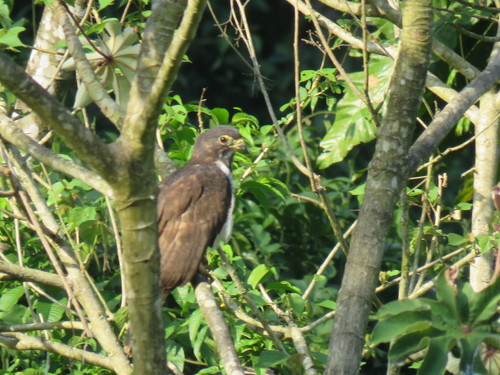 Double-toothed Kite
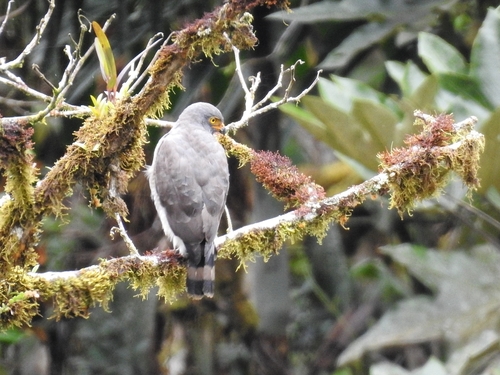 Roadside Hawk
In breve
I giovani Double-toothed Kite mostrano parti superiori di un marrone scuro e striature verticali audaci sotto, mentre i giovani Roadside Hawk sono più variabili ma generalmente mancano di tali forti striature verticali. Negli adulti, il miglior segno distintivo è la combinazione del pattern della testa e delle parti inferiori: il Double-toothed Kite ha una testa grigia scura con una gola bianca e una striscia centrale scura, oltre a parti inferiori rugginose con barrature, mentre il Roadside Hawk è più marrone o grigio nel complesso con una testa meno contrastante e barrature marroni e bianche più estese sotto. In volo, il Roadside Hawk mostra una coda relativamente lunga e ali corte e larghe, spesso con una sfumatura rugginosa sulle ali, mentre il Double-toothed Kite appare più snello e più simile a un Accipiter. Anche il colore degli occhi differisce: il Double-toothed Kite ha occhi rossi, il Roadside Hawk gialli o biancastri. Entrambe le specie possono essere trovate in aree sovrapposte, ma il Roadside Hawk è molto più comune e vocale.
Consigli di identificazione
- Immature plumage: I giovani Double-toothed Kite hanno parti superiori di un marrone scuro e striature verticali marroni audaci su parti inferiori bianche a beige—cerca questa forte striatura verticale, che non è eguagliata dai giovani Roadside Hawk, che mostrano barrature o maculature più diffuse.
- Head pattern (adults): Il Double-toothed Kite ha una testa grigia scura con una gola bianca e una distintiva striscia centrale scura; la testa del Roadside Hawk è meno contrastante, fondendosi con le parti superiori marroni o grigie.
- Underparts (adults): Il Double-toothed Kite mostra ruggine sul petto e sull'addome, con barrature grigie e bianche (soprattutto in H. b. fasciatus); il Roadside Hawk ha parti inferiori barrate marroni e bianche, di solito senza ruggine estesa.
- Tail pattern: Il Double-toothed Kite ha una coda nerognola con tre bande grigie e una punta grigia; la coda del Roadside Hawk è marrone con quattro o cinque barre grigie—contare le barre può aiutare ma può essere difficile sul campo.
- Eye color: L'adulto Double-toothed Kite ha occhi rossi; quelli del Roadside Hawk sono gialli o biancastri. Questo è sottile ma può essere diagnostico a distanza ravvicinata.
- Bill and cere: Il Double-toothed Kite ha una cere giallo-verdastra e un becco con intagli simili a denti sulla mascella (di solito non visibili sul campo); il Roadside Hawk ha un becco relativamente grande e una cere meno distintiva.
- Wing and tail shape in flight: Il Roadside Hawk ha ali relativamente corte e larghe e una coda lunga, dando un aspetto compatto e robusto; il Double-toothed Kite è più snello con ali più lunghe rispetto alla coda, apparendo più simile a un Accipiter.
- Rufous on wings: Il Roadside Hawk mostra spesso una sfumatura rugginosa sulle ali in volo, che il Double-toothed Kite non ha.
- Perching behavior: Il Roadside Hawk spesso si posa in modo evidente su fili, pali o rami esposti; il Double-toothed Kite è più riservato e di solito rimane nella foresta o al margine.
- Soaring and flight style: Il Roadside Hawk frequentemente plana, a volte in alto su aree aperte, e non si libra. Il Double-toothed Kite è meno probabile che pianzi in aperto ed è più agile in ambienti forestali.
- Vocalization: Il Roadside Hawk è molto vocale con uno squittio acuto; il Double-toothed Kite è molto più silenzioso. Un richiamo persistente da un piccolo rapace è un forte indizio per il Roadside Hawk.
- Habitat: Il Roadside Hawk è comune in campi aperti, margini forestali e vicino a insediamenti umani; il Double-toothed Kite si trova principalmente in foreste secondarie mature o alte, raramente in aree aperte.
- Association with monkeys: Se vedi un piccolo rapace seguire gruppi di scimmie, è probabile che sia un Double-toothed Kite, poiché il Roadside Hawk non mostra questo comportamento.
- Relative abundance: Il Roadside Hawk è molto più comune e probabile da vedere nella maggior parte degli habitat al di fuori delle foreste dense; il Double-toothed Kite è raro e principalmente limitato ad aree forestali.
- Sexual dimorphism: Entrambe le specie hanno un piumaggio simile tra i sessi, ma le femmine di Double-toothed Kite sono leggermente più ricche di colore; questo è sottile e raramente utile sul campo.
Taglia
Il Double-toothed Kite è leggermente più piccolo e leggero, con una massa corporea di circa 195 g e una lunghezza di 29–35 cm (apertura alare 60–72 cm). Il Roadside Hawk è più pesante (250–300 g) e più lungo (31–41 cm), e le femmine sono circa il 20% più grandi dei maschi. Sul campo, il Roadside Hawk appare spesso più massiccio e robusto, specialmente nel petto e nel becco, mentre il Double-toothed Kite è più snello e più delicato. La coda del Roadside Hawk è relativamente lunga per il suo corpo, e le sue ali sono proporzionalmente più corte e larghe, dando un aspetto compatto e robusto, specialmente quando si posa.
Piumaggio
I giovani Double-toothed Kite sono di un marrone scuro sopra con striature verticali marroni audaci su parti inferiori bianche a beige—questa forte striatura verticale è un segno chiave per i giovani uccelli. I giovani Roadside Hawk sono più variabili ma tipicamente non mostrano striature verticali così pronunciate; invece, tendono ad avere barrature o maculature più diffuse sotto. Gli adulti Double-toothed Kite hanno una testa grigia scura, gola bianca con una striscia centrale scura, parti superiori grigie più chiare e una coda nerognola con tre bande grigie e una punta grigia. Le loro parti inferiori sono rugginose con barrature grigie e bianche (più estese e più chiare in H. b. fasciatus). Gli adulti Roadside Hawk sono marroni o grigi sopra (a seconda della sottospecie), con una testa meno contrastante, parti inferiori barrate marroni e bianche, e una coda con quattro o cinque barre grigie. In volo, il Roadside Hawk mostra spesso una sfumatura rugginosa sulle ali, che è assente nel Double-toothed Kite. Anche il colore degli occhi è un indizio: il Double-toothed Kite ha occhi rossi, mentre quelli del Roadside Hawk sono gialli o biancastri.
Comportamento
Il Roadside Hawk è molto più probabile da vedere posato in modo evidente su fili, pali o rami esposti lungo strade e aree aperte, spesso vocalizzando. Spesso plana con le sue ali relativamente corte e larghe e una coda lunga, ma non si libra. Il Double-toothed Kite è più riservato, tipicamente trovato in habitat forestali, ed è meno probabile da vedere in campi aperti o posato in modo evidente. Spesso segue gruppi di scimmie per catturare prede spaventate dal loro movimento, un comportamento non condiviso dal Roadside Hawk. In volo, il Double-toothed Kite appare più snello e più simile a un Accipiter, mentre il Roadside Hawk appare più massiccio e più simile a un Buteo.
Habitat
Il Roadside Hawk è altamente adattabile e spesso il rapace più comune nel suo areale, specialmente in campi aperti, margini forestali e vicino a insediamenti umani. È frequentemente visto lungo le strade, come suggerisce il suo nome. Il Double-toothed Kite è più limitato a habitat forestali, specialmente foreste secondarie mature o alte, ed è molto meno probabile da vedere in aree aperte o disturbate. Se vedi un piccolo rapace in un parco cittadino, in un pascolo o lungo una strada, è molto più probabile che sia un Roadside Hawk; il Double-toothed Kite è più probabile che si trovi all'interno della foresta o al margine, spesso in associazione con gruppi di scimmie.
Voce
Il Roadside Hawk è molto vocale, con uno squittio acuto e penetrante che è spesso udito anche quando l'uccello non è visibile. Il Double-toothed Kite è molto più silenzioso e meno probabile da essere rilevato per voce. Se senti un grido persistente e acuto da un rapace posato, il Roadside Hawk è il colpevole probabile.
Double-toothed Kite · Roadside Hawk · I miei uccelli difficili