

Diamond Dove vs Peaceful Dove
Geopelia cuneata contro Geopelia placida
Fai un quiz con Diamond Dove e Peaceful Dove
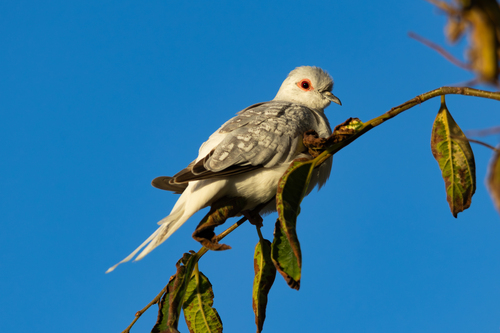 Diamond Dove
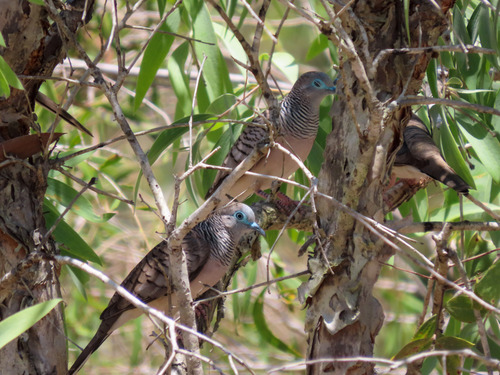 Peaceful Dove
In breve
Il segno distintivo più affidabile per separare il Diamond Dove dal Peaceful Dove è la presenza di macchie bianche audaci con bordi neri sulle ali dei Diamond Doves adulti, che sono completamente assenti nei Peaceful Doves. I Diamond Doves juvenili mancano di queste macchie, ma anche in quel caso, le forti striature nere sul collo e sulla nuca del Peaceful Dove, e il suo anello oculare blu-grigio, lo distinguono. Entrambi sono piccole colombe che si nutrono a terra, ma il Diamond Dove è leggermente più leggero e più compatto, con un anello oculare rosso o arancione e un volto blu-grigio più chiaro nei maschi. Il Peaceful Dove mostra un'ala a scacchi più uniforme, un petto rosa-grigio e ampie striature nere sul collo. Lo stile di volo e i richiami sono simili, ma sottili differenze nella struttura e nel piumaggio sono fondamentali.
Consigli di identificazione
- Macchie bianche sulle ali (adulti): I Diamond Doves adulti hanno macchie bianche prominenti con bordi neri sulle ali; i Peaceful Doves non mostrano mai queste, indipendentemente dall'età o dal sesso.
- Confusione giovanile: I Diamond Doves juvenili mancano di macchie sulle ali, ma mancano anche delle forti striature nere del collo del Peaceful Dove. I Peaceful Doves juvenili sono più chiari ma mostrano comunque alcune linee nere sottili sul collo.
- Striature sul collo e sulla nuca: Il Peaceful Dove (tutte le età) ha sottili striature nere sul collo, sulla nuca e sulla parte superiore della schiena, dando un aspetto 'barrato'. Il Diamond Dove ha un collo e una nuca uniformi.
- Colore dell'anello oculare: Il Diamond Dove ha un anello oculare rosso o arancione (più luminoso nei maschi, più opaco nelle femmine e nei juvenili); il Peaceful Dove ha un anello oculare blu-grigio che si fonde con il becco.
- Colore dell'occhio: L'occhio del Diamond Dove è rosso (adulti) o fulvo (juvenili); quello del Peaceful Dove è bianco-grigiastro.
- Colore del volto e del petto: Il maschio del Diamond Dove ha un volto e un petto blu-grigio; la femmina è più marrone. Il Peaceful Dove ha un petto rosa-grigio e un volto meno contrastante.
- Colore del becco: Il becco del Diamond Dove è grigio scuro (adulti) o grigio chiaro (juvenili); il becco del Peaceful Dove non è specificamente diagnostico.
- Pancia e parti inferiori: Il Diamond Dove ha una pancia cremosa; le parti inferiori del Peaceful Dove sono più uniformemente rosa-grigio.
- Schema delle ali in volo: In tutte le età, le macchie bianche del Diamond Dove sono visibili in volo (eccetto nei juvenili); le ali del Peaceful Dove sono a scacchi ma mancano di macchie.
- Forma della coda: Il Peaceful Dove mostra spesso una coda più lunga e più graduata rispetto al compatto Diamond Dove.
- Colore delle gambe e dei piedi: Il Diamond Dove ha gambe e piedi rosa (adulti), grigi nei juvenili; il colore delle gambe del Peaceful Dove non è evidenziato come diagnostico.
- Contesto dell'habitat: Il Diamond Dove è molto più probabile in aree aperte, aride o semi-aride vicino all'acqua; il Peaceful Dove è comune in giardini, boschi e margini urbani.
- Comportamento: I Diamond Doves spesso corrono con un passo ondeggiante a terra; i Peaceful Doves sono più propensi a essere visti posati sugli alberi quando non si nutrono.
- Vocalizzazioni: Se uditi, il richiamo del Diamond Dove è lento e malinconico; quello del Peaceful Dove è più acuto e più ripetitivo, ma possono verificarsi sovrapposizioni.
- Dimensione del gruppo: Entrambi possono essere visti in coppie o piccoli gruppi, ma il Peaceful Dove è più probabile trovarlo in stormi più grandi, specialmente in aree urbane o disturbate.
Taglia
Entrambe le specie sono tra le più piccole colombe dell'Australia, con lunghezze corporee simili (19–21 cm). Il Diamond Dove è leggermente più leggero (31 g) rispetto al Peaceful Dove (nessuna massa precisa fornita, ma simile o leggermente più pesante secondo il consenso della comunità). Sul campo, il Diamond Dove può apparire più delicato e compatto, mentre il Peaceful Dove è un po' più robusto e ha una coda più lunga e graduata.
Piumaggio
-
Giovanile/immaturo: I Diamond Doves juvenili mancano delle macchie bianche sulle ali e hanno un petto grigio uniforme e un anello oculare fulvo, ma mostrano comunque un volto relativamente chiaro e mancano delle forti striature del collo del Peaceful Dove. I Peaceful Doves juvenili sono più chiari e meno striati rispetto agli adulti, ma mostrano comunque alcune linee nere sottili sul collo e sulla nuca, e un anello oculare blu-grigio opaco.
-
Adulto: I Diamond Doves adulti (entrambi i sessi) hanno evidenti macchie bianche con bordi neri sulle ali, una pancia cremosa chiara e una testa e un petto blu-grigio (maschio) o marrone (femmina). L'anello oculare è di un vivace rosso-arancione nei maschi, più opaco nelle femmine. I Peaceful Doves hanno ali grigio-marroni a scacchi (senza macchie bianche), un petto rosa-grigio e ampie sottili striature nere sul collo, sulla nuca e sulla parte superiore della schiena. Il loro anello oculare è blu-grigio e si fonde con il becco, e il loro volto è meno contrastante rispetto al Diamond Dove. La nuca e la gola sono entrambe striate nel Peaceful Dove, a differenza di alcune specie simili.
Comportamento
Entrambe le specie sono spesso viste nutrirsi a terra, a volte in coppie o piccoli gruppi. Il Diamond Dove tende a correre con un passo ondeggiante ed è spesso visto in aree più aperte e aride. Il Peaceful Dove è più probabile trovarlo in ambienti urbani, giardini e boschi, e si riposa anche sugli alberi. Entrambe le specie hanno un volo forte, diretto e talvolta ondulato, e le loro ali producono un rumore fischiante o di fruscio 'frrr' in volo.
Habitat
Il Diamond Dove preferisce regioni leggermente aride o semi-aride vicino all'acqua, specialmente nel Centro, Ovest e Nord dell'Australia. Il Peaceful Dove è più adattabile, presente in una gamma più ampia di habitat tra cui giardini, aree urbane, terreni incolti, boschi, corsi d'acqua e persino i margini delle foreste pluviali. È possibile una sovrapposizione, ma il Diamond Dove è molto meno probabile in vegetazione densa o in aree fortemente urbanizzate rispetto al Peaceful Dove.
Voce
Entrambe le specie hanno richiami morbidi e malinconici. Il richiamo del Diamond Dove è descritto come lento, falsetto e malinconico, spesso due lunghi coo seguiti da una pausa e un coo più lungo. I richiami del Peaceful Dove sono più acuti e includono 'doodle-doo', 'co-co-coo' e 'croorrr!'. I richiami di allerta sono brevi e forti nel Diamond Dove. In pratica, i richiami possono essere simili e non sono il segno distintivo più affidabile, ma la voce del Peaceful Dove è generalmente più alta e più ripetitiva.