

Curve-billed Thrasher vs Sage Thrasher
Toxostoma curvirostre contro Oreoscoptes montanus
Fai un quiz con Curve-billed Thrasher e Sage Thrasher
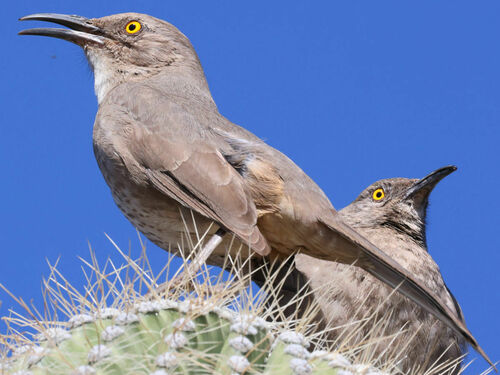 Curve-billed Thrasher
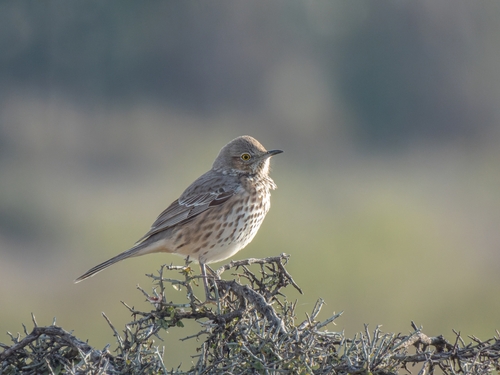 Sage Thrasher
In breve
Il segno distintivo più affidabile tra Curve-billed Thrasher e Sage Thrasher è il becco: Curve-billed ha un becco lungo, a forma di falce e completamente scuro, mentre il becco di Sage Thrasher è più corto e solo leggermente curvato. Le piume giovanili e adulte possono sovrapporsi in toni complessivi brunastri, ma Curve-billed mostra macchie rotonde e più grandi sul petto, mentre Sage Thrasher ha striature fini e scure. Il colore degli occhi è utile ma variabile: Curve-billed ha solitamente occhi arancioni o dorati, quelli di Sage Thrasher sono giallo limone o ambra. In volo o posato, Curve-billed appare più robusto con un becco più lungo e più curvato verso il basso e una coda relativamente più corta per un thrasher; Sage Thrasher è più piccolo, snello e più delicato nel complesso. L'habitat e il comportamento aiutano anche: Curve-billed è comune nei sobborghi aridi del sud-ovest e nei deserti, Sage Thrasher è legato a spazi aperti di salvia o praterie.
Consigli di identificazione
- Forma e lunghezza del becco: Curve-billed Thrasher ha un becco lungo, a forma di falce e completamente nero; il becco di Sage Thrasher è più corto, più sottile e solo leggermente curvato. Questo è affidabile in tutte le età e stagioni.
- Marcature sul petto: Curve-billed mostra macchie rotonde, spesso più grandi, sul petto (soprattutto nelle sottospecie orientali), mentre Sage Thrasher ha striature fini e scure. I giovanili di Curve-billed possono mostrare macchie meno distinte, ma le striature di Sage Thrasher sono sempre più strette e lineari.
- Colore degli occhi: Curve-billed ha solitamente occhi arancioni o dorati; quelli di Sage Thrasher sono giallo limone o ambra. Entrambi possono mostrare alcune variazioni, quindi usali con cautela, specialmente in scarsa illuminazione.
- Dimensioni e struttura: Curve-billed è più robusto, con una testa e un corpo più grandi; Sage Thrasher è più piccolo, snello e più delicato. Utile quando visti fianco a fianco o con esperienza.
- Lunghezza della coda: Curve-billed ha una coda relativamente corta per un thrasher, ma comunque più lunga di quella corta di Sage Thrasher. La forma della coda non è così diagnostica come il becco o il motivo del petto.
- Piumaggio giovanile: I giovanili di Curve-billed non hanno punte chiare e sono lavati di ruggine sopra, con piume addominali disordinate; i giovanili di Sage Thrasher sono più chiari sopra e mostrano parti inferiori leggermente striate. Concentrati sul motivo del petto e sulla forma del becco negli uccelli giovani.
- Colore del becco: Il becco di Curve-billed è completamente nero; quello di Sage Thrasher è scuro ma non così pesante o curvato. Questo è coerente in tutte le età.
- Habitat: Curve-billed si trova in deserti aridi, spesso vicino a insediamenti umani; Sage Thrasher è quasi sempre in spazi aperti di salvia o praterie. Se vedi un thrasher in un cortile suburbano in Arizona, è quasi certamente Curve-billed.
- Comportamento: Curve-billed è più evidente, spesso cantando da posatoi esposti; Sage Thrasher è più segreto, correndo o saltellando basso in campagna aperta.
- Vocalizzazione: Ascolta il richiamo acuto 'whit-wheet' di Curve-billed, specialmente da posatoi alti. Il canto di Sage Thrasher non è descritto qui, ma il richiamo di Curve-billed è distintivo.
- Variazione delle sottospecie: I Curve-billed orientali hanno macchie più distinte e più bianco nella coda; le forme occidentali sono più semplici. Sage Thrasher mostra poca variazione regionale.
- Volo: Curve-billed appare più pesante e più diretto in volo; Sage Thrasher è più leggero e più galleggiante. Non sempre diagnostico ma può aiutare con l'esperienza.
- Contesto e distribuzione: Sage Thrasher è migratorio e assente dalle aree di riproduzione in inverno; Curve-billed è residente tutto l'anno.
- Sovrapposizione: Dove le aree di distribuzione si sovrappongono (ad es., Nuovo Messico, Arizona), fai affidamento sulla forma del becco, sul motivo del petto e sull'habitat per la migliore separazione.
- Trappole: Fai attenzione ai giovanili di Curve-billed con macchie meno distinte e qualche lavaggio ruggine, che possono sembrare superficialmente simili a Sage Thrasher. Controlla sempre insieme la forma del becco e il motivo del petto.
Taglia
Sage Thrasher è il thrasher più piccolo, pesando circa 44g e misurando 20–23 cm di lunghezza [wikidata]. Curve-billed Thrasher è più pesante e robusto, anche se la massa esatta non è fornita qui. Sul campo, Curve-billed appare più robusto e con una testa più grande, mentre Sage Thrasher è visibilmente più piccolo, snello e più delicato. La lunghezza della coda è relativamente corta per Curve-billed rispetto ad altri thrashers, ma comunque più lunga di quella di Sage Thrasher. La dimensione e la forma del becco accentuano ulteriormente la differenza di dimensione: il becco di Curve-billed è molto più lungo e più profondamente curvato.
Piumaggio
Gli uccelli giovanili e immaturi sono i più facilmente confondibili. I giovanili di Curve-billed Thrashers non hanno punte chiare e hanno parti superiori lavate di ruggine; le loro macchie sul petto sono rotonde e spesso più grandi, ma possono essere variabili. I giovanili di Sage Thrashers hanno parti superiori più chiare e parti inferiori leggermente striate, con striature più fini e più lineari rispetto alle macchie di Curve-billed. Gli adulti di Curve-billed sono marrone-grigiastro sopra con macchie rotonde di marrone-grigio sul petto, mentre gli adulti di Sage Thrashers sono marrone-grigiastro sopra e bianchi sotto con striature scure e nette. Il colore degli occhi è variabile, ma Curve-billed mostra solitamente occhi arancioni o dorati, mentre quelli di Sage Thrasher sono giallo limone o ambra. Il colore del becco è diagnostico: quello di Curve-billed è completamente nero, quello di Sage Thrasher è scuro ma più corto e meno curvato. Non è descritto alcun modello distintivo della parte superiore dell'ala o di volo per nessuna delle due specie, quindi la separazione si basa su queste caratteristiche del corpo e della testa.
Comportamento
Curve-billed Thrasher è più probabile che venga visto in aree suburbane, cercando cibo a terra o cantando da posatoi alti, ed è generalmente più evidente e avvicinabile. Sage Thrasher preferisce spazi aperti di salvia o praterie, spesso correndo o saltellando a terra ed è più segreto. Curve-billed è non migratorio e spesso visto tutto l'anno nella sua area, mentre Sage Thrasher migra e può essere assente dai luoghi di riproduzione in inverno. In volo, Curve-billed appare più pesante e più diretto, Sage Thrasher è più leggero e più galleggiante.
Habitat
Curve-billed Thrasher è comune nei deserti del sud-ovest degli Stati Uniti e del Messico, spesso in ambienti suburbani, cespugli desertici e aree con cactus o mesquite sparsi. Evita le praterie dense. Sage Thrasher è fortemente legato agli habitat aperti di salvia e praterie del nord-ovest americano, nidificando nel Grande Bacino e svernando più a sud. Evita la vegetazione densa e si trova raramente in aree suburbane o fortemente alberate. Il contesto dell'habitat è spesso un forte indizio: Sage Thrasher nella salvia, Curve-billed in città aride o cespugli desertici.
Voce
Curve-billed Thrasher è meglio conosciuto per il suo richiamo acuto e fischiato 'whit-wheet', spesso emesso da un posatoio prominente. Il suo canto è vario, piacevole e mimetico, con frasi che sono nasali e ronzanti ma meno brusche di quelle di un usignolo. Il canto di Sage Thrasher non è descritto qui, ma è generalmente più melodico e continuo nella letteratura correlata. I richiami sono meno distintivi per Sage Thrasher in questo contesto, quindi il 'whit-wheet' di Curve-billed è un utile indizio sul campo.
Curve-billed Thrasher · Sage Thrasher · I miei uccelli difficili