

Crowned Eagle vs Long-crested Eagle
Stephanoaetus coronatus contro Lophaetus occipitalis
Fai un quiz con Crowned Eagle e Long-crested Eagle
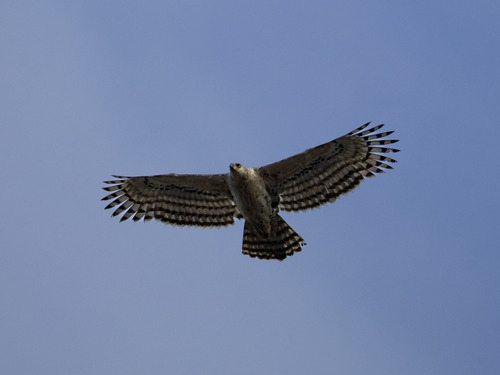 Crowned Eagle
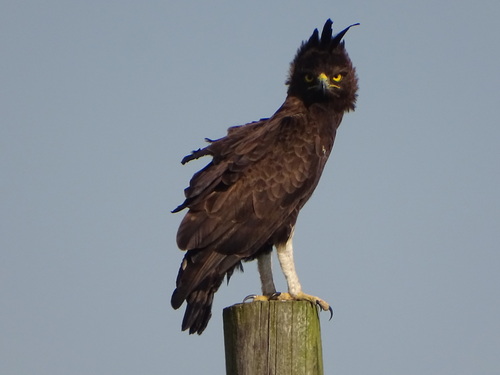 Long-crested Eagle
In breve
Il segno di campo più affidabile per separare il Crowned Eagle dal Long-crested Eagle è la presenza di una cresta lunga e shaggy e di un piumaggio complessivamente scuro nel Long-crested Eagle, rispetto all'assenza di cresta e a un aspetto molto più massiccio, più chiaro e pesantemente marcato nel giovane Crowned Eagle. In volo, i giovani Crowned Eagles mostrano una coda più lunga e più pesantemente barrata e ali più corte e più larghe rispetto al Long-crested Eagle, che lampeggia con macchie bianche sulle ali. Gli adulti sono ancora più distintivi, ma spesso si verifica confusione con i giovani. Anche le dimensioni sono un indizio importante: il Crowned Eagle è quasi tre volte più pesante e molto più massiccio nel complesso. Controlla sempre prima la cresta e il modello della coda, specialmente negli uccelli posati o in volo.
Consigli di identificazione
- Presenza della cresta: Il Long-crested Eagle mostra sempre una lunga cresta shaggy quando è posato, che è assente nel Crowned Eagle di qualsiasi età. Se vedi una cresta pronunciata, non è un Crowned Eagle.
- Modello della coda (giovani/immaturi): I giovani Crowned Eagles hanno una coda molto lunga e nera con tre barre chiare e una punta nera stretta, mentre la coda del Long-crested Eagle è più corta, nera con barre grigie chiare, e non è mai così lunga o pesantemente barrata.
- Forma dell'ala in volo: Il Crowned Eagle ha ali larghe e corte e una coda lunga, dando un profilo massiccio, quasi da falco. Il Long-crested Eagle ha ali più strette e lunghe e una coda proporzionalmente più corta, facendolo sembrare più simile a un avvoltoio o a un piccolo aquila in volo.
- Macchie sotto le ali e sulle ali: In volo, il Long-crested Eagle mostra una macchia bianca evidente su entrambe le superfici superiori e inferiori delle ali (dalle penne primarie e dalle copritrici mediane sotto le ali), assente nel Crowned Eagle a tutte le età.
- Colore del piumaggio (giovani): I giovani Crowned Eagles hanno la testa chiara e il ventre bianco con cosce macchiate, mentre i giovani Long-crested Eagles sono di un marrone più chiaro nel complesso ma non sono mai bianchi sotto e mancano di cosce macchiate.
- Piumaggio adulto: Gli adulti Crowned Eagles sono pesantemente barrati e patternizzati, senza cresta e con un aspetto potente e toracico. Gli adulti Long-crested Eagles sono uniformemente scuri con una cresta prominente.
- Marcature delle gambe e delle cosce: Le cosce macchiate sono un segno distintivo del giovane Crowned Eagle, non viste nel Long-crested Eagle di qualsiasi età.
- Postura posata: Il Crowned Eagle si posa eretto e appare massiccio e toracico, mentre il Long-crested Eagle è più snello, spesso gonfia la sua cresta e si posa più leggermente.
- Colore degli occhi: Gli adulti Long-crested Eagles hanno occhi gialli brillanti (più scuri nelle femmine), mentre i giovani Crowned Eagles possono avere occhi color khaki o ocra gialla, ma questo è variabile e non sempre affidabile.
- Colore dei piedi e del cere: Entrambe le specie hanno piedi e cere gialli, ma nel Long-crested Eagle, i piedi possono schiarirsi a bianco nei maschi; questo è sottile e non è un segno di campo primario.
- Contesto dell'habitat: Se visti in profondità nella foresta densa, specialmente nell'Africa orientale o meridionale, è più probabile che sia un Crowned Eagle; se si trova al bordo di una foresta, in un bosco aperto o posato su un palo lungo la strada, è più probabile che sia un Long-crested Eagle.
- Impressione delle dimensioni: Il Crowned Eagle è molto più grande e bulkier; se l'uccello appare massiccio e potente, specialmente rispetto ai rapaci vicini, sospetta un Crowned Eagle.
- Comportamento: Il Long-crested Eagle è spesso visto posato in modo evidente, a caccia di prede, mentre il Crowned Eagle è più segreto e raramente si posa apertamente.
- Confusione giovanile: Se vedi un giovane aquila pallido e pesantemente marcato con una lunga coda barrata e cosce macchiate, è un giovane Crowned Eagle; se l'uccello è scuro, manca di cresta e mostra macchie bianche sulle ali in volo, è un Long-crested Eagle.
- Sviluppo della cresta nei giovani: Anche i giovani Long-crested Eagles possono mancare di una cresta completa, ma non mostreranno mai l'aspetto pallido, macchiato o squamato del giovane Crowned Eagle.
Taglia
Il Crowned Eagle è sostanzialmente più grande e più pesante, con una massa media adulta di 3673,5 g rispetto ai 1291,5 g del Long-crested Eagle [wikidata]. Questa differenza è sorprendente sul campo: il Crowned Eagle appare massiccio, toracico e costruito in modo potente, mentre il Long-crested Eagle è molto più leggero, snello e compatto. Anche la femmina Long-crested Eagle più grande non si avvicina alla massa di un maschio Crowned Eagle. Quando è posato, le dimensioni e la massa del Crowned Eagle sono evidenti, mentre il Long-crested Eagle appare snello e slanciato in confronto.
Piumaggio
I giovani e gli immaturi Crowned Eagles hanno la testa chiara e il ventre bianco, con cosce macchiate di nero, un dorso che mostra piume con bordi chiari (dando un aspetto squamato) e una lunga coda nera con tre barre chiare e una punta nera stretta. Le loro ali sono corte e larghe, e la coda è proporzionalmente molto lunga e pesantemente barrata—chiave in volo. Alcuni giovani sono estremamente striati, ma tutti mostrano la lunga coda barrata e le cosce macchiate. Al contrario, il Long-crested Eagle di qualsiasi età è molto più scuro nel complesso: gli adulti sono marrone scuro con una cresta lunga e shaggy prominente, e in volo mostrano una macchia bianca distintiva sulle superfici superiori e inferiori delle ali (formata dalle penne primarie e dalle copritrici mediane sotto le ali). La coda è nera, barrata con grigio chiaro, ma è più corta e meno ovviamente patternizzata rispetto al Crowned Eagle. I giovani Long-crested Eagles sono di un marrone più chiaro ma mancano ancora delle parti bianche e delle cosce macchiate del giovane Crowned Eagle, e la loro cresta non è sviluppata. In tutte le età, il Long-crested Eagle manca delle pesanti barrature e della chiara squamatura del Crowned Eagle, e non mostra mai una testa o parti inferiori bianche.
Comportamento
Il Crowned Eagle è un potente predatore forestale, spesso visto librarsi sopra o cacciare all'interno di boschi densi, ma è segreto e raramente si posa in modo aperto. Il suo volo è pesante e deciso, con ali larghe e arrotondate e una lunga coda usata per manovrare tra gli alberi. Il Long-crested Eagle, al contrario, è spesso visto posato in modo evidente su pali o rami esposti ai bordi delle foreste, a caccia di prede. Il suo volo è più leggero, con battiti e planate più frequenti, e spesso mostra la sua cresta quando è posato. Le esibizioni di corteggiamento nel Long-crested Eagle coinvolgono tuffi ripidi e voli dondolanti, a volte accompagnati da richiami.
Habitat
Il Crowned Eagle si trova in foreste dense e boschi ripariali nell'Africa subsahariana, specialmente nell'est e nel sud, e evita il paese aperto. È un vero aquila forestale, raramente avventurandosi lontano da una copertura pesante. Il Long-crested Eagle, pur favorendo anche aree umide e bordi di foresta, è molto più tollerante degli habitat aperti, inclusi boschi frammentati, piantagioni e persino aree agricole. È frequentemente visto vicino ai bordi delle foreste o in paesi più aperti, specialmente dove i roditori sono abbondanti.
Crowned Eagle · Long-crested Eagle · I miei uccelli difficili