
Crimson-backed Flameback vs Red-backed Flameback
Chrysocolaptes stricklandi contro Dinopium psarodes
Fai un quiz con Crimson-backed Flameback e Red-backed Flameback
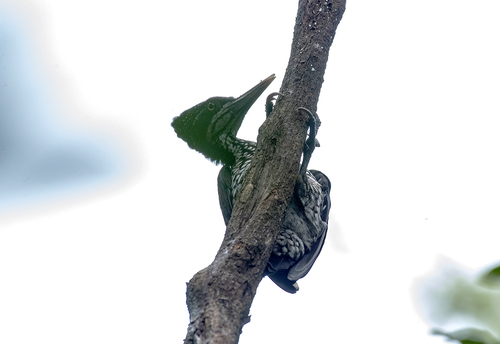 Crimson-backed Flameback
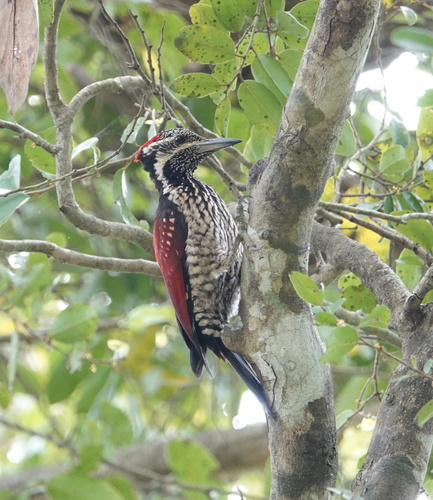 Red-backed Flameback
In breve
Il segno di campo più affidabile tra Crimson-backed Flameback (Chrysocolaptes stricklandi) e Red-backed Flameback (Dinopium psarodes) è il colore delle parti superiori e del becco: Crimson-backed ha un dorso di un profondo cremisi e un becco giallo, mentre Red-backed è anch'esso cremisi sopra ma ha un becco grigio, con punta smussata e bordi neri distintivi sulle ali. Per gli uccelli posati o in volo, controlla il colore del becco e l'estensione e il modello di nero sul viso e sulle ali. I giovani di Red-backed sono più opachi e meno marcati, il che può causare confusione, ma le differenze nel becco e nel modello facciale rimangono utili. Entrambi sono endemici dello Sri Lanka, ma Red-backed è molto più comune e diffuso.
Consigli di identificazione
- Il colore del becco è un segno di campo chiave: Crimson-backed Flameback ha sempre un becco giallo, mentre Red-backed Flameback ha un becco grigio, con punta smussata. Questo è affidabile in tutte le età e in tutte le stagioni.
- Colore delle parti superiori: Entrambe le specie hanno dorso cremisi, ma quello di Crimson-backed è descritto come più profondo e uniforme, mentre il cremisi di Red-backed è interrotto da bordi neri prominenti sulle ali (visibili in volo e spesso a riposo).
- Modello delle ali in volo: Red-backed Flameback mostra bordi neri sulle ali, un forte segno di campo in tutte le livree, compresi i giovani. Crimson-backed manca di questa caratteristica, apparendo più uniformemente cremisi sopra.
- Strisce facciali: Red-backed Flameback ha una audace striscia nera che corre fino alla nuca e alla parte superiore del dorso, con strisce bianche tra l'occhio e il collo. Crimson-backed ha una striscia supramoustachial più debole e maculata e una striscia sopracciliare meno evidente, dando un viso meno marcato.
- Parti inferiori: Red-backed mostra parti inferiori bianche con macchie nere disordinate, e un petto e collo neri con macchie e strisce bianche. Le parti inferiori di Crimson-backed sono meno descritte, ma mancano del forte modello bianco e nero di Red-backed.
- Corona (femmina): La femmina di Red-backed ha una corona rossa con una corona anteriore e una fronte maculate in bianco e nero; questo non è descritto per Crimson-backed, ma può aiutare se visto bene.
- Segni giovanili: I giovani di Red-backed sono più opachi, con marcature meno audaci; i maschi hanno macchie bianche sulla corona, le femmine ne hanno poche o nessuna. Usa il colore del becco e il modello delle ali per separare anche i giovani uccelli opachi.
- Habitat e abbondanza: Se ti trovi in un giardino domestico, in un'area disturbata, o ovunque al di fuori della foresta profonda, è molto più probabile che tu veda Red-backed. Crimson-backed è meno comune e più ristretto.
- Voce: Se senti un nitrito acuto e stridente o un tamburellare opaco, sospetta Red-backed. La mancanza di descrizione vocale per Crimson-backed significa che questo è solo un segno positivo per Red-backed.
- Caratteristiche strutturali: Il becco di Red-backed è descritto come smussato e grigio, mentre quello di Crimson-backed è giallo e non descritto come smussato. Entrambi sono simili in dimensioni e aspetto generale.
- Confusione ibrida: Alcuni ibridi possono mostrare livree intermedie (arancione o giallo mescolato con rosso), ma il colore del becco e il modello facciale aiutano ancora.
- Differenze sessuali: La femmina di Red-backed ha una corona maculata distintiva; le differenze sessuali in Crimson-backed non sono descritte qui.
- Viste posate vs. in volo: In volo, concentrati sul bordo nero delle ali per Red-backed; posato, controlla il colore del becco e le strisce facciali.
- Contesto: Red-backed è il picchio più comune in Sri Lanka; Crimson-backed è molto meno probabile in habitat disturbati o aperti.
- Quando hai dubbi: Usa una combinazione di colore del becco, modello delle ali e strisce facciali, poiché questi sono i segni più costantemente affidabili attraverso le età e le condizioni.
Taglia
Red-backed Flameback è lungo circa 28 cm ed è descritto come il picchio più comune e appariscente dello Sri Lanka. Crimson-backed Flameback non ha una misura specifica qui, ma entrambi sono picchi di dimensioni medie-grandi. La dimensione da sola non è un separatore affidabile sul campo, poiché entrambi sono simili e si sovrappongono in dimensioni.
Piumaggio
- Giovani: I giovani di Red-backed Flameback sono più opachi in generale, con marcature meno audaci; i maschi hanno macchie bianche sulla corona, le femmine ne hanno poche o nessuna. La livrea giovanile di Crimson-backed Flameback non è dettagliata, ma gli adulti sono diagnostici.
- Adulti: Crimson-backed Flameback ha un corpo superiore di un profondo cremisi (dorso e ali), un becco giallo, e una striscia supramoustachial (moustache) più debole e maculata con una sopracciglia meno distinta. Red-backed Flameback è anch'esso per lo più cremisi sopra ma mostra sempre bordo nero sulle ali e una striscia nera che si estende fino alla nuca e alla parte superiore del dorso, con strisce bianche tra l'occhio e il collo. Le parti inferiori differiscono: Red-backed ha parti inferiori bianche con macchie nere disordinate, petto e collo neri con macchie/strisce bianche; il modello delle parti inferiori di Crimson-backed non è descritto in dettaglio, ma le strisce facciali sono più deboli e meno definite. La femmina di Red-backed ha una corona rossa con una corona anteriore e una fronte maculate in bianco e nero, mentre il modello della corona di Crimson-backed non è specificato qui.
Comportamento
Entrambe le specie si nutrono in modo tipico dei picchi, arrampicandosi su tronchi e rami usando le loro code per supporto. Red-backed Flameback è noto per unirsi a stormi di specie miste e per foraggiare sia sugli alberi che a terra, specialmente per le formiche. Il suo volo è descritto come un modello di battito e planata, che è tipico per i picchi. Non sono descritti segni di comportamento unici per Crimson-backed Flameback, quindi il comportamento non è un separatore affidabile.
Habitat
Entrambe le specie sono endemiche dello Sri Lanka. Red-backed Flameback è molto più diffuso e comune, trovato in una vasta gamma di habitat tra cui foreste secche e umide di pianura, mangrovie e persino giardini domestici, principalmente nella zona secca ma anche in ambienti umidi. Crimson-backed Flameback è anch'esso endemico ma le sue preferenze di habitat non sono dettagliate qui. In pratica, se ti trovi in un giardino domestico o in un habitat disturbato, è molto più probabile che tu veda Red-backed.
Voce
Red-backed Flameback ha un nitrito acuto, non musicale, stridente, con richiami ritmici o ripetuti 'woik-woik-wik-wi-ti-ti-t-t t-t-trrrrrr!' e un tamburellare opaco. Nessuna descrizione vocale è fornita per Crimson-backed Flameback. La voce può aiutare a confermare Red-backed, ma non è un separatore diretto a meno che tu non conosca bene i richiami.
Crimson-backed Flameback · Red-backed Flameback · I miei uccelli difficili