

Crested Serpent-Eagle vs Wallace's Hawk-Eagle
Spilornis cheela contro Nisaetus nanus
Fai un quiz con Crested Serpent-Eagle e Wallace's Hawk-Eagle
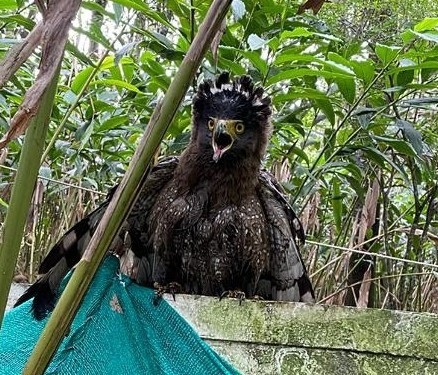 Crested Serpent-Eagle
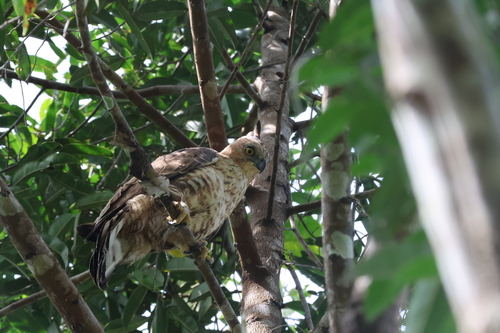 Wallace's Hawk-Eagle
In breve
Il segno di campo più affidabile per separare il Crested Serpent-Eagle dal Wallace's Hawk-Eagle è la struttura generale e il profilo di volo: il Crested Serpent-Eagle è tozzo e con ali larghe, con una coda corta e arrotondata e un collo spesso sormontato da una cresta corta a forma di ventaglio, mentre il Wallace's Hawk-Eagle è molto più snello, con ali più strette e una coda più lunga e graduata. In volo, il Crested Serpent-Eagle mostra ali larghe a forma di pala tenute in una V poco profonda e una coda e piume da volo a strisce nere e bianche; il Wallace's Hawk-Eagle è più agile e simile a un accipitriforme, con una coda più lunga e un motivo di sottoala meno contrastante. I giovani Crested Serpent-Eagle sono più chiari sulla testa e mostrano più bianco sotto, ma mantengono comunque il profilo tozzo. Anche le dimensioni sono un forte indizio: il Crested Serpent-Eagle è molto più grande e robusto del Wallace's Hawk-Eagle. Entrambe le specie si trovano nelle foreste del sud-est asiatico, ma il Wallace's Hawk-Eagle è più strettamente legato alle foreste di pianura.
Consigli di identificazione
- Structure is key: Il Crested Serpent-Eagle è tozzo, con un collo spesso, ali larghe a forma di pala e una coda corta e arrotondata. Il Wallace's Hawk-Eagle è molto più snello, con ali più strette e appuntite e una coda più lunga e graduata. Questa differenza è ovvia sia in posizione per lo più che in volo.
- Crest and head shape: Il Crested Serpent-Eagle ha una cresta nuchale corta, a forma di ventaglio, nera e bianca, che gli conferisce un aspetto di collo spesso e testa grande. Il Wallace's Hawk-Eagle non ha questo collo spesso e ha un profilo della testa più snello.
- Flight silhouette: In volo planato, il Crested Serpent-Eagle tiene le sue ali larghe in una V poco profonda, con una coda corta e un corpo pesante. Il Wallace's Hawk-Eagle vola con maggiore agilità simile a un accipitriforme, con una coda più lunga e ali più strette.
- Tail pattern: Il Crested Serpent-Eagle mostra barre nere e bianche ben definite sulla coda, visibili sia in posizione per lo più che in volo. La coda del Wallace's Hawk-Eagle è meno marcata e più lunga in proporzione al corpo.
- Underwing and flight feather pattern: Il Crested Serpent-Eagle ha barre bianche larghe sulla parte inferiore delle piume da volo e della coda, creando un aspetto ad alto contrasto. La sottoala del Wallace's Hawk-Eagle è meno contrastante e più uniformemente marcata.
- Juvenile plumage: I giovani Crested Serpent-Eagle hanno molto bianco sulla testa e sulle parti inferiori, ma mostrano comunque le barre bianche larghe tipiche della specie sulla coda e sulle ali. Il giovane Wallace's Hawk-Eagle non mostra così tanto bianco sulla testa, né la stessa marcatura audace.
- Perched jizz: Quando è posato, le punte delle ali del Crested Serpent-Eagle non raggiungono la punta della coda, e l'uccello appare robusto. Il Wallace's Hawk-Eagle appare più snello e con una coda lunga.
- Bare parts: Il Crested Serpent-Eagle ha pelle facciale e piedi nudi gialli, che possono essere visibili da vicino. Le parti nude del Wallace's Hawk-Eagle non sono descritte qui, quindi usare cautela.
- Behavior: Il Crested Serpent-Eagle trascorre gran parte della giornata posato in folta vegetazione o planando in alto, spesso chiamando. Il Wallace's Hawk-Eagle è più propenso a essere visto volare attivamente attraverso la chioma degli alberi o lungo i bordi della foresta.
- Habitat: Se visto in campagna aperta, ai margini o in foreste a elevazione più alta, è più probabile che si tratti di un Crested Serpent-Eagle. Il Wallace's Hawk-Eagle è legato alle foreste umide di pianura.
- Size impression: Anche senza un confronto diretto, il Crested Serpent-Eagle è molto più grande e robusto del Wallace's Hawk-Eagle. Se l'uccello appare piccolo e agile per un rapace, sospettare del Wallace's Hawk-Eagle.
- Vocalization: Se senti un forte, crescente 'kluee-wip-wip', è diagnostico per il Crested Serpent-Eagle.
- Pitfalls: Entrambe le specie sono marroni scuri sopra e possono apparire simili da lontano, ma la combinazione di struttura, modello di coda e ali, e habitat dovrebbe separarle nella maggior parte delle visuali.
- Sex and season: Non sono notate forti differenze di dimorfismo sessuale o di piumaggio stagionale per nessuna delle due specie, quindi tutti questi segni si applicano tutto l'anno e a entrambi i sessi.
- If in doubt: Concentrati sulla forma generale dell'uccello, sulla lunghezza della coda e sul modello delle ali in volo, e cerca il collo spesso e la cresta corta del Crested Serpent-Eagle rispetto al profilo snello e dalla coda lunga del Wallace's Hawk-Eagle.
Taglia
Il Crested Serpent-Eagle è significativamente più grande e robusto del Wallace's Hawk-Eagle. Gli adulti di Crested Serpent-Eagle variano notevolmente in dimensioni nel loro areale, ma anche le sottospecie più piccole sono più pesanti e più grandi del Wallace's Hawk-Eagle, la cui massa corporea media è di circa 555 g [wikidata]. Alcune razze di Crested Serpent-Eagle possono superare i 1.500 g, con anche piccoli uccelli continentali intorno ai 900 g. Sul campo, il Crested Serpent-Eagle appare largo e robusto, mentre il Wallace's Hawk-Eagle è visibilmente più piccolo, più snello e più leggero.
Piumaggio
I giovani e gli immaturi Crested Serpent-Eagle mostrano molto bianco sulla testa e sulle parti inferiori, ma mantengono le barre bianche larghe tipiche della specie sulla coda e sulle piume da volo, visibili sia in posizione per lo più che in volo. Gli adulti sono marroni scuri sopra con un collo spesso, una cresta corta a forma di ventaglio e marcature audaci nere e bianche sulla coda e sulle piume da volo sotto. In volo, la sottoala è scura con ampie bande chiare, e le ali sono larghe e a forma di pala. Il Wallace's Hawk-Eagle, al contrario, manca del collo spesso e della cresta corta, ed è più uniformemente marcato sotto, con meno contrasto sulla sottoala e sulla coda. La sua coda è più lunga e più graduata, e le ali sono più strette e più appuntite. Il giovane Wallace's Hawk-Eagle non mostra il bianco esteso sulla testa o le barre bianche larghe del Crested Serpent-Eagle. Entrambe le specie sono marroni scuri sopra, ma la struttura dell'aquila e il modello di ali/coda sono fondamentali.
Comportamento
Il Crested Serpent-Eagle trascorre la maggior parte della giornata posato in folta vegetazione, spesso chiamando da un posatoio esposto e planando su termiche con le ali tenute in una V poco profonda. È un predatore che aspetta, spesso visto a scrutare serpenti e rettili. Il Wallace's Hawk-Eagle è più attivo e agile, spesso visto volare attraverso la chioma della foresta o lungo i bordi, ed è meno probabile che venga visto planare in alto sopra la foresta. Il volo dell'aquila è più simile a un accipitriforme, con movimenti rapidi e agili e meno tempo trascorso posato in vista.
Habitat
Entrambe le specie abitano le foreste del sud-est asiatico, ma il Crested Serpent-Eagle è più adattabile, trovato in una gamma di habitat forestali che vanno dalle pianure alle colline e persino vicino a praterie umide. Il Wallace's Hawk-Eagle è più ristretto alle foreste umide di pianura subtropicali o tropicali, specialmente nella penisola malese, a Sumatra e a Borneo. Vedere un rapace in habitat aperti o ai margini, o a elevazioni più alte, è più probabile che indichi un Crested Serpent-Eagle.
Voce
Il Crested Serpent-Eagle ha un richiamo distintivo e lontano descritto come 'kluee-wip-wip', con la prima nota alta e crescente, spesso ripetuta da un posatoio o in volo. Le vocalizzazioni del Wallace's Hawk-Eagle non sono descritte nelle note fornite, quindi la voce è diagnostica solo se si sente il richiamo del Crested Serpent-Eagle.
Crested Serpent-Eagle · Wallace's Hawk-Eagle · I miei uccelli difficili