

Crested Owl vs Rufous Cacholote
Lophostrix cristata contro Pseudoseisura unirufa
Fai un quiz con Crested Owl e Rufous Cacholote
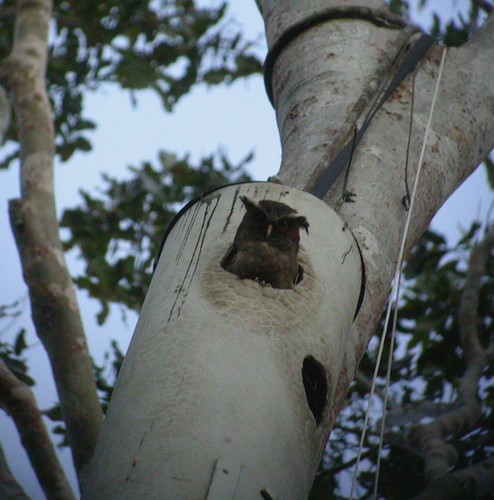 Crested Owl
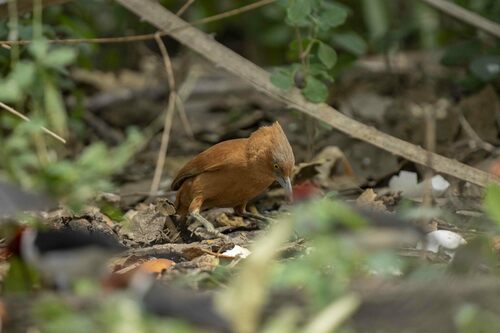 Rufous Cacholote
In breve
Il modo più affidabile per separare il Crested Owl dal Rufous Cacholote è attraverso la struttura generale e il motivo facciale: il Crested Owl è un uccello molto più grande e pesante con un sorprendente disco facciale scuro, lunghe ciocche di orecchie bianche o color crema e una prominente striscia bianca sugli occhi, mentre il Rufous Cacholote è un uccello canoro più piccolo e tozzo con una cresta rugginosa o grigia e un viso semplice, di un pallido color ruggine. Le piume giovanili non creano confusione, poiché i giovani Crested Owls hanno un piumaggio lanoso bianco e ciocche di orecchie corte, mentre i giovani cacholotes hanno una cresta più corta e trasandata e un colore meno uniforme. In volo, le ampie ali dell'owl e il movimento silenzioso e fluttuante sono diversi dal volo più diretto e tremolante del cacholote. Anche a distanza, la dimensione e la postura eretta dell'owl contrastano con la postura attiva e orizzontale del cacholote. Se vedi un uccello cresta rugginosa in Sud America, controlla il disco facciale dell'owl e le ciocche di orecchie rispetto al viso semplice e alla dimensione più piccola del cacholote.
Consigli di identificazione
- Dimensione e robustezza: Il Crested Owl è molto più grande e pesante del Rufous Cacholote; se l'uccello sembra quasi delle dimensioni di un falco, è l'owl. Il cacholote è solo di dimensioni simili a quelle di un tordo.
- Disco facciale e striscia sugli occhi: Solo il Crested Owl ha un disco facciale scuro, ben definito e una audace striscia bianca che si estende nelle ciocche di orecchie. Il viso del cacholote è semplice, privo di qualsiasi disco o striscia.
- Ciocche di orecchie vs cresta: Le ciocche di orecchie del Crested Owl sono lunghe, bianche o color crema, e si proiettano verso l'alto, mentre la cresta del Rufous Cacholote è più corta, rugginosa o grigia, e si trova sulla sommità della testa senza formare ciocche.
- Motivo del piumaggio: Il Crested Owl (entrambi i morfi) mostra macchie bianche sulle copritrici delle ali e piume da volo barrate; le ali del cacholote sono di un semplice color ruggine con punte scure, senza barre o macchie.
- Motivo della coda: La coda dell'owl è marrone cioccolato con macchie più scure; quella del cacholote è rugginosa, con punte non barrate e senza barre.
- Piumaggio giovanile: I giovani Crested Owls hanno un piumaggio lanoso bianco e ciocche di orecchie corte, ma mostrano ancora un disco facciale; i giovani cacholotes hanno una cresta trasandata e corta e un colore irregolare, ma non hanno mai un disco facciale o ciocche di orecchie.
- Colore del becco: Il becco del Crested Owl è giallo o scuro; quello del cacholote è blu-grigio o grigio con una mandibola inferiore più chiara.
- Colore dell'iride: L'iride dell'owl varia dal giallo al marrone con macchie rugginose; quella del cacholote è gialla o giallo crema.
- Colore delle zampe: Le dita dell'owl sono di un grigio-marrone chiaro; le zampe e i piedi del cacholote sono di un grigio oliva o verdastro.
- Postura: Il Crested Owl si posa eretto, spesso immobile; il cacholote è più orizzontale, posandosi e muovendosi attivamente.
- Stile di volo: L'owl vola con ali ampie e arrotondate e un movimento silenzioso e fluttuante; il volo del cacholote è diretto, tremolante e meno stabile.
- Habitat: Foresta umida densa (owl) vs bosco aperto, cespugli o savana (cacholote).
- Periodo di attività: L'owl è notturno e raramente visto di giorno; il cacholote è diurno e ben visibile.
- Nido: Il cacholote costruisce grandi nidi di rami sugli alberi; i nidi dell'owl non sono tipicamente osservati all'aperto.
- Distribuzione geografica: Il Crested Owl si trova in America Centrale e nel nord dell'America del Sud; il Rufous Cacholote è limitato a Bolivia, Brasile e Paraguay.
Taglia
Il Crested Owl è drammaticamente più grande e pesante: misura 38–43 cm di lunghezza e pesa 425–620 g, rispetto ai 20–21 cm e 42–57 g del Rufous Cacholote [wikipedia][wikidata]. L'owl è quasi due volte più lungo e fino a dieci volte più pesante. Sul campo, questo significa che l'owl appare massiccio e imponente, mentre il cacholote è più vicino in dimensione a un tordo o a un piccolo ghiandaia. La testa dell'owl è proporzionalmente grande con lunghe ciocche di orecchie, mentre la cresta del cacholote è molto più corta e meno prominente.
Piumaggio
I giovani Crested Owls hanno un piumaggio lanoso bianco e ciocche di orecchie corte, con un disco facciale scuro già presente; le loro piume da volo e da coda sono simili a quelle degli adulti, quindi anche i giovani uccelli mostrano il motivo facciale chiave e le ciocche di orecchie. I giovani Rufous Cacholotes hanno una cresta più corta e trasandata e un colore meno uniforme, privi di qualsiasi disco facciale o ciocche di orecchie. Gli adulti Crested Owls si presentano in morfi scuri e chiari: entrambi hanno un disco facciale scuro, lunghe ciocche di orecchie bianche o color crema e una prominente striscia bianca sugli occhi che si estende nelle ciocche. Il resto del piumaggio è marrone cioccolato (morfo scuro) o marrone rugginoso (morfo chiaro), con macchie bianche sulle copritrici delle ali e piume da volo barrate. Gli adulti del Rufous Cacholote sono per lo più di un brillante color ruggine-rossastro, più chiari sotto, con una cresta che varia dal rugginoso al grigiastro; il loro viso è semplice, privo di qualsiasi disco o striscia sugli occhi, e il centro della gola è di un arancione sfumato. Le loro piume da volo hanno punte scure, ma senza barre o macchie bianche. La coda dell'owl è marrone cioccolato con macchie più scure, mentre la coda del cacholote è rugginosa con punte non barrate.
Comportamento
Il Crested Owl è un predatore notturno e segreto, di solito posato eretto e immobile in una foresta densa, raramente visto alla luce del giorno. Caccia principalmente grandi insetti e occasionalmente piccoli vertebrati. Il Rufous Cacholote è diurno, attivo e ben visibile, spesso visto cercare cibo in coppie o piccoli gruppi, saltellando attraverso boschi aperti o cespugli, e costruendo grandi nidi di rami. Il suo comportamento è più simile a quello di una ghiandaia o di un grande scricciolo che a un owl.
Habitat
Il Crested Owl abita le foreste umide dell'America Centrale e del nord dell'America del Sud, spesso in boschi densi e maturi. Il Rufous Cacholote si trova in boschi aperti più secchi, cespugli e savane in Bolivia, Brasile e Paraguay. Le loro aree di distribuzione si sovrappongono poco e le loro preferenze di habitat sono abbastanza diverse: vedere un uccello cresta in un paese aperto e secco favorisce fortemente il cacholote, mentre un grande uccello cresta in una foresta umida è probabilmente l'owl.