

Coscoroba Swan vs Anatra muta
Coscoroba coscoroba contro Cairina moschata
Fai un quiz con Coscoroba Swan e Anatra muta
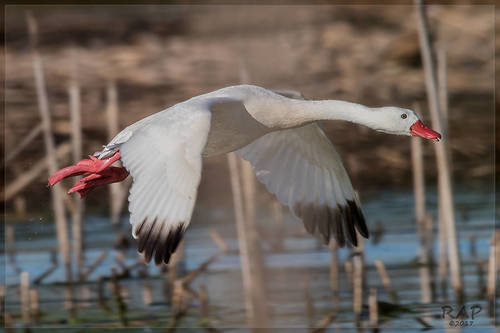 Coscoroba Swan
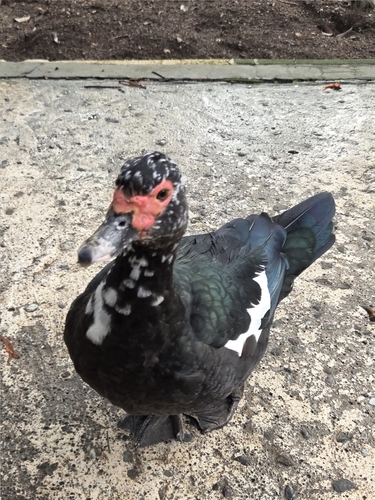 Anatra muta
In breve
The most reliable field mark between Coscoroba Swan and Muscovy Duck is overall plumage: adult Coscoroba Swans are pure white with only black tips to the outer primaries, while wild Muscovy Ducks are predominantly black with large white wing patches and a dark, bare, warty face. Juvenile Muscovy Ducks are duller and lack the strong white wing patches, but still show dark plumage and facial skin unlike the swan. Coscoroba Swan is also much larger and more swan-like in posture, with a shorter neck than true swans but longer legs and a pink bill and feet. Muscovy Ducks have a flatter, broader tail, a blackish bill with a red or black knob at the base, and often perch or nest in trees. In flight, Coscoroba Swan shows a mostly white wing with only black tips, while Muscovy Duck shows extensive black with white patches. These differences are visible at all ages, though domestic Muscovy Ducks can show variable white on the head and neck, which can confuse the unwary.
Consigli di identificazione
- Plumage in flight (all ages): Coscoroba Swan shows a white wing with only black tips to the outer primaries; Muscovy Duck shows a mostly black wing with large white patches (variable in feral/domestic birds, but always more black than Coscoroba).
- Plumage at rest (adults): Coscoroba Swan is pure white with pink bill and legs; Muscovy Duck is mostly black with white wing patches, a dark bill with red/black knob, and bare, warty facial skin.
- Juvenile/immature plumage: Young Muscovy Ducks are duller black with little or no white on the wing, but still have a bare face and dark bill; Coscoroba Swan immatures are white with black-tipped primaries, lacking any bare facial skin.
- Face and bill: Coscoroba Swan has a fully feathered face to the base of the bill and a smooth, pink bill; Muscovy Duck has a bare, warty (carunculated) face with a black or red knob at the bill base, and a blackish bill with pale pink speckling.
- Legs and feet: Coscoroba Swan's legs and feet are bright pink; Muscovy Duck's are blackish, and the feet have long claws for perching.
- Tail shape: Muscovy Duck has a wide, flat tail, often held horizontally; Coscoroba Swan's tail is shorter and less prominent.
- Posture and jizz: Coscoroba Swan stands tall and upright, with a shorter neck than true swans but still longer than any duck; Muscovy Duck is more horizontal and duck-like in stance.
- Size: Coscoroba Swan is much heavier and bulkier (4200 g vs. 2125 g average), with a more imposing presence; female Muscovy Ducks are especially small compared to any Coscoroba Swan.
- Habitat: Coscoroba Swan is found in natural wetlands and marshes; Muscovy Duck is often seen in urban parks, farms, or perched in trees, especially outside its native range.
- Behavior: Coscoroba Swan rarely upends and often grazes on land; Muscovy Duck may perch in trees or on structures and is more likely to be seen roosting above ground.
- Voice: Coscoroba Swan gives a loud 'cos-cor-oo' or hooting call; Muscovy Duck is mostly silent, with males giving a low breathy call and females a quiet trilling coo.
- Domestic/feral confusion: Feral Muscovy Ducks can show variable white on the head and neck, but always have a bare, warty face and dark bill; Coscoroba Swan never shows bare skin or a knob at the bill base.
- Association with people: Muscovy Ducks are often found near humans and may be tame or pest-like; Coscoroba Swans are less likely to be found in urban settings.
- Sexual dimorphism: Male Muscovy Ducks are larger and more iridescent, with bigger facial caruncles; Coscoroba Swan sexes are similar except for size, with males being larger.
- Bill color: Coscoroba Swan's bill is always pink; Muscovy Duck's bill is blackish with pale pink speckling, sometimes variable in feral birds but never fully pink.
Taglia
Coscoroba Swan is significantly heavier and bulkier than Muscovy Duck, with an average adult mass of 4200 g compared to 2125 g for Muscovy. Coscoroba Swan is one of the largest South American waterfowl, but still smaller and shorter-necked than true swans. Muscovy Duck males can reach up to 3–4 kg, but are still lighter and less imposing than Coscoroba Swan. The swan stands taller, with longer legs, and has a more upright, swan-like posture, while Muscovy Duck is more horizontal and duck-like. Female Muscovy Ducks are much smaller and less robust than Coscoroba Swans of either sex.
Piumaggio
Adult Coscoroba Swans are pure white except for black tips to the outer six primaries, which are only visible in flight or when the wing is stretched. Their bill and legs are bright pink, and the face is fully feathered to the base of the bill. Muscovy Ducks, in wild form, are mostly black with large white patches on the wings (more extensive in males), and have iridescent, glossy back and wing feathers. The face is bare with a dark red or blackish knob at the bill base, and the bill itself is black with pale pink speckling. Females are smaller and drabber, with less prominent facial caruncles. Juvenile Muscovy Ducks are duller overall, with little or no white on the wing, but still show a dark, bare face and blackish plumage. Feral/domestic Muscovy Ducks can show variable white on the head and neck, but always retain the bare, warty face and dark bill. In flight, Coscoroba Swan shows a white wing with only black tips, while Muscovy Duck shows black wings with white patches. These contrasts hold for all ages, though the amount of white in Muscovy Duck can vary in feral/domestic birds.
Comportamento
Coscoroba Swan often forages while swimming or wading in shallow water and is rarely seen upending like other swans. It also grazes on land and can walk easily due to its longer legs, taking off quickly from land or water. Muscovy Ducks are more duck-like in behavior, often perching or nesting in trees or on structures, and are seen both on water and on land. They have long claws for perching and may sleep on water to avoid predators. Feral Muscovy Ducks are often found in urban or suburban settings, sometimes becoming pests. Coscoroba Swans are more likely to be seen in natural wetlands and are less associated with human habitation.
Habitat
Coscoroba Swan is native to southern South America, found in wetlands, lakes, and marshes in Argentina, Bolivia, Brazil, Chile, Paraguay, Uruguay, and the Falkland Islands. Muscovy Duck is native from southern Texas and Mexico south to Argentina and Uruguay, but feral populations occur in many parts of the world, especially in urban and suburban parks, farms, and near human habitation. Coscoroba Swan prefers more natural wetland habitats, while Muscovy Duck is highly adaptable and often found near people, including on farms and in city parks.
Voce
Coscoroba Swan gives a distinctive onomatopoeic 'cos-cor-oo' call, usually as a threat, and a monosyllabic hooting note as a contact call. Immatures make loud chirps and trills. Muscovy Duck males have a low, breathy call, while females give a quiet trilling coo. Neither species is particularly vocal, but the Coscoroba Swan's calls are more resonant and swan-like, while Muscovy Duck is quieter and less likely to draw attention by sound.