
Rondone comune vs Fork-tailed Drongo
Apus apus contro Dicrurus adsimilis
Fai un quiz con Rondone comune e Fork-tailed Drongo
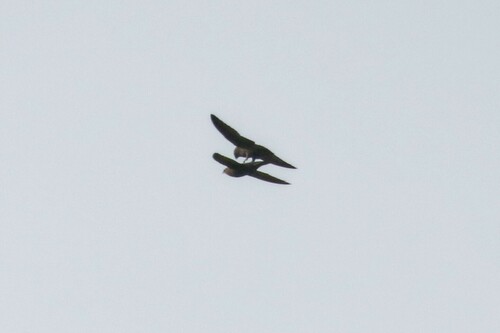 Rondone comune
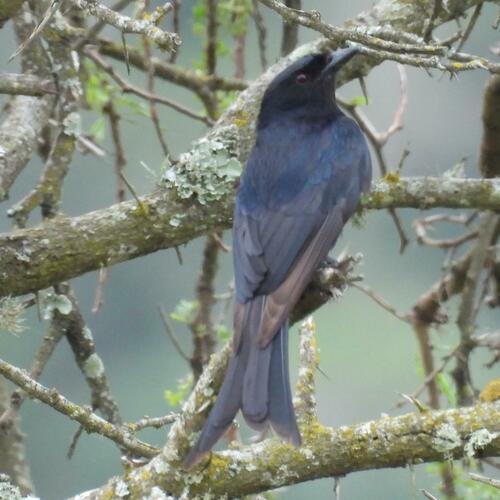 Fork-tailed Drongo
In breve
Il modo più affidabile per separare il Rondone comune dal Fork-tailed Drongo è attraverso la struttura generale e lo stile di volo: i rondoni sono aerei con ali a falce e una silhouette a forma di mezzaluna e non si posano mai in posizione verticale, mentre i drongos sono uccelli da posatoio con un corpo robusto, un becco forte e una coda profondamente biforcuta. I drongos juvenili possono essere confusi a causa del loro piumaggio marrone più opaco e della biforcazione della coda meno pronunciata, ma anche in quel caso, il loro posatoio verticale e il becco più spesso sono indizi. I rondoni sono uniformemente scuri con solo una piccola macchia di gola pallida, visibile meglio da vicino, e sono quasi sempre visti in volo veloce e agile. I drongos, al contrario, mostrano un corpo superiore nero-blu lucido da adulti, occhi rossi e spesso si lanciano dai posatoi. Se vedi l'uccello posato in verticale su un ramo, è un drongo, non un rondone.
Consigli di identificazione
- Posatoio vs. volo: Se l'uccello è posato in verticale su un ramo o un filo, è un Fork-tailed Drongo. I Rondoni comuni non sono quasi mai visti posati in aperto.
- Forma dell'ala in volo: I rondoni hanno ali lunghe, strette e a forma di falce che formano un contorno a mezzaluna o a boomerang. I drongos hanno ali più corte e più larghe con una forma di passeriforme più tipica.
- Forma della coda: I drongos hanno una coda profondamente biforcuta, specialmente da adulti, mentre i rondoni hanno una coda corta, solo leggermente biforcuta. I drongos juvenili hanno una biforcazione meno pronunciata, ma comunque più di un rondone.
- Struttura del becco: I rondoni hanno un becco piccolo, quasi invisibile, visibile meglio da vicino; i drongos hanno un becco robusto e forte di colore nero visibile anche da lontano.
- Colore degli occhi: I drongos adulti hanno occhi rossi sorprendenti; i rondoni hanno occhi scuri che non si distinguono.
- Lucentezza del piumaggio: I drongos adulti mostrano una lucentezza blu-verde sul dorso in buona luce, mentre i rondoni sono di un uniforme marrone scuro senza iridescenza.
- Confusione giovanile: I drongos juvenili sono marroni più opachi con punte color crema e una biforcazione della coda meno evidente, ma si posano comunque in verticale e mostrano un becco più spesso. I rondoni, anche da juvenili, sono uniformemente scuri con solo una macchia di gola pallida.
- Macchia di gola: I rondoni hanno una piccola macchia di gola pallida o biancastra, ma questa è difficile da vedere tranne che da vicino e non è un segno affidabile da lontano.
- Stile di volo: I rondoni sono veloci, agili e raramente si fermano; i drongos volano fuori da un posatoio per catturare prede e tornano, con un volo più diretto e meno acrobatico.
- Habitat: I rondoni sono visti in spazi aerei aperti, spesso in alto sopra il suolo; i drongos sono solitamente in o vicino agli alberi e spesso vicino all'acqua o ai terreni agricoli.
- Vocalizzazione: I rondoni emettono grida forti e penetranti, specialmente in gruppi. Le chiamate dei drongos non sono descritte qui ma non corrispondono al grido del rondone.
- Zampe e piedi: I drongos hanno zampe e piedi corti ma visibili per posarsi; i rondoni hanno zampe piccole e non sono mai visti in piedi in posizione verticale in aperto.
- Forma del corpo: I rondoni sono snelli e aerodinamici per il volo continuo; i drongos sono più robusti e massicci, con un forte petto e testa.
- Contesto: Se vedi un uccello lanciarsi fuori da un posatoio e tornare, è un drongo. Se sta circolando senza sosta e non atterra mai, è un rondone.
- Muta stagionale: I drongos subiscono una muta completa dopo la riproduzione; i rondoni non mostrano una muta evidente sul campo.
Taglia
Il Fork-tailed Drongo è più pesante e più robusto del Rondone comune, con una massa corporea di circa 43,4 g [wikidata]. Il Rondone comune è leggermente più lungo nel corpo (16–17 cm) ma è molto più snello e costruito per il volo continuo, con un'apertura alare di 38–40 cm. L'apertura alare del drongo è molto più corta (circa 13,4 cm per ala; apertura alare totale non specificata ma chiaramente inferiore a quella del rondone), e l'uccello è più massiccio con un forte becco e zampe per posarsi. Sul campo, il rondone appare con ali più lunghe e corpo più leggero, mentre il drongo appare più robusto e compatto.
Piumaggio
- I drongos juvenili sono marroni scuri con punte di piume color crema, una biforcazione della coda meno evidente e bocca e occhi pallidi; mancano della lucentezza blu-nera e degli occhi rossi degli adulti. Questo può farli apparire più opachi e meno contrastati, ma la coda biforcuta e il posatoio verticale rimangono indizi.
- I drongos adulti sono neri lucidi con iridescenza blu-verde, occhi rossi e una coda nera profondamente biforcuta. Il ventre è uniformemente nero, corrispondente alla parte superiore ma con meno lucentezza.
- Il Rondone comune di tutte le età è complessivamente marrone scuro, con una piccola macchia di gola pallida che è difficile da vedere tranne che da vicino. Le ali sono lunghe e a forma di falce, e la coda è corta e solo leggermente biforcuta. Non c'è iridescenza o occhio rosso.
- I rondoni non mostrano punte di piume pallide, color crema o toni marroni, nemmeno da juvenili; il loro piumaggio è uniformemente scuro tranne che per la macchia di gola.
Comportamento
I Rondoni comuni sono quasi sempre visti in volo, raramente posati tranne che nel nido (che è nascosto). Il loro volo è veloce, agile e continuo, con rapidi cambi di direzione e alta manovrabilità aerea. Non si posano mai in verticale su rami esposti. I Fork-tailed Drongos sono spesso visti posati in verticale su rami, fili o tronchi esposti, da cui si lanciano per catturare insetti. Sono difensori aggressivi del loro territorio e possono attaccare uccelli più grandi. Il loro volo è più diretto e meno acrobatico rispetto a quello di un rondone, con frequenti ritorni al posatoio.
Habitat
Il Rondone comune si trova nei cieli aperti sopra le città, nelle pianure e vicino all'acqua durante la migrazione e la riproduzione, raramente visto in habitat boschivi o posato sugli alberi. Il Fork-tailed Drongo è un uccello di habitat boschivi, boschi e savane in tutta l'Africa sub-sahariana, spesso vicino a zone umide, fattorie o margini forestali. Se l'uccello è visto in una foresta densa o posato su un albero, è quasi certamente un drongo.
Voce
Il Rondone comune emette un grido forte e penetrante, spesso in gruppi, con due livelli di tono (più alto nelle femmine). Il Fork-tailed Drongo non è descritto in dettaglio qui, ma non emette le caratteristiche grida del rondone. Se senti un grido alto, acuto e ripetuto sopra di te, è probabile che sia un rondone.
Rondone comune · Fork-tailed Drongo · I miei uccelli difficili